Make the right decisions about emerging technologies

Today’s businesses are innovating across

  • business models,
  • products,
  • services
  • and customer engagement

while disrupting markets and entire industries. Much of this innovation is driven by applying emerging technologies throughout the value chain. It creates great opportunities but at the same time presents significant challenges and unknown risks and consequences to organizations. Competitors can completely disrupt an industry, or an organization can disrupt itself first and lead a new phase of growth.

This pursuit of everything digital is happening at an accelerating pace. Speed has become a huge source of value whether measured by faster decision-making or how quickly an organization can go from ideation to revenue. This need to deploy digital capabilities quickly and at scale is the antithesis of IT-led projects that are typically months or years long and, as a result, often out of frustration, the business is increasingly sidestepping the IT function to procure new technologies. The combination of an increasingly tech-savvy population combined with the proliferation of cloud-based software as a service (SaaS) solutions has greatly simplified this process. In this race to harness emerging technologies and innovate it is easy to forget about governance and that can lead to significant costs and risks.

Understanding when, how, why, and what new technologies are introduced to an organization is critical to both maximize the opportunities that they present and minimize the inherent risks.

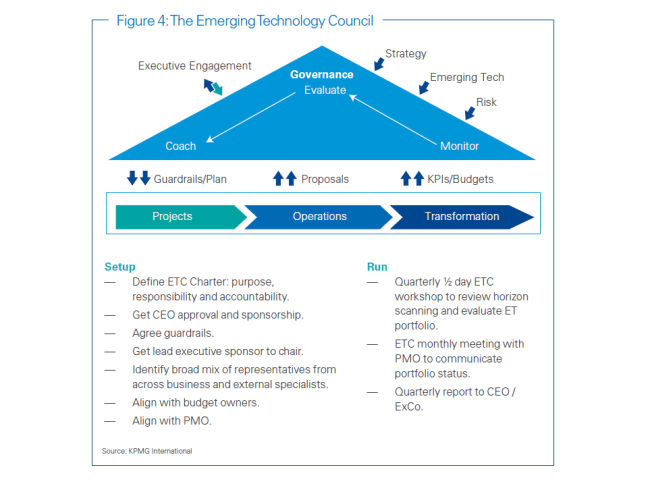
Establishing a governance framework that embraces disruptive technologies and encourages innovation while ensuring risks are identified and managed is essential to an organization’s ability to survive and thrive in a digital world. Innovation / Emerging Technology Councils comprised of the right mix of internal and third party experts can ensure that the right approach is taken, investment is available and prioritized, and opportunities can be scaled.

The unique characteristics of emerging technologies

  • their diverse applications,
  • the myriad concerns raised by some new capabilities,
  • the need for public engagement,
  • and the challenge of effective coordination between governance players

– create the need for a new governance approach and a new lens through which to view risk management.

KPMG1

Click here to access KPMG’s detailed article

How to Protect and Engage Customers

Think about the many devices and channels your customers use today and the barrage of marketing messages coming across them. It’s overwhelming. How do you break through to meaningfully engage with customers, keep them loyal, and increase incremental revenue?

Finding ways to stand out from entrenched competitors and innovative upstarts is becoming increasingly difficult. Traditional offerings and marketing continue to decline. At the same time, your customers and employees face a host of evolving and confusing cyber threats that can quickly derail their lives. That, no doubt, partially explains why 79 percent of consumers prefer to do business with companies that provide identity monitoring services, according to a GfK Survey.

Yet the complexity of threats requires more than monitoring. Additionally, most identity and data protection service offerings haven’t kept up with the times and consumers’ expectations about self-service. At this intersection of evolving threats and customer needs lies a rare opportunity for you to establish a new type of valuable and ongoing engagement with customers.

In this article, we’ll explore this new opportunity for protecting and engaging your customers, examining:

  • Technology’s impact on customer interactions and loyalty
  • The tight correlation between security engagement and risk
  • Why it’s time for a new identity and data defense solution model
  • How a marketplace approach to identity management, privacy and cyber security can help you regularly engage customers, improve loyalty and grow revenues

Technology’s impact on customer interactions and loyalty

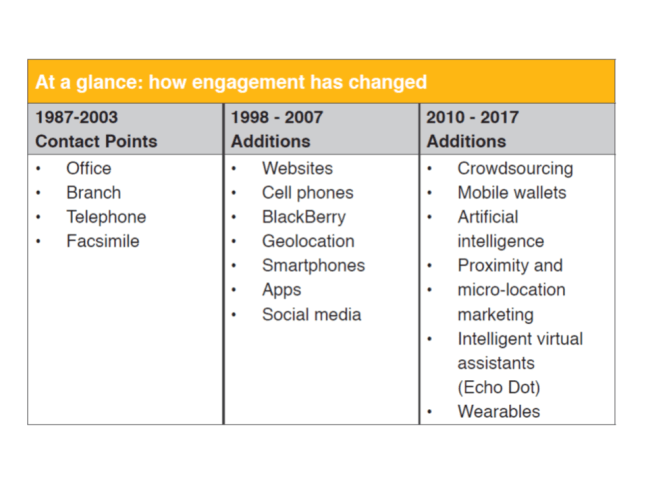
Today, most engagement is technologydriven, and customers expect nearly instantaneous responses for any type of query or request.

Engagement1

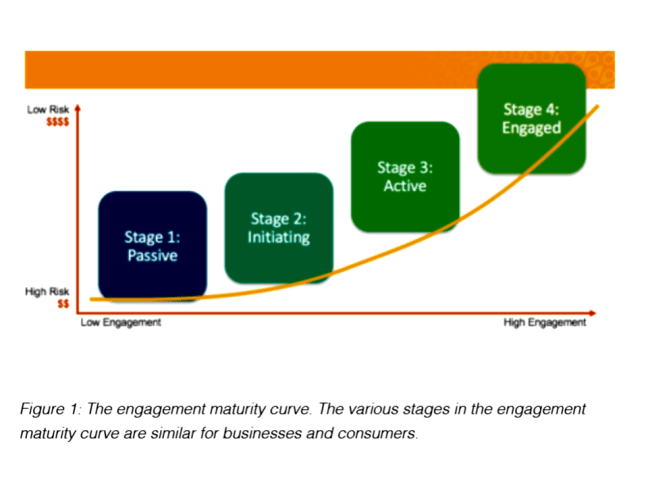
The tight correlation between security engagement and risk

It’s not just technology that has been evolving rapidly over the years. We’ve also seen a corresponding progression in the sophistication and types of identity and data fraud.

Engagement2

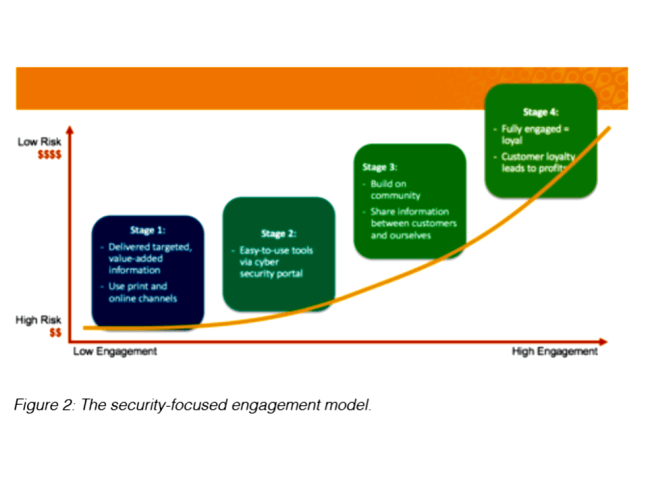
Why it’s time for a new identity and data defense solution model

We recognized the growing potential of cyber and identity protection services as a unique opportunity for ongoing necessary engagement. That’s why we took a step back and reconsidered everything from the changing threat landscape to changing customer preferences and began working on an innovative approach for organizations to engage customers.

Engagement3

Click here to access Cyberscout’s White Paper


The Customer Journey of a Lifetime: Step-by-Step Modernisation to Maximise Retention

Customer experience is the insurer’s latest hot topic. Improving it at existing touchpoints and finding new opportunities to deliver it beyond purchase, renewal and claims dominate discussions. McKinsey found in the B2B sector that improved customer experience lowered churn by 15%, increased win rate from 20% to 40% and lowered costs to serve by up to 50%.

But understanding how to deliver great insurance customer experience, whether on mobile, in a contact centre or at a repair shop means far more than finessing an individual point of interaction. How the customer experiences each interaction and how it colours past and future interactions is critical to building a successful customer experience.

In other words, if you don’t give your customer the best journey, they’ll never arrive at the desired destination.

In this paper we look at the latest research supporting customer journey analysis and speak to three insurance executives who are putting this strategy at the heart of their customer experience and engagement policy. Progress towards the optimal customer journey is examined in the following stages:

  1. Proof points for customer journey analysis
  2. Embedding effective customer tracking
  3. Solid data collection practice
  4. Assessing and enhancing the availability of information
  5. Upskilling the organisation to manage the journey
  6. Discovering and mitigating pain points in the customer journey
  7. An atmosphere of continuous improvement

Proof points for customer journey analysis

Customer journey analysis and optimisation is so important because of the multiple channels and external influences involved in the buying process. So much can happen between intent and purchase. No-one is exempt. Google and Ipsos found that 90% of people move between devices in a sequential fashion to accomplish a goal. In online shopping, 61% of internet users and 80% of online millennials start shopping on one device but finish on another.” This is a pretty simplistic view. If we turn to research by user experience research house, GfK, the customer journey looks even more convoluted:

CX Survey

From this infographic, we note that most insurance customers use branded search but also go across around eight touchpoints including social media and email. Only 14% don’t do any research and for those who do, most will research online covering around five different websites. Further research on the insurer journey from GfK found that hardly any purchasers bothered with word of mouth (5%) but price comparison sites (PCS) wield a strong influence (26%).

This diagram only relates to the insurance purchase journey. There are many more influences on customer retention such as claims journey, customer engagement campaigns (increasingly popular under the influence of internet of things (IoT) technology).

Embedding effective customer tracking

The business case for journey analysis established, insurers need to make sure they are tracking all the essential touchpoints.

ERGO Group AG’s Head of Customer and Sales Service Health, Dr. Carsten Rahlf explains his process: “If a phone number is saved in the database we can see the customer’s profile upon calling, their historic interaction points, so we know where he is in the process. If he went to the doctor, paid him and wants to be reimbursed, also we can see when and how he submitted his bills. He may have sent them by post or used the app. He and we can see through the online portal that his request has been accepted and the customer and the agent can then track it to see if it has been executed.”

Wesleyan’s Group Head of Marketing Robin Gibson is in the middle of bringing CRM data into a Microsoft Dynamics system to improve their single view of the customer – vital to make any sense of customer tracking data. Executives looking to follow his lead should be aware it is a long-term project: “We spent the last three years on integration, migrating all the data into new CRM systems. The first part is to allow financial consultants and the customer to jointly have a single view of finances. »

« The next part is to allow customers to self-serve on their devices. Next, we need to put marketing plugins into the system to simulate interactions and use the database to find new customers.” He adds that a manageable, clean source of customer information is vital to comply with May 2018’s GDPR legislation which requires explicit data consent ongoing. It’s clear that tracking the customer journey means not just focusing on points of customer interaction such as cookies on a website or calls to a call centre but also looking internally to see what processes are helping or hindering that customer journey.

This will never be an exact science. Explaining where tracking begins and ends in MyCustomer, SEO expert Martin Calvert admits a degree of arbitrariness is expected “The start and end points of a customer journey are always going to be debatable. Does the journey ultimately start when they see one of your brand’s adverts years ago…does it end after they’ve bought their last product from you in their 80s?”

The learning is to track what you can and hunt out two specific areas:

  • one, where gaps in the customer journey appear
  • and two, where customers appear to experience pain points that are unaccountable – so far.

To get reliable pictures of this, insurers need to access as much data as possible.

Customer Journey

Click here to access InsuranceNexus’ White Paper

Organizing and Orchestrating Digital Transformation

Organizing for a Digital World

What makes the shift to more robust digital offerings, channels and operations so tricky is the stress it puts on old-line companies’ operating models. Many new activities and capabilities—ranging from advanced analytics and rapid prototyping to cybersecurity and external partnership management—will need to be developed and located somewhere in the organization.

  • Who takes ownership for these activities
  • Who decides investment levels for each
  • And how they will work

are all major operating model questions.

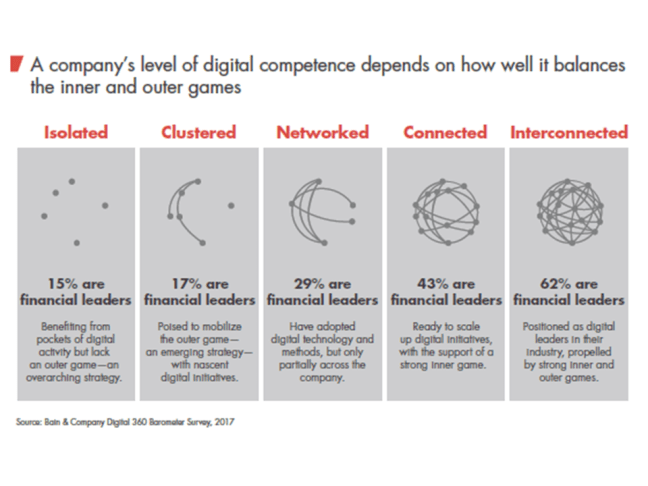
In addressing these choices, companies usually start to realize that their legacy processes don’t move fast enough to keep up with changing customer demands and behavior, which are shaped by digital interactions in other parts of their lives. Decision speed also may be too slow, because it’s tied to budget cycles. Companies may find digital innovations hard to scale up beyond small projects. And certain kinds of digital talent have become very tough to source and hire. As a result, digital transformations are significantly harder to pull off than conventional change programs. Bain & Company recently surveyed 1,000 companies around the world to gauge their level of digital readiness. After comparing financial results for five categories of companies based on their degree of digital sophistication, we found that revenues for the digital leaders grew 14% over the past three years, more than doubling the performance of the digital laggards in their industries. Profitability followed a similar pattern. Yet while the payoff from digital transformation can be impressively high, the success rate is regrettably low. In our survey, just 5% of those companies involved in digital transformation efforts reported that they had achieved or exceeded the expectations they had set for themselves (versus a success rate of 12% for conventional transformations found in an earlier survey). A full 71% of these companies settled for dilution of value and mediocre performance.

Leading companies realize that making the transition to digital 2.0 or 3.0 requires systematically examining and adjusting each element of their operating model— the blueprint for how resources are organized and operated to get critical work done. The operating model encompasses decisions around the shape and size of the business, where to draw the boundaries for each line of business and function, how people work together within and across these boundaries, how the corporate center will add value to the business units, and what norms and behaviors should be encouraged. It entails choices in five areas:

  • Structure involves drawing appropriate boundaries for lines of business and functions, and defining centers of expertise and other coordinating units.
  • Accountabilities describe the roles and responsibilities of the main organizational entities, including ownership for profit and loss statements and a clear, value-adding role for the corporate center.
  • Governance refers to executive forums and management processes that yield high-quality decisions on strategic priorities, as well as budgets and incentives to align behavior.
  • Capabilities refer to how the company combines people, process and technology in a repeatable way to deliver desired outcomes.
  • Ways of working describe the expected cultural norms for how people collaborate, especially across the boundaries between functions or teams.

Executives should consider how each area will change in turn as the organization’s digital intensity rises.

Bain DigOrg

Click here to access BAIN_BRIEF_Organizing_for_a_Digital_World


Orchestrating a Successful Digital Transformation

Among the five categories of companies in the research, the most advanced digitally achieved the best balance between the inner and outer games. Those just embarking on digital transformations typically start from a set of isolated initiatives targeting their most acute pain points (the outer game), but they struggle to translate these prototypes into products and capabilities that can have a meaningful impact on the company’s economics. More advanced businesses do a good job of clustering digital initiatives around a common strategic ambition and start to focus on improving select enabling capabilities, particularly IT. But these initiatives also tend to plateau somewhere short of broad organizational impact or end up creating “two-speed” organizations that are responsive in limited respects but still held back by legacy systems.

The true digital leaders pull away from the competition by linking a bold strategic ambition to the specific inner game capabilities and behaviors that they will need to achieve it. First they translate their strategy into a clear set of digital initiatives that point the organization toward a clear vision of full potential. Then they invest heavily in the fundamental changes to their ways of working and culture that allow them to develop those initiatives rapidly and execute them at scale.

Bain DigOrchestration

Click here to access BAIN_BRIEF_Orchestrating_a_Successful_Digital_Transformation


Moving from best to better and better – Business practice redesign is an untapped opportunity

Under mounting performance pressure, many corporate leaders are looking to business process reengineering to improve performance, and in many ways that makes sense after all, processes give shape to an organization and are often useful for coordinating routine flows across large organizations. The routine work of a company should be done as efficiently as possible, which increasingly means incorporating automation.

But organizations may be missing a much greater opportunity to improve performance.

Here’s the thing: Much of the work of many organizations today—at least the work that typically offers the potential for differentiation—is no longer routine or even predictable. When conditions and requirements shift constantly, processes fail. While process optimization can still certainly help

  • reduce costs
  • and streamline operations,

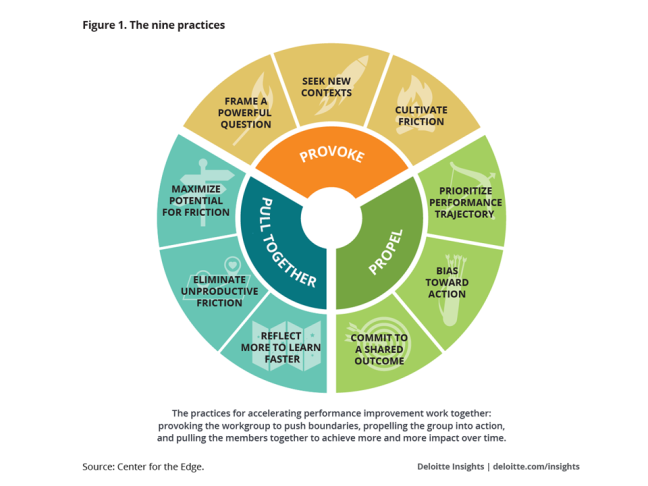
leaders should consider a different kind of organizational rethinking for significant performance improvement. And in an environment of accelerating technological advances and rapid and unpredictable change, constant performance improvement is a must. Competition can come from anywhere—doing well relative to the competitors on your radar isn’t enough. Many barriers to competition are falling, and many boundaries, between industries and between markets, are blurring.

  • Consumers have more access to information and alternatives than ever, along with a coincident increase in expectations.
  • Workers have more access to information and alternatives—and increased expectations.

At the same time, many employees, in all kinds of environments, face increasing pressure to reach higher levels of individual performance. The useful life of many skills is in decline, creating a constant pressure to learn fast and reskill.

Many companies have struggled to effectively respond to these pressures since long before the Internet of Things and cognitive technologies added new layers of complexity. The average return on assets for US companies has declined for the past several decades, and companies find themselves displaced from market leadership positions more often than they used to. While the price-performance improvement in the digital infrastructure has increased exponentially, most companies are still capturing only a small fraction of the value that ought to be available through the technologies built on this infrastructure. Existing approaches to performance improvement appear to be falling short.

It begs the question: In a world of digital transformation and constant change, what does performance improvement mean? Many companies suffer from at least one of three broad problems that can misdirect their focus:

  1. Thinking of performance improvement too modestly. Leaders often think of performance advances as discrete, one-time jumps from A to B, or even a series of jumps to C and D. The initiatives that typically generate these bumps are similarly construed as pre-defined, one-time changes rather than as unbounded efforts that have the potential to generate more and more improvement. As we discuss in more detail, not only do most companies need to continually improve their performance— those that don’t start accelerating may fall further and further behind and become increasingly marginalized. Accelerating improvement, then, should be a goal of operations, not just one-off initiatives.
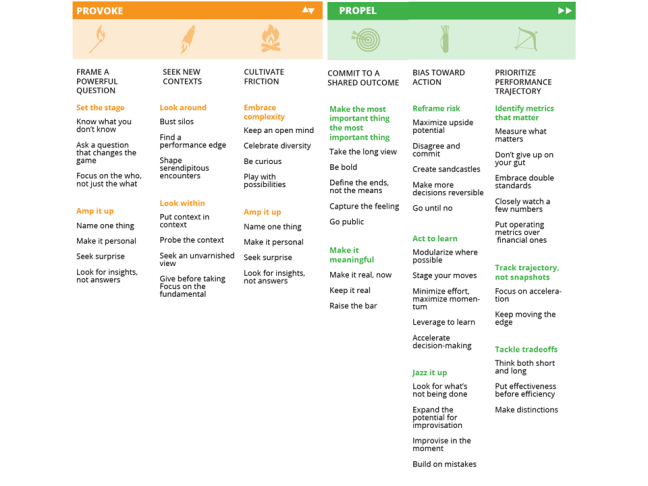
  2. Thinking of performance improvement too narrowly, focused only on costs. Process dominated much of performance improvement efforts for the past several decades, focusing largely on the denominator of the financial ratio of revenues to costs. But costs can be cut only so far, and technology-based process efficiencies can be quickly competed away, especially at a time when the changing environment and shifting customer expectations are making many standardized processes quickly obsolete. Further reductions can become harder to achieve and have less impact. The relevant performance might be more about an organization’s ability to create significant new value. Workers across an organization regularly encounter new needs, new tools for meeting needs, and opportunities to identify new ways of delivering more value and impact in multiple dimensions, including helping other parts of the organization generate more value. The potential for value creation isn’t confined to certain roles or functions, and is bounded primarily by an organization’s ability to create new knowledge and creatively address new problems. Focusing on new value creation may be the key to getting on a trajectory of accelerating performance improvement. Doing so would require an organization to move beyond efficiency and standardization and begin focusing on cultivating the behaviors—such as experimentation and reflection to make sense of what has been learned—associated with new value creation.
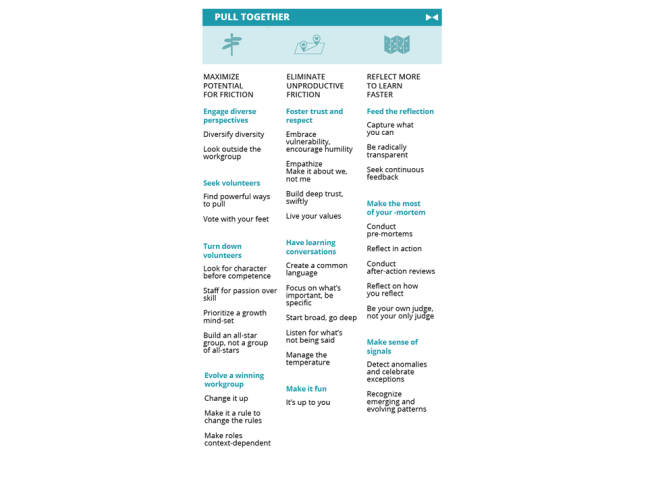
  3. Thinking of performance improvement at the wrong level. Most organizations manage performance where they measure it—which is to say where they have data: broadly, for the department and organization, and narrowly, for the individual. Both levels can miss where work, especially value-creating work, increasingly gets done: in groups. As a result, organizations can miss the opportunity to shape how work actually gets done. Focusing on performance where it matters most to the organization’s work might be a key to having a significant impact on the performance that matters.

The imperative to act seems simple: Today’s environment seems to offer no reprieve, no stabilization that gives us a chance to catch our breath and say, “OK, now we’ve got it figured out.” The methods and processes that led organizations to great success in the past seem to no longer be working. For sustained performance improvement, companies may need to change their focus and look in new directions.

Deloitte 1

Deloitte 2

Deloitte 3

Click here to access Deloitte’s detailed study

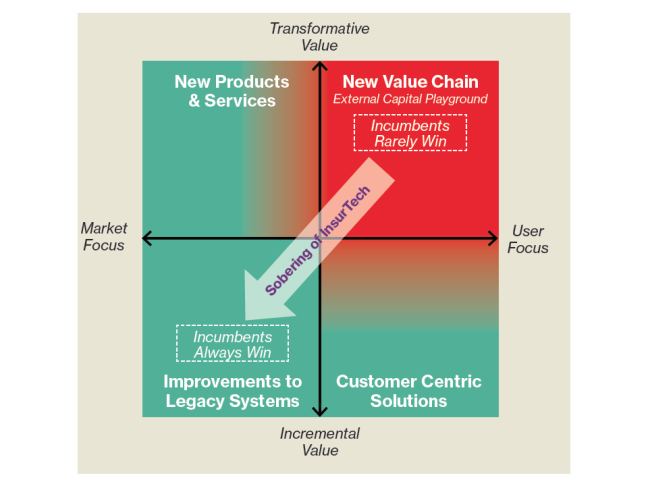
By investing heavily in start-ups and technology, (re)insurance companies appear to have assumed a semblance of control over the InsurTech revolution

Who Benefits from Modularization?

With technology moving forward at an unprecedented pace, incumbents are increasingly electing to outsource functions to highly specialized new entrants, renting evolving modules of technology that can be tailored to suit their individual needs. Though this approach may be more cost effective, it further fuels the question of whether incumbents will allow value in the industry to shift towards new entrants. In time, market participants will come to understand which module in the chain generates the most value. It is plausible that automation in distribution will shift value towards efficiency of internal processes that support cutting-edge modeling and underwriting engines.

InsT0

The State of InsurTech

InsurTech funding volume increased 36% year-over-year in 2017, demonstrating that technology driven innovation remains a core focus area for (re)insurance companies and investors heading into 2018. However, perhaps contrary to many of the opinions championed in editorial and press coverage of the InsurTech sector, further analysis of the growing number of start-ups successfully attracting capital from (re)insurers and financial investors reveals that the majority of InsurTech ventures are not focused on exiling incumbents by disrupting the pressured insurance value chain. According to research from McKinsey & Company,

  • 61% of InsurTech companies aim to enable the value chain,
  • 30% are attempting to disintermediate incumbents from customers
  • 9% are targeting full scale value chain disruption.

Has the hype surrounding InsurTech fostered unjustified fear from overly defensive incumbents?

We have taken this analysis a step further by tracking funding volume from strategic (re)insurers versus financial investors for InsurTechs focused on enabling the value chain relative to their counterparts attempting to disintermediate customers from incumbents or disrupt the value chain altogether and found that 65% of strategic (re)insurer InsurTech investments have been concentrated in companies enabling the value chain, with only 35% of incumbent investments going to start-ups with more disruptive business models. What does it mean? While recognizing the subjective nature of surmising an early stage company’s ultimate industry application at maturity from its initial focus, we attribute this phenomenon to the tendency of incumbents to, consciously or subconsciously, encourage development of less perceptibly threatening innovation while avoiding more radical, potentially intimidating technologies and applications.

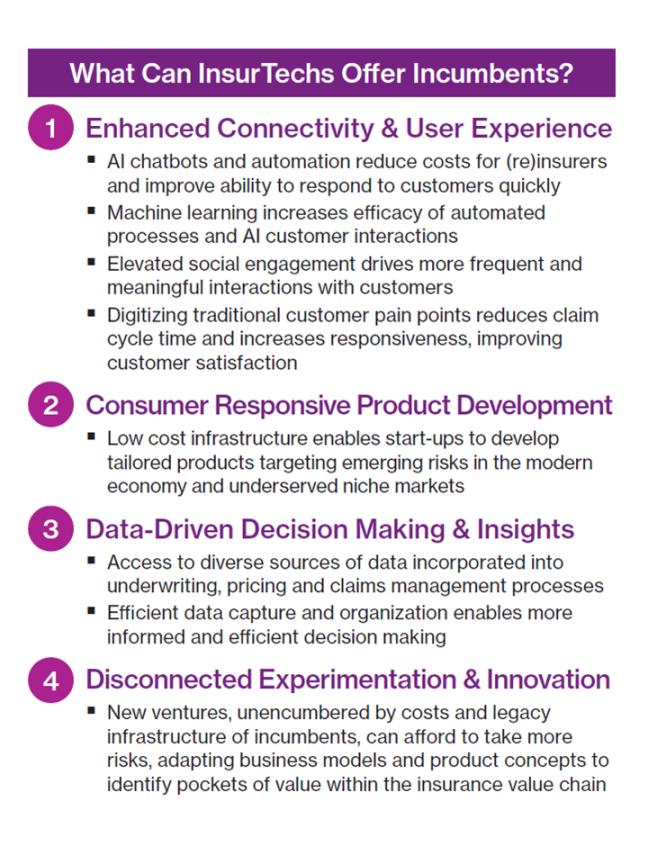
Recognizing that this behavior may allow incumbents to preserve a palatable status quo, it should be considered in the context in which individual investments are evaluated – on the basis of expected benefits relative to potential risk. We have listed several benefits that InsurTechs offer to incumbents :

InsT1

Segmenting the InsurTech Universe

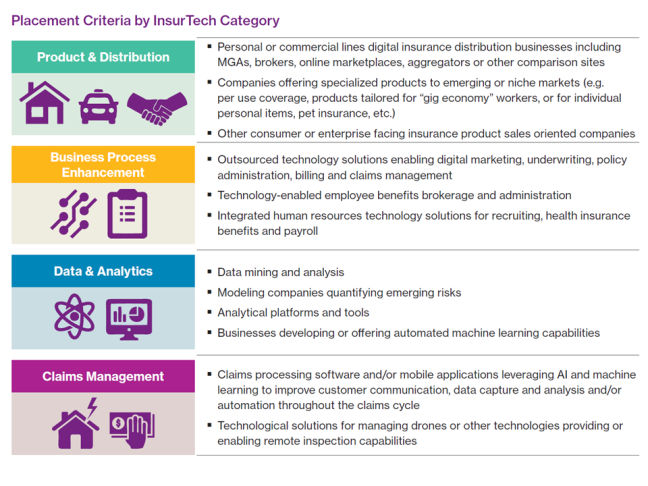
As InsurTech start-ups continue to emerge across the various components of the insurance value chain and business lines, incumbents and investors are evaluating opportunities to deploy these applications in the insurance industry today and in the future. To simplify the process of identifying useful and potentially transformational technologies and applications, we have endeavored to segment the increasingly broad universe of InsurTech companies by their core function into four categories:

  1. Product & Distribution
  2. Business Process Enhancement
  3. Data & Analytics
  4. Claims Management

This exercise is complicated by the tendency of companies to operate across multiple functions, so significant professional judgment was used in determining the assignment for each company. A summary of the criteria used to determine placement is listed below. On the following pages, we have included market maps to provide a high level perspective of the number of players in each category, as well as a competitive assessment of each subsector and our expectations for each market going forward. Selected companies in each category, ranked by the amount of funding they have raised to date, are listed, followed by more detailed overviews and Q&A with selected representative companies from each subsector.

InsT2

Click here to access WTW’s detailed birefing

2018 AI predictions – 8 insights to shape your business strategy

  1. AI will impact employers before it impacts employment
  2. AI will come down to earth—and get to work
  3. AI will help answer the big question about data
  4. Functional specialists, not techies, will decide the AI talent race
  5. Cyberattacks will be more powerful because of AI—but so
    will cyberdefense
  6. Opening AI’s black box will become a priority
  7. Nations will spar over AI
  8. Pressure for responsible AI won’t be on tech companies alone

Key implications

1) AI will impact employers before it impacts employment

As signs grow this year that the great AI jobs disruption will be a false alarm, people are likely to more readily accept AI in the workplace and society. We may hear less about robots taking our jobs, and more about robots making our jobs (and lives) easier. That in turn may lead to a faster uptake of AI than some organizations are expecting.

2) AI will come down to earth—and get to work

Leaders don’t need to adopt AI for AI’s sake. Instead, when they look for the best solution to a business need, AI will increasingly play a role. Does the organization want to automate billing, general accounting and budgeting, and many compliance functions? How about automating parts of procurement, logistics, and customer care? AI will likely be a part of the solution, whether or not users even perceive it.

3) AI will help answer the big question about data

Those enterprises that have already addressed data governance for one application will have a head start on the next initiative. They’ll be on their way to developing best practices for effectively leveraging their data resources and working across organizational boundaries. There’s no substitute for organizations getting their internal data ready to support AI and other innovations, but there is a supplement: Vendors are increasingly taking public sources of data, organizing it into data lakes, and preparing it for AI to use.

4) Functional specialists, not techies, will decide the AI talent race

Enterprises that intend to take full advantage of AI shouldn’t just bid for the most brilliant computer scientists. If they want to get AI up and running quickly, they should move to provide functional specialists with AI literacy. Larger organizations should prioritize by determining where AI is likely to disrupt operations first and start upskilling there.

5) Cyberattacks will be more powerful because of AI—but so will cyberdefense

In other parts of the enterprise, many organizations may choose to go slow on AI, but in cybersecurity there’s no holding back: Attackers will use AI, so defenders will have to use it too. If an organization’s IT department or cybersecurity provider isn’t already using AI, it has to start thinking immediately about AI’s short- and long-term security applications. Sample use cases include distributed denial of service (DDOS) pattern recognition, prioritization of log alerts for escalation and investigation, and risk-based authentication. Since even AI-wary organizations will have to use AI for cybersecurity, cyberdefense will be many enterprises’ first experience with AI. We see this fostering familiarity with AI and willingness to use it elsewhere. A further spur to AI acceptance will come from its hunger for data: The greater AI’s presence and access to data throughout an organization, the better it can defend against cyberthreats. Some organizations are already building out on-premise and cloud-based “threat lakes,” that will enable AI capabilities.

6) Opening AI’s black box will become a priority

We expect organizations to face growing pressure from end users and regulators to deploy AI that is explainable, transparent, and provable. That may require vendors to share some secrets. It may also require users of deep learning and other advanced AI to deploy new techniques that can explain previously incomprehensible AI. Most AI can be made explainable—but at a cost. As with any other process, if every step must be documented and explained, the process becomes slower and may be more expensive. But opening black boxes will reduce certain risks and help establish stakeholder trust.

7) Nations will spar over AI

If China starts to produce leading AI developments, the West may respond. Whether it’s a “Sputnik moment” or a more gradual realization that they’re losing their lead, policymakers may feel pressure to change regulations and provide funding for AI. More countries should issue AI strategies, with implications for companies. It wouldn’t surprise us to see Europe, which is already moving to protect individuals’ data through its General Data Protection Regulation (GDPR), issue policies to foster AI in the region.

8) Pressure for responsible AI won’t be on tech companies alone

As organizations face pressure to design, build, and deploy AI systems that deserve trust and inspire it, many will establish teams and processes to look for bias in data and models and closely monitor ways malicious actors could “trick” algorithms. Governance boards for AI may also be appropriate for many enterprises.

AI PWC

Click here to access PWC’s detailed predictions report


Technology Driven Value Generation in Insurance

The evolution of financial technology (FinTech) is reshaping the broader financial services industry. Technology is now disrupting the traditionally more conservative insurance industry, as the rise of InsurTech revolutionises how we think about insurance distribution.

Moreover, insurance companies are improving their operating models, upgrading their propositions, and developing innovative new products to reshape the insurance industry as a whole.

Five key technologies are driving the change today:

  1. Cloud computing
  2. The Internet of Things (including telematics)
  3. Big data
  4. Artificial intelligence
  5. Blockchain

This report examines these technologies’ potential to create value in the insurance industry. It also examines how technology providers could create new income streams and take advantage of economies of scale by offering their technological backbones to participants in the insurance industry and beyond.

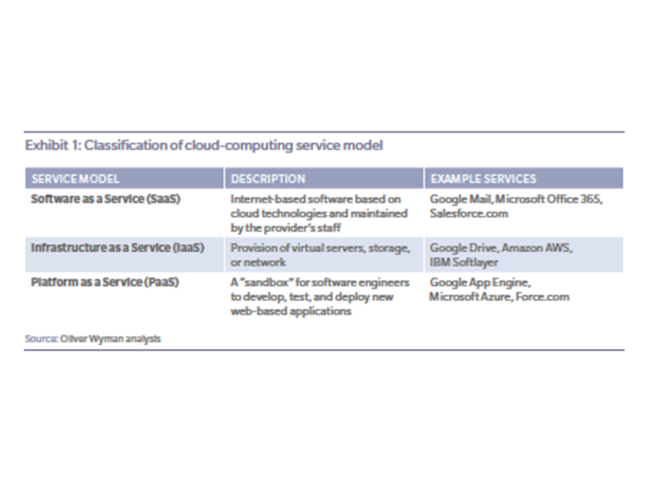
Cloud computing refers to storing, managing, and processing data via a network of remote servers, instead of locally on a server or personal computer. Key enablers of cloud computing include the availability of high-capacity networks and service-oriented architecture. The three core characteristics of a cloud service are:

  • Virtualisation: The service is based on hardware that has been virtualised
  • Scalability: The service can scale on demand, with additional capacity brought online within minutes
  • Demand-driven: The client pays for the services as and when they are needed
cloud

Telematics is the most common form of the broader Internet of Things (IoT). The IoT refers to the combination of physical devices, vehicles, buildings and other items embedded with electronics, software, sensors, actuators, and network connectivity that enable these physical objects to collect and exchange data.

The IoT has evolved from the convergence of

  • wireless technologies,
  • micro-electromechanical systems,
  • and the Internet.

This convergence has helped remove the walls between operational technology and information technology, allowing unstructured, machine-generated data to be analysed for insights that will drive improvements.
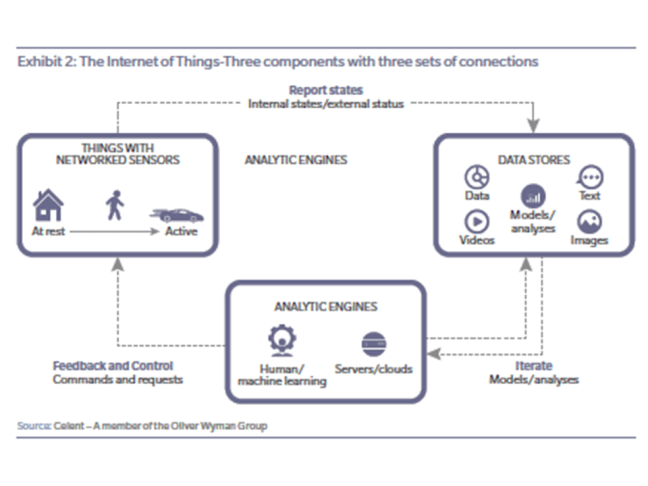
IoT

Big data refers to data sets that are so large or complex that traditional data processing application software is insufficient to deal with them. A definition refers to the “five V” key challenges for big data in insurance:

  • Volume: As sensors cost less, the amount of information gathered will soon be measured
    in exabytes
  • Velocity: The speed at which data is collected, analysed, and presented to users
  • Variety: Data can take many forms, such as structured, unstructured, text or multimedia. It can come from internal and external systems and sources, including a variety
    of devices
  • Value: Information provided by data about aspects of the insurance business, such as customers and risks
  • Veracity: Insurance companies ensure the accuracy of their plethora of data

Modern analytical methods are required to process these sets of information. The term “big data has evolved to describe the quantity of information analysed to create better outcomes, business improvements, and opportunities that leverage all available data. As a result, big data is not limited to the challenges thrown up by the five Vs. Today there are two key aspects to big data:

  1. Data: This is more-widely available than ever because of the use of apps, social media, and the Internet of Things
  2. Analytics: Advanced analytic tools mean there are fewer restrictions to working with big data
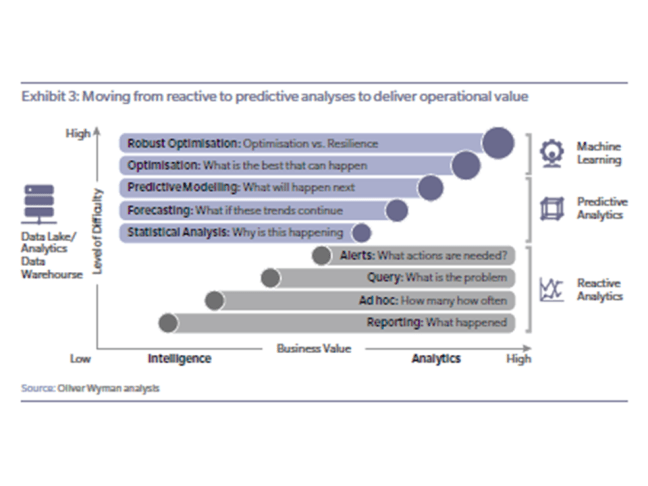
BigData

The understanding of Artificial Intelligence AI has evolved over time. In the beginning, AI was perceived as machines mimicking the cognitive functions that humans associate with other human minds, such as learning and problem solving. Today, we rather refer to the ability of machines to mimic human activity in a broad range of circumstances. In a nutshell, artificial intelligence is the broader concept of machines being able to carry out tasks in a way that we would consider smart or human.

Therefore, AI combines the reasoning already provided by big data capabilities such as machine learning with two additional capabilities:

  1. Imitation of human cognitive functions beyond simple reasoning, such as natural language processing and emotion sensing
  2. Orchestration of these cognitive components with data and reasoning

A third layer is pre-packaging generic orchestration capabilities for specific applications. The most prominent such application today are bots. At a minimum, bots orchestrate natural language processing, linguistic technology, and machine learning to create systems which mimic interactions with human beings in certain domains. This is done in such a way that the customer does not realise that the counterpart is not human.

Blockchain is a distributed ledger technology used to store static records and dynamic transaction data distributed across a network of synchronised, replicated databases. It establishes trust between parties without the use of a central intermediary, removing frictional costs and inefficiency.

From a technical perspective, blockchain is a distributed database that maintains a continuously growing list of ordered records called blocks. Each block contains a timestamp and a link to a previous block. Blockchains have been designed to make it inherently difficult to modify their data: Once recorded, the data in a block cannot be altered retroactively. In addition to recording transactions, blockchains can also contain a coded set of instructions that will self-execute under a pre-specified set of conditions. These automated workflows, known as smart contracts, create trust between a set of parties, as they rely on pre-agreed data sources and and require not third-party to execute them.

Blockchain technology in its purest form has four key characteristics:

  1. Decentralisation: No single individual participant can control the ledger. The ledger
    lives on all computers in the network
  2. Transparency: Information can be viewed by all participants on the network, not just
    those involved in the transaction
  3. Immutability: Modifying a past record would require simultaneously modifying every
    other block in the chain, making the ledger virtually incorruptible
  4. Singularity: The blockchain provides a single version of a state of affairs, which is
    updated simultaneously across the network
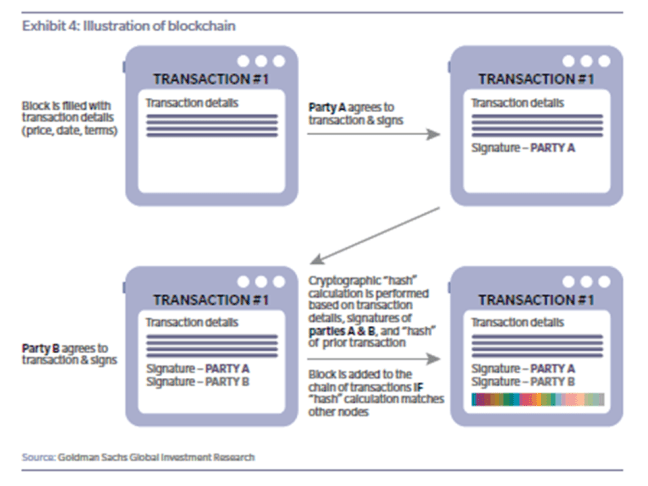
Blockchain

Oliver Wyman, ZhongAn Insurance and ZhongAn Technology – a wholly owned subsidiary of ZhongAn insurance and China’s first online-only insurer – are jointly publishing this report to analyse the insurance technology market and answer the following questions:

  • Which technologies are shaping the future of the insurance industry? (Chapter 2)
  • What are the applications of these technologies in the insurance industry? (Chapter 3)
  • What is the potential value these applications could generate? (Chapter 3)
  • How can an insurer with strong technology capabilities monetise its technologies?
    (Chapter 4)
  • Who is benefiting from the value generated by these applications? (Chapter 5)


Click here to access Oliver Wyman’s detailed report

Insurance Data Integrated Platform

The insurance industry today is poised for a paradigm shift in the way that technology is deployed to provide products and services to customers. This has primarily been driven by changing business needs and the innovations brought about by myriad insuretech firms, leading to an inevitable shift towards adopting the new digital innovations.

Analysts have forecast significant investments geared towards the digitalization of the industry and expect such investments to continue pouring in for several years. It is also expected that an increasing number of new insurance companies will be driven by technology companies to bring better products, services, and customer service in the insurance industry.

A forward-looking plan of action, sufficient operational flexibility, an effective implementation strategy, and a willingness to adopt digital disruptions in every aspect of their organization – those insurers that have all of the above can position themselves to leverage the impending digital disruptions to propel their organization to the very forefront of the industry.

DEALING WITH THE DIGITALIZATION OF THE INSURANCE INDUSTRY

These adopters of digital technology will have a clear upper hand against their competition. Suitably equipped to cut costs and design more attractive offerings, the digital insurance carriers are sure to acquire a whole new set of customers, thus increasing market share. Those who fail to quickly adopt the new technologies, on the other hand, will struggle to maintain their competitive positions in the midst of a customer-centric, price-sensitive market.

Data has always been at the center of the insurance industry, and despite the changes that are to come, data will continue to be the focal point of the industry. In fact, it’s set to play a bigger role to play than ever before.

The continued criticality of data in the insurance landscape is ensured by carriers’ need for information-driven strategies in the digitalized business scenario. They’ll have to leverage data as an asset, enabling automated decision-making in critical business processes, in order to thrive. This, in turn, is why a digital business technology platform – one that incorporates information management and analytical capabilities – will become a necessity in the future.

Without a system in place to support the analytics and reporting needs of the business, decision-makers may be left with no choice but to rely on conventional time-consuming manual processes those are more qualitative rather than quantitative in nature. This is bound to cause serious repercussions for the organization, ultimately resulting in missed opportunities and loss of competitiveness.

According to a Gartner study, the two following technology platforms are essential for any digital business:

  1. Data and analytics platform – This platform should consist of data management programs and analytics applications to enable data-driven decision making
  2. Ecosystems platform – This platform’s role should be to support the creation of and connection to external ecosystems, marketplaces, and communities

MFX


Click here to access MFX’s detailed White Paper


Digital Strategy and Transformation

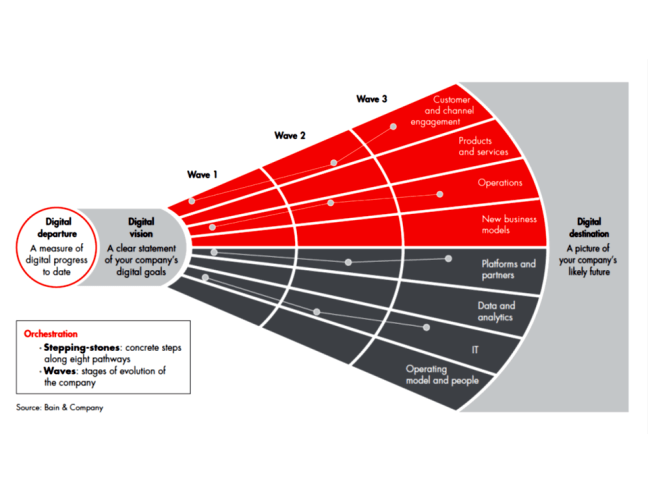
Digital Strategy for a B2B World

It’s easy to see why so many view companies like Uber, Amazon and Google as the business models of the future. They’ve redefined their industries. They’ve rewired the customer experience. They’re not afraid to fail fast, learn from mistakes and make the changes necessary to stay well ahead of the market.

None of this is news to leaders of industrial and other business-to-business (B2B) companies. But these executives also know full well that what works in the consumer realm doesn’t always translate in a B2B context. Failing fast? That’s problematic in industries such as chemical processing or offshore drilling, where the smallest mistake can trigger epic disaster. Moving quickly? We’ll get back to you when our channel partners get back to us.

Redefining the industry? Easier said than done in a business like aviation, where many stakeholders operate in a complex, interdependent ecosystem. The truth is B2B is different than business-to-consumer (B2C) when it comes to digital strategy, and it requires a different approach. There are many lessons to be learned from digital innovators like Amazon, and the opportunities are very real. But simple comparisons to what works for these digital standouts aren’t always useful in an industrial setting and often come off as naive or impractical, feeding the notion that digital is more hype than reality. This gets in the way of deciding how digital can, in fact, transform important parts of a business and makes it hard to create alignment around the right path forward.

Digital Destination

Click here to access BAIN_BRIEF-Digital_Strategy_for_a_B2B_World

Digitalization in Insurance: The Multibillion Dollar Opportunity

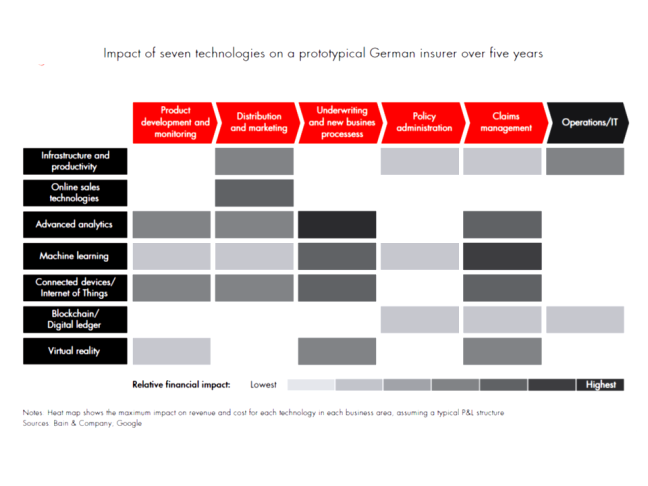
The business of property and casualty insurance— assessing risk, collecting premiums and paying claims— hasn’t changed much since 1861, when a group of underwriters sold the first policies to protect London homeowners against losses from fire. Recently, though, the insurance industry has embarked on a radical transformation, one spurred by a series of digital innovations whose widespread adoption is just a few years away. Bain & Company and Google have identified seven key technologies—namely,

  • infrastructure and productivity,
  • online sales technologies,
  • advanced analytics,
  • machine learning,
  • the Internet of Things,
  • distributed ledger
  • and virtual reality

—that have already begun to disrupt the industry and whose impact will accelerate in the next three to five years. These new technologies are likely to be a boon for consumers, bringing more choice, better service and lower prices.

For those insurers ready to seize the initiative, digitalization presents an immense opportunity. The companies that stand to benefit the most are those that use the impetus of digitalization to rethink all their operations, from underwriting to customer service to claims management. The impact on both revenues and costs can be enormous. An analysis by Bain and Google shows that a prototypical P&C insurer in Germany that implemented these technologies could increase its revenues by up to 28% within five years, reduce claims payouts by as much 19% and cut policy administration costs by as much as 72%.

These pioneers in digital technology can gain an edge over their rivals by becoming more effective and efficient. They’ll be able to trim costs and pass on those savings to their customers, thereby winning new business and gaining market share. The digital laggards, by contrast, will find themselves fighting an intensified price war and scrambling to protect their competitive positions.

Digital P&C

Click here to access BAIN_BRIEF_Digitalization_in_Insurance

Six IT Design Rules for Digital Transformation

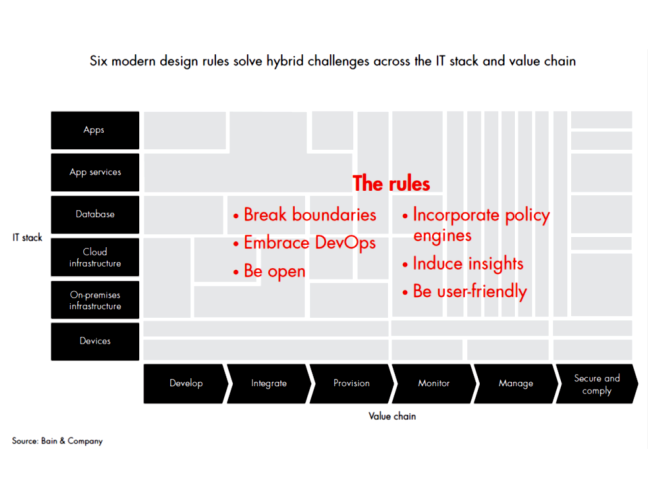
Superior performance in the digital age calls for an adaptable technology infrastructure that manages the complexities of a multicloud environment, embedded security and compliance policies, and deep business alignment. Best-in-class IT operations and the software vendors that support them are adopting a playbook based on six core rules for IT design.

  1. Break boundaries across IT stacks. Given that companies are unlikely to achieve complete migration to the public cloud anytime soon, CIOs need monitoring, discovery and confi guration tools that function in hybrid, multicloud environments as well as up and down the stack, from legacy systems to consumer-facing apps.
  2. Embrace DevOps. As firms increase the cadence of their digital offerings, they have no choice but to integrate software development and IT operations. Already, as many as 60% of enterprises are using or planning to use a DevOps approach to building and installing software, according to a survey by Gartner. Modern IT organizations require software that works across the production chain and that’s designed for rapid testing and validation.
  3. Be open. No modern solution can be an island. As designers produce focused, best-in-class solutions instead of massive monolithic systems, openness becomes critical. Companies need modular, opensource and application-program-interface–friendly software that is designed for easy extensibility and integration with other apps. CIOs expect to be able to combine the capabilities of their disparate systems to serve new needs.
  4. Incorporate policy engines. Cost pressures have driven CIOs to seek to automate their IT operations. They want to escape the massive manual efforts that they currently rely on to monitor policies, including compliance, data governance and security rules. They need solutions that have builtin logic to identify and remediate against rules in order to enable policy management across a hybrid infrastructure.
  5. Induce insights. As digital apps proliferate, companies are becoming fl ooded with an abundance of data—some of it useful, some of it not. CIOs need analytical tools that use techniques such as machine learning to glean insights from disparate sources.
  6. Insist on user-friendly experiences and tools. In a complex world, IT professionals are demanding intuitive, easy-to-use software. They are no longer satisfied with hard-to-master, second-rate applications; they want a consumer-level user experience. They need solutions that are software-as-a-service (SaaS) capable, simple to install and have immediate, out-of-the-box functionality.

IT Transformation

Click here to access BAIN_BRIEF_Six_IT_Design_Rules_for_Digital_Transformation