The Prudential Regulation Authority’s approach to insurance supervision

UK’s Insurance Supervisory Body PRA just published a very interesting paper describing it’s purpose and it’s working principles. Even if Bexit will exclude PRA from EIOPA associated supervisory bodies, this paper should be considered as being landmark as most of the EIOPA associated bodies didn’t go this way of transparency and methodology yet, despite EIOPA having set a framework at least for some of these issues, crucial for insurers to manage thair risk and capital requirements.

« We, the Prudential Regulation Authority (PRA), as part of the Bank of England (‘the Bank’), are the UK’s prudential regulator for deposit-takers, insurance companies, and designated investment firms.

This document sets out how we carry out our role in respect of insurers. It is designed to help regulated firms and the market understand how we supervise these institutions, and to aid accountability to the public and Parliament. The document acts as a standing reference that will be revised and reissued in response to significant legislative and other developments which result in changes to our approach.

This document serves three purposes.

  1. First, it aids accountability by describing what we seek to achieve and how we intend to achieve it.
  2. Second, it communicates to regulated insurers what we expect of them, and what they can expect from us in the course of supervision.
  3. Third, it is intended to meet the statutory requirement for us to issue guidance on how we intend to advance our objectives.

It sits alongside our requirements and expectations as published in the PRA Rulebook and our policy publications.

EU withdrawal

Our approach to advancing these objectives will remain the same as the UK withdraws from the EU. Our main focus is on trying to ensure that the transition to our new relationship with the EU is as smooth and orderly as possible in order to minimise risks to our objectives.

Our approach to advancing our objectives

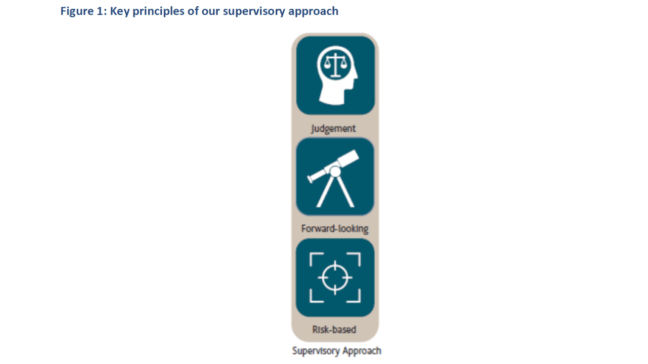
To advance our objectives, our supervisory approach follows three key principles – it is:

  1. judgement-based;
  2. forward-looking; and
  3. focused on key risks.

Across all of these principles, we are committed to applying the principle of proportionality in our supervision of firms.
PRA1

Identifying risks to our objectives

The intensity of our supervisory activity varies across insurers. The level of supervision principally reflects our judgement of an insurer’s potential impact on policyholders and on the stability of the financial system, its proximity to failure (as encapsulated in the Proactive Intervention Framework (PIF), which is described later), its resolvability and our statutory obligations. Other factors that play a part include the type of business carried out by the insurer and the complexity of the insurer’s business and organisation.

Our risk framework

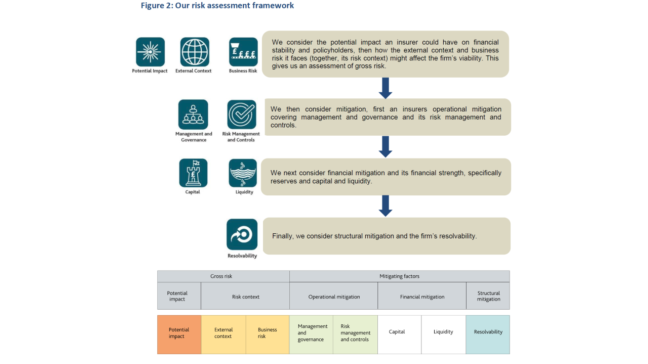
We take a structured approach when forming our judgements. To do this we use a risk assessment framework. The risk assessment framework for insurers is the same as for banks, but is used in a different way, reflecting our additional objective to contribute to securing appropriate policyholder protection, the different risks to which insurers are exposed, and the different way in which insurers fail.

Much of our proposed approach to the supervision of insurers is designed to deliver the supervisory activities which the UK is required to carry out under Solvency II.

The key features of Solvency II are:

  • market-consistent valuation of assets and liabilities;
  • high quality of capital;
  • a forward-looking and risk-based approach to setting capital requirements;
  • minimum governance and effective risk management requirements;
  • a rigorous approach to group supervision;
  • a Ladder of Intervention designed to ensure intervention by us in proportion to the risks that a firm’s financial soundness poses to its policyholders;
  • and strong market discipline through firm disclosures.

Some insurers fall outside the scope of the Solvency II Directive (known as non-Directive firms), mainly due to their size. These firms should make themselves familiar with the requirements for non-Directive firms.
PRA2

Supervisory activity

This section describes how, in practice, we supervise insurers, including information on our highest decision-making body and our approach to authorising new insurers. As part of this, it describes the Proactive Intervention Framework (PIF) and our high-level approach to using our legal powers. For UK insurers, our assessment covers all entities within the consolidated group.

PRA3

Proactive Intervention Framework (PIF)

Supervisors consider an insurer’s proximity to failure when drawing up a supervisory plan. Our judgement about proximity to failure is captured in an insurer’s position within the PIF.

Judgements about an insurer’s proximity to failure are derived from those elements of the supervisory assessment framework that reflect the risks faced by an insurer and its ability to manage them, namely, external context, business risk, management and governance, risk management and controls, capital, and liquidity. The PIF is not sensitive to an insurer’s potential impact or resolvability.

The PIF is designed to ensure that we put into effect our aim to identify and respond to emerging risks at an early stage. There are five PIF stages, each denoting a different proximity to failure, and every insurer sits in a particular stage at each point in time. When an insurer moves to a higher PIF stage (ie as we determine the insurer’s viability has deteriorated), supervisors will review their supervisory actions accordingly. Senior management of insurers will be expected to ensure that they take appropriate remedial action to reduce the likelihood of failure and the authorities will ensure appropriate preparedness for resolution. The intensity of supervisory resources will increase if we assess an insurer has moved closer to breaching Threshold Conditions, posing a risk of failure and harm to policyholders.

An insurer’s PIF stage is reviewed at least annually and in response to relevant, material developments. (…) »
Click here to access PRA’s detailed paper

How the Distinct Roles of Internal Audit and the Finance Function Drive Good Governance

How the Distinct Roles of Internal Audit and the Finance Function Drive Good Governance

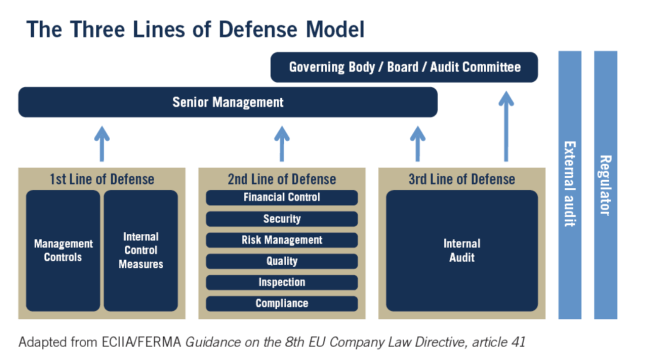
Effective governance involves many individuals and departments throughout an organization, including the Board of Directors, executive management, finance, and internal audit, among others. Yet each of these groups has a different set of skills and responsibilities. To successfully identify and manage risk, they must come together to create and maintain a sound system of corporate governance.

The insights shared here by 11 governance experts offer important perspective as to how finance and internal audit collaborate to support corporate governance, despite their distinct and separate missions.

Interviewees provided perceptions and experiences and shared best practices, as well as challenges, that they have encountered on their quest to achieve effective governance. These contributors come from organizations around the world that differ in size, industry, and management configurations. Several experienced governance from within both the finance function and internal audit.

A few shared perceptions include:

  • The Board of Directors is responsible for setting the proper tone for the organization;
  • It is critical to purposefully develop a consistent culture throughout the organization, driven by the CEO and senior management; and
  • Communication and coordination across complementary functions is vital.

Keys To Achieving Good Governance

There are many different definitions of governance. According to The Institute of Internal Auditors (hereafter The IIA), governance is “the combination of processes and structures implemented by the board in order to inform, direct, manage and monitor the activities of the organization toward the achievement of its objectives.

The International Federation of Accountants (hereafter IFAC) uses a slightly different definition which focuses more on the creation of strategic objectives and stakeholder value, “Governance is to create and optimize sustainable organizational success and stakeholder value, balancing the interests of the various stakeholders. It comprises arrangements put in place to ensure that organizations define and achieve intended outcomes.

Both definitions suggest that good governance and the achievement of organizational success are not the responsibility of the Board alone, but rather the outcome of a mosaic of organizational policies, processes, and cross-functional interactions.

When asked to provide the key objectives of governance, interviewees shared a number of different perspectives. Most frequently, good governance was defined as representing the interests of stakeholders by setting appropriate objectives and driving a culture that supports them.

Three LoD

Click here to acces IFAC and IIA’s detailed article

Front Office Risk Management Technology

A complex tangle of embedded components

Over the past three decades, Front Office Risk Management (FORM) has developed in a piecemeal way. As a result of historical business drivers and the varying needs of teams focused on different products within banks, FORM systems were created for individual business silos, products and trading desks. Typically, different risk components and systems were entwined and embedded within trading systems and transaction processing platforms, and ran on different analytics, trade capture and data management technology. As a result, many banks now have multiple, varied and overlapping FORM systems.

Increasingly, however, FORM systems are emerging as a fully fledged risk solution category, rather than remaining as embedded components inside trading systems or transactional platforms (although those components still exist). For many institutions FORM, along with the frontoffice operating environment, has fundamentally changed following the global financial crisis of 2008. Banks are now dealing with a wider environment of systemically reduced profitability in which cluttered and inefficient operating models are no longer sustainable, and there are strong cost pressures for them to simplify their houses.

Equally, a more stringent and prescriptive regulatory environment is having significant direct and indirect impacts on front-office risk technology. Because of regulators’ intense scrutiny of banks’ capital management, the front office is continuously and far more acutely aware of its capital usage (and cost), and this is having a fundamental impact on the way the systems it uses are evolving. The imperative for risk-adjusted pricing means that traditional trading systems are struggling to cope with the growing importance of and demand for Valuation Adjustment (xVA) systems at scale. Meanwhile, regulations such as the Fundamental Review of the Trading Book (FRTB) will have profound implications for frontoffice risk systems.

As a result of these direct and indirect regulatory pressures, several factors are changing the frontoffice risk technology landscape:

  • The scale and complexity involved in data management.
  • Requirements for more computational power.
  • The imperative for integration and consistency with middle-office risk systems.

Evolving to survive

As banks recognize the need for change, FORM is slowly but steadily evolving. Banks can no longer put off upgrades to systems that were built for a different era, and consensus around the need for a flexible, cross-asset, externalized front-office risk system has emerged.

Over the past few years, most Tier 1 and Tier 2 banks have started working toward the difficult goal of

  • standardizing,
  • consolidating
  • and externalizing

their risk systems, extracting them from trading and transaction processing platforms (if that’s where they existed). These efforts are complicated by the nature of FORM – specifically that it cuts across several functional areas.

Vendors, meanwhile, are struggling with the challenges of meeting the often contradictory nature of front-office demands (such as the need for flexibility vs. scalability). As the frontoffice risk landscape shifts under the weight of all these demand-side changes, many leading vendors have been slow to adapt to the significant competitive challenges. Not only are they dealing with competition from new market entrants with different business models, in many instances they are also playing catch-up with more innovative Tier 1 banks. What’s more, the willingness to experiment and innovate with front-office risk systems is now filtering down to Tier 2s and smaller institutions across the board. Chartis is seeing an increase in ‘build and buy’ hybrid solutions that leverage open-source and open-HPC2 infrastructure.

The rapid development of new technologies is radically altering the dynamics of the market, following several developments:

  • A wave of new, more focused tools.
  • Platforms that leverage popular computational paradigms.
  • Software as a Service (SaaS) risk systems.

More often than not, incumbent vendors are failing to harness the opportunities that these technologies and new open-source languages bring, increasing the risk that they could become irrelevant within the FORM sector. Chartis contends that, as the market develops, the future landscape will be dominated by a combination of agile new entrants and existing players that can successfully transform their current offerings. Vendors have many different strategies in evidence, but the evolution required for them to survive and flourish has only just begun.

With that in mind, we have outlined several recommendations for vendors seeking to stay relevant in the new front-office risk environment:

  • Above all, focus on an open, flexible environment.
  • Create consistent risk data and risk factor frameworks.
  • Develop highly standardized interfaces.
  • Develop matrices and arrays as ‘first-class constructs’.
  • Embrace open-source languages and ecosystems.
  • Consider options such as partnerships and acquisitions to acquire the requisite new skills and technology capabilities in a relatively short period of time.

Chartis

Click here to access Chartis’ Vendor Spotlight Report

Anlalytics Behind The Perfect Risk Score & Predictive Model

We are living in a progressively more connected world where smarter products and changing consumer expectations are disrupting nearly every industry. While the connected world is data intensive, complex to manage and challenging to harness, the opportunities for generating more value and new propositions are nearly endless.

Octo Telematics has invested in the development of algorithms and analytical tools to help our industry partners maximize opportunities from the connected world – and we continue to do so today. Through actionable intelligence based on the accurate analysis of data, industry partners can differentiate their products and services with innovative customer experiences.

In building globally recognized analytical capabilities to serve the global insurance marketplace, Octo Telematics acquired the usage-based insurance (UBI) assets of Willis Towers Watson, including its market-leading DriveAbility® solution. DriveAbility aggregates and analyses granular telematics and insurance data to provide an industry-leading driving score and assist insurers to design, score, issue and bind telematics-based insurance policies. It also facilitates relationships between stakeholders including automotive OEMs, telecommunication companies and insurers to present convenient, personalized insurance offers to customers using pre-analyzed driving data. Today, a strategic alliance with Willis Towers Watson on additional opportunities continues to enhance both companies’ suite of products and services.

Historically, insurance companies have made underwriting and pricing decisions based on static risk factors that are largely proxies for how, how much, when and where a vehicle is operated. By leveraging actual driving data, data scientists can build telematics-based risk scores that are significantly more predictive than any risk factor used by insurance companies today.

To get the full value from telematics, data scientists must have the right data and employ different techniques than those used for traditional actuarial analysis. Done correctly, insurers can create a score that provides

  • double-digit lift,
  • optimizes the lift above and beyond traditional factors
  • and identifies factors that cause accidents to happen.

Failure to follow best practices for model development will result in sub-optimal lift that makes the business case less compelling. Lift is just one factor that should be considered. To be truly effective, any risk score should also be transparent, cost-effective, flexible, implementable and acceptable to regulatory bodies. Even the most predictive scores may not be effective if they fail one or more of these categories.

Octo

Click here to access OCTO’s White Paper

Les besoins verticaux définissent la marche à suivre pour les transformations de produits numériques et les stratégies

Les initiatives de transformation numérique se déroulent différemment selon les secteurs verticaux et les entreprises, en fonction des besoins métiers en jeu. Lorsque les entreprises subissent des transformations numériques, elles se concentrent souvent sur

  • les processus informatiques,
  • les ventes et le marketing

avant le développement des produits. Cependant, ce rapport expliquera aux DSI et aux directeurs de la technologie comment les entreprises de différents secteurs verticaux utilisent l’organisation produits comme catalyseur de leur transformation numérique, et comment cette décision améliore leurs relations avec les clients.

Principales conclusions

Les sociétés de produits physiques se concentrent sur l’IoT

Pour les organisations produits physiques, l’étape évidente vers une entreprise numérique consiste souvent à connecter des produits et des actifs. Il s’agit d’une tâche complexe qui nécessite

  • une infrastructure technologique intégrée,
  • une grande compétence dans la connectivité et l’Internet des objets (IoT),
  • ainsi qu’une logique claire sur la façon dont les produits connectés répondront aux besoins de leurs clients.

Les sociétés de services construisent des plates-formes numériques orientées client

Les entreprises du secteur des services basculeront vers le commerce numérique grâce à des plateformes numériques axées sur la clientèle. Ces projets doivent être

  • faciles à utiliser,
  • évolutifs
  • et intégrés aux partenaires de l’écosystème

afin de créer de la valeur pour les clients.

Diapositive1

Cliquez ici pour accéder à l’analyse détaillée de Forrester

Taking Digital Regulatory Reporting from Concept to Reality

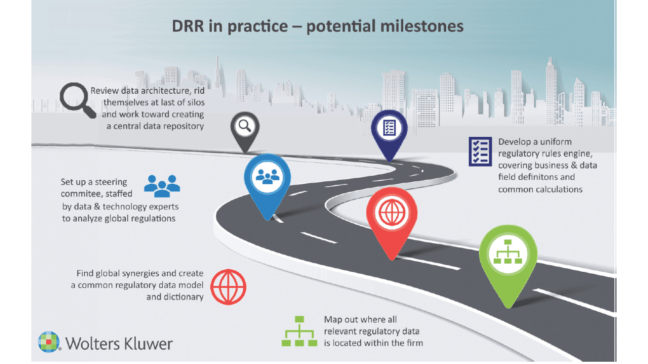
In its Digital Regulatory Reporting (DRR) project, the U.K. Financial Conduct Authority (FCA), in conjunction with the Bank of England, has invited financial institutions to explore ways to work smarter on these activities by delegating much of the hard work to technology. Success in the endeavour, as the FCA put it, “opens up the possibility of a model driven and machine readable regulatory environment that could transform and fundamentally change how the financial services industry understands, interprets and then reports regulatory information.

Part of the project’s work program was a twoweek “TechSprint,” held in November 2017, that was intended to test the feasibility of fully automated regulatory reporting with straightthrough processing of regulatory submissions. Among the anticipated benefits, accruing to financial institutions and regulators alike, are

  • greater accuracy in data submissions
  • and reduced time, cost and overall effort in generating them.

The TechSprint demonstrated that DRR could be accomplished under such controlled testing conditions and provided a proof of concept. Since then the program has held an extended pilot, as well as industry-led roundtable discussions bringing industry experts together, to try to determine whether and how DRR could be scaled up and put into practice in the real world.

The chief aim of the roundtables is to go over issues – legal, technological and regulatory – that could facilitate or impede the introduction of DRR. Participants in the latest and final one, held in London in June and hosted by Wolters Kluwer, seemed intent on contemplating the limitations of the concept: attempting to identify what a system might be able to do by acknowledging what it most likely will not be able to do.

One thorny matter that was highlighted involves a potential conflict between DRR, which participants generally agreed would be most effective following hard and fast rules – ideally by using a standardized model encompassing many supervisory frameworks employed across multiple jurisdictions – and the principles-based supervisory architecture that has evolved since the global financial crisis. If a substantial portion of the reporting process is handed over to machines, will management judgment be forced to take a back seat in matters of risk management, compliance and overall governance? Put another way, how compatible would DRR be with postcrisis supervisory architecture if interpretation of regulations by bankers is deemed a feature of the latter and a bug of the former?

Diapositive1

Click here to access Wolters Kluwers detailed analysis


Navigating the new world – Preparing for insurance accounting change (IFRS 17)

If implementation of the forthcoming insurance contracts standard is to reach the best possible outcome for your organization, we believe it needs to be seen as more than just a compliance exercise. This will entail

  • combining multiple strands into a common program,
  • identifying linkages
  • and addressing dependencies

across the business in a logical sequence and thinking strategically about possible effects on the organization and its stakeholders. A well-developed and ‘living’ plan assigns clear accountabilities and breaks down objectives into manageable tasks for delivery to realistic time-scales in order to establish an effective blue-print for success.

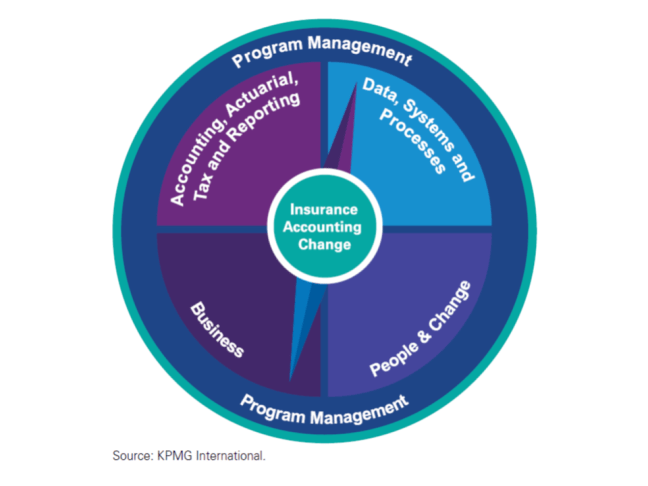
Our methodology groups activities into four manageable phases:

  1. assess the change
  2. design your response
  3. implement your design
  4. sustain your new practices, securely embedding them in business as usual.

Key success factors

Our experience shows us there are many factors that will contribute to successfully implementing insurance accounting change, including:

  1. Dedicated staff: In our experience the single biggest factor contributing to program success is the presence of full-time staff dedicated to the project, with a wide range of skills including data management, IT implementation and project management and who know your business.
  2. Spend sufficient time and energy on the initial impact phase: It is essential that an insurer plans for this critical phase and allows for sufficient time to perform a gap analysis on a line-by-line basis through the income statement and balance sheet and supports disclosures.
  3. Consider fundamental questions surrounding core business drivers: earnings trends, growth opportunities and target operating models. The earlier effects are identified, the more time an insurer will have to develop and implement a strategic response.
  4. Training staff: Many organizations underestimate the amount of personnel training required. Designing a comprehensive training strategy and program is highly complex and requires careful planning.
  5. Robust project planning: The plan must be achievable and continuously refined with formal tracking and monitoring.
  6. Clear communications: Communication needs to be both formal and informal and applied throughout the life of the program.
  7. Careful change management: IFRS conversion will lead to significant changes in how people do their jobs. Some of the biggest challenges have arisen when the cultural issues have not been acknowledged and addressed.
  8. More than just an accounting and actuarial project: Implementing the forthcoming insurance contracts project will undoubtedly be a multi-disciplinary effort.
    1. IT specialists consider the functionality of source systems and enterprise performance management (EPM) systems;
    2. Change management specialists focus on behavioral change and communication;
    3. specialists in commercial functions (tax, data management, executive incentives, etc.) bring a holistic approach to the program.

Robust project management helps to bring everything together coherently.

Assessing what the forthcoming standard will mean for you

Accounting, actuarial, tax and reporting

Q1. What are the key accounting, actuarial, tax and disclosure differences between our current generally accepted accounting principles (GAAP) and the new standards? What are the key decisions that need to be made by management regarding the alternative treatments that are available?

Data, systems and processes

Q2. What will the impact be for our data requirements, and on the systems and processes used for

  • data collection,
  • actuarial projections,
  • calculating and accruing interest on the contractual service margin
  • and consolidation and financial reporting systems?

Are there quick fixes that we can use? Can we leverage recent investments in infrastructure or will we need a major overhaul?

Q3. How will the group‘s close and other processes be impacted?

Business

Q4. What is the estimated directional impact on profit and equity and what are the key decisions and judgments that this will influence?

Q5. What are the key impacts for my business and how will these be influenced by the choices open to us? Who will need to understand results and metrics on the new basis?

People and change management

Q6. Who will be impacted by the conversion, what skills and resources are likely to be needed and what training needs can we identify?

Program management

Q7. What would a high-level conversion plan look like and what is its likely impact on resources?

IFRS17 3

Click here to access KPMG’s methodology paper

Accelerated evolution – M&A, transformation and innovation in the insurance industry

Strong appetite for deal activity

Today’s insurers know that maintaining the ‘status quo’ is not a recipe for sustainable growth. They feel the pressure of disruption in the market from

  • new competitors,
  • new technologies,
  • new customer demands
  • and new sources of capital.

They feel the pain of

  • continued low interest rates,
  • volatility in underwriting losses
  • and pressure on profitability,

as investment portfolio yields continue to decline.

Organic growth has been challenging across most of the mature insurance markets. Consider this: Since the start of this decade to 2016, global gross domestic product (GDP) increased by more than 20 percent. Yet the global premium market grew by just 9 percent over the same period. Insurers recognize that things must change if they want to maintain or grow their market share.

“In an era of anticipated disruption of legacy business and operating models, global insurance executives realize that their strategy cannot be about pursuing growth for growth’s sake. When it comes to growth strategy, more of the same is not necessarily the best answer. What may have been a core business in the past may not be in the future,” notes Ram Menon, KPMG’s Global Insurance Deal Advisory Leader.

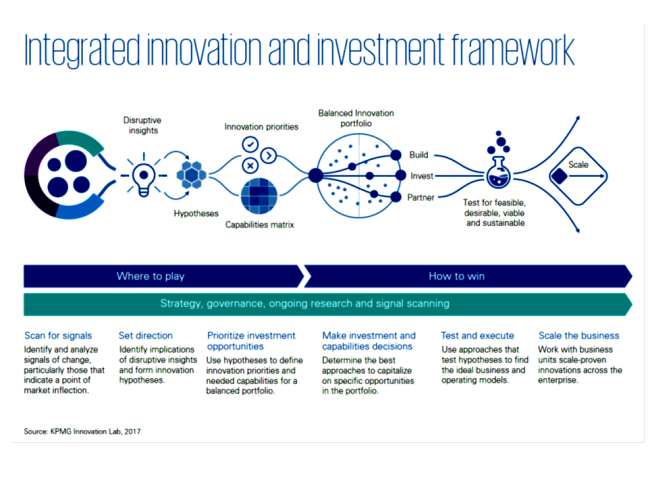
Today’s insurance leaders are taking a more strategic view of the value of M&A. According to a recent global survey of 115 insurance CEOs conducted by KPMG International, more than 60 percent of insurers now see disruption as more of an opportunity for growth than a threat. And they are using their capital and their M&A capabilities to maximize those opportunities — often by strategically deploying capital towards emerging technology as a competitive advantage to

  • engage customers,
  • generate cash flows
  • and enhance enterprise value.

The good news is that — for the most part — capital and surplus levels are at record highs across life, non-life and reinsurance markets. And most insurers plan to tap into that capital to make deals. In fact, our survey suggests that close to three-quarters of insurers expect to conduct an acquisition and two-thirds expect to seek partnership opportunities over the next 3 years. Eighty-one percent say they will conduct up to three acquisitions or partnerships in the same period. More than 70 percent said they are hoping their deals will help transform their organization in some way. As a top priority,

  • 37 percent hope to transform their business models,
  • 24 percent want to transform their operating models,
  • and 10 percent are looking to acquire new innovation capabilities and emerging technologies

through their acquisitions.

“Insurers increasingly recognize their days of operating business-as-usual numbered. And it’s not small changes market going to be undoing — big ones,” says Thomas Gross with KPMG Germany. Auto insurers, for example, looking at rapid adoption of mobility models and wondering how they add value when car manufacturers or leasers own relationship customer.”

On their path to transformation, insurance companies expect to strategically deploy capital against a range of specific inorganic growth opportunities:

  • transforming their business models for sustainable growth;
  • modernizing their operating models for profitable growth;
  • enhancing customer engagement;
  • and gaining access to innovation and emerging technologies.

“The top factor that will drive insurance acquisitions will be the need for emerging technologies. Insurance companies are all looking at how to put their operations on digital platforms in order to save time and resources both for the company and the customers,” notes the Head of Finance at a China-based property and casualty (P&C) insurer. At the same time, a significant number of insurers also hope to rebalance their portfolio of businesses. Many plan to evaluate whether they should fix or exit businesses that are struggling to achieve returns in excess of their longterm capital rates. This should allow them to remain focused on transforming businesses they consider core for the future while freeing up additional capital for reinvestment into new lines of business and technology capabilities.

As the director of finance at a UK-based non-life insurer notes, “Units that are consistently performing poorly will be segregated to further analyze their positions and whether or not they still fit in the company’s planned structure. We discourage force-fitting any product or company unless it has great potential for generating revenue. If it does not, we look for suitable buyers for the business.”

Our data indicates, insurance executives expect to exit non-core businesses, enter new markets and gain access to new technology infrastructure and operating capabilities via M&A and partnerships, as a way to further diversify their global risks and earnings profile.

Looking beyond the borders

Our survey suggests that the majority of insurers will be involved in some sort of non-domestic deal: 68 percent say they expect to conduct a cross-border acquisition, partnership or divestiture over the next 3 years. Just 32 percent say their top priority will be on domestic activity.

“Over a period of 3 years, we expect to see a lot of M&A transactions overseas. We are looking to expand into regions that are new for us and with acquisitions, you can get going without having to set up a base from scratch or encounter a lot of unforeseen risks,” notes the senior VP for M&A at a global insurance brokerage firm. Perhaps not surprisingly, our data suggests that insurers expect to see the most activity in North America — the US in particular. Given that the US is still the largest insurance market in the world with around 30 percent of the global premium market share, many insurers see the US as a source of steady market growth and relative premium stability.

“The volume of M&A in North America will increase the most in the coming years. With the new tax reforms, insurance companies will pay lower taxes — these new regulations will provide insurers opportunities to grow. Companies from other markets will also want to take advantage of the lower tax rate and will look for ways to expand into the US market,” suggested the CFO at a Bermuda-based reinsurer. Changes to US tax laws will certainly create significant disruption and opportunity for insurers both onshore and offshore. “The reduction in the corporate tax rate to 21 percent makes US assets much more compelling,” notes Philip Jacobs, leader of the Insurance Tax practice with KPMG in the US. “The lower US tax rate has also eliminated some of the offshore tax advantage; the large Bermuda players may still be operating with relatively low effective rates, but the tax differential between operating in the US versus Bermuda has narrowed.”

Latin America, however, expects relatively lower levels of deal activity. “It’s a sellers’ market in Latin America,” notes David Bunce, Senior Client Partner with KPMG in Brazil. “Lots of international insurers want to get into certain Latin American markets, but nobody is really ready to sell.”

At the other end of the spectrum — and the other side of the world — Asia-Pacific is widely viewed as a region of massive growth potential and innovation. China has already become the world’s second largest insurance market (with around 10 percent of
global premium market share) and premiums have more than doubled since 2010. Singapore and Hong Kong have long been key centers of insurance innovation growth.

Asia-Pacific was identified as the geographic region where insurers would most likely seek partnership opportunities. “As insurers seek to expand outside of their traditional distribution networks in Asia, digital partnerships are emerging as a fairly quick way to tap into new customer segments without significant upfront capital investment,” adds Joan Wong with KPMG China. “A digital partnership could unlock significant new growth, which would tip the balance for those making a ‘go or grow’ decision about their businesses.”

The director of investment at a Korea-based international insurer agrees. “Asia has become one of the biggest markets for insurers, and the region’s growing population along with changes in capital regulations will give insurers the backing they need to grow. In China alone we have seen a major increase in the number of companies seeking out new ventures in the insurance sector.”

While the majority of our respondents say they are looking across their borders for growth, those in Asia-Pacific are much more likely to be focused on domestic acquisitions instead. “Most of the markets in Asia are still fairly domestically oriented and there is still significant fragmentation and inefficiency that could be eliminated,” adds Stephen Bates with KPMG in Singapore. “Given the growth potential across the region, it’s not surprising that Asian insurers are thinking about taking advantage of opportunities at home before investing further into foreign markets.”

Somewhat tellingly, insurers expect most of the divestiture activity to originate from Western Europe. As the head of finance and investments at a large French insurer argues, “The persistent compression in global interest rates continues to be a challenge for the insurance industry, and many companies in Europe are aiming to divest in part to cope with this. When you add in the factors of changing regulation and customer demographics, it means that insurance business models have evolved and companies are reshaping themselves accordingly.”

“Insurers in Europe are very interested in diversifying their risk and see adjacent markets as an opportunity to do just that,” notes Giuseppe Rossano Latorre, Head of Corporate Finance at KPMG in Italy. “There are a number of life insurers that are looking at the asset management business, for example, as a potential growth opportunity in the future.”

Our data indicates that in the Life sector, acquisitions will likely focus on finding lower-risk, higher-growth, higher-return assets, particularly around capital-light retirement, investment management and group benefits businesses. However, greater levels of activity should be expected in the Nonlife sector, driven by a growing appetite for more profitable specialty risks and commercial risks, with a preference for commercial risk in the small- and medium-sized enterprise (SME) sector.

What this survey makes clear is that global insurance companies recognize they now have a window of opportunity to strategically allocate their capital across the globe towards achieving and accelerating their transformation strategy.

MandA_Innovation

Click here to access KPMG’s detailed study

EIOPA: Potential macroprudential tools and measures to enhance the current insurance regulatory framework

The European Insurance and Occupational Pensions Authority (EIOPA) initiated in 2017 the publication of a series of papers on systemic risk and macroprudential policy in insurance. So far, most of the discussions concerning macroprudential policy have focused on the banking sector. The aim of EIOPA is to contribute to the debate, whilst taking into consideration the specific nature of the insurance business.

With this purpose, EIOPA has followed a step-by-step approach, seeking to address the following questions:

  • Does insurance create or amplify systemic risk?
  • If yes, what are the tools already existing in the current framework, and how do they contribute to mitigate the sources of systemic risk?
  • Are other tools needed and, if yes, which ones could be promoted?

While the two first questions were addressed in previous papers, the purpose of the present paper is to identify, classify and provide a preliminary assessment of potential additional tools and measures to enhance the current framework in the EU from a macroprudential perspective.

EIOPA carried out an analysis focusing on four categories of tools:

  1. Capital and reserving-based tools;
  2. Liquidity-based tools;
  3. Exposure-based tools; and
  4. Pre-emptive planning.

EIOPA also considers whether the tools should be used for enhanced reporting and monitoring or as intervention power. Following this preliminary analysis, EIOPA concludes the following (Table 1):

Table 1 Macro

It is important to stress that the paper essentially focuses on whether a specific instrument should or should not be further considered. This is an important aspect in light of future work in the context of the Solvency II review. As such, this work should be understood as a first step of the process and not as a formal proposal yet. Furthermore, EIOPA is aware that the implementation of tools also has important challenges. In this respect this report provides an overview of tools, main conclusions and observations, stressing also the main challenges.

Table 2 puts together the findings of all three papers published by EIOPA by linking

  1. sources of systemic risk and operational objectives (first paper),
  2. tools already available in the current framework (second paper)
  3. and other potential tools and measures to be further considered (current paper).

Table 2 Papers

The first paper, ‘Systemic risk and macroprudential policy in insurance’ aimed at identifying and analysing the sources of systemic risk in insurance from a conceptual point of view and at developing a macroprudential framework specifically designed for the insurance sector.

The second paper, ‘Solvency II tools with macroprudential impact’, identified, classified and provided a preliminary assessment of the tools or measures already existing within the Solvency II framework, which could mitigate any of the sources of systemic risk.

This third paper carries out an initial assessment of potential tools or measures to be included in a macroprudential framework designed for insurers, in order to mitigate the sources of systemic risk and contribute to the achievement of the operational objectives.

It covers six main issues:

  1. Identification of potential new instruments/measures. The tools will be grouped according to the following blocks:
    • Capital and reserving-based tools
    • Liquidity-based tools
    • Exposure-based tools
    • Pre-emptive planning
  2. Way in which the tools in each block contribute to achieving one or more of the operational objectives identified in previous papers.
  3. Interaction with Solvency II.
  4. Individual description of all the tools identified for each of the blocks. The following classification will be considered:
    • Enhanced reporting and monitoring tools and measures. They provide supervisors and other authorities with additional relevant information about potential risks and vulnerabilities that are or could be building up in the system. Authorities could then implement an array of measures to address them both at micro and macroprudential level (see annex for an inventory of powers potentially available to national supervisory authorities (NSAs)).
    • Intervention powers. These powers are currently not available as macroprudential tools. They are more intrusive and intervene more severely in the management of the companies. Examples could be additional buffers, limits or restrictions. They are only justified where the existing measures may not suffice to address the sources of systemic risk identified.
  5. Preliminary analysis per tool.
  6. Preliminary conclusion.

Four initial remarks should be made.

  1. First, although in several instances the measures and instruments are originally microprudential in nature, they could also be implemented as macroprudential instruments, if a systemically important institution or set of institutions or the whole market are targeted.
  2. Secondly, analysing potential changes on the long-term guarantees (LTG) measures and measures on equity risk that were introduced in the Solvency II directive, although out of the scope of this paper, could contribute to further enhance the framework from a macroprudential perspective. The focus of this paper is essentially on new tools, leaving aside the analysis of potential changes in the current LTG measures and measures on equity risk, which will be carried out in the context of the Solvency II review by 1 January 2021.
  3. Thirdly, when used as a macroprudential tool, the decision process may differ, given that there are different institutional models for the implementation of macroprudential policies across EU countries, in some cases involving different parties (e.g. ministries, supervisors, etc.). This paper seeks to adopt a neutral approach by referring to the concept of the ‘relevant authority in charge of the macroprudential authority’, which should encompass the different institutional models existing across jurisdictions.
  4. Fourthly, there seems to be no single solution when it comes to the level of application of each tool (single vs. group level).

Concerning the different proposed monitoring tools, in the follow-up work, the structure and content of the additional data requirements should be defined. This should then be followed by an assessment of the potential burden of collecting this information from undertakings.

It is important to stress that this paper essentially focuses on whether a specific instrument should or should not be further considered. This is an important aspect in light of future work in the context of the Solvency II review. As such, this work should be understood as a first step of the process and not as a formal proposal yet.

Figure ORSA

Click here to access EIOPA’s detailed discussion paper

Failures and near misses in insurance – Overview of the causes and early identification

General approach

The approach to dealing with failures of financial institutions has witnessed significant changes since the eruption of the financial crisis in 2008, both from the crisis prevention and the crisis management perspective. A changing perspective in the interpretation of the causes, early identification and corrective measures used in the context of (near) failures may create difficulties when trying to compare past failures with current ones, particularly with the advent of recovery and resolution frameworks in finance.

EIOPA has developed its own conceptual approach, which is followed throughout this report. It should be stressed that there is not a conceptual approach which is universally agreed. The aim of the present chapter is to explain the approach followed by EIOPA, in order to achieve a common understanding and support the classification of the different cases of insurance failures and near misses.

This chapter focuses on the following two issues:

  • The definition of the concepts of “failure” and “near miss”, which are essential to understanding the database construction process and the scope of the cases to be included.
  • The need to have a common understanding of the framework for crisis prevention and management, as well as the recovery and resolution tools to be used.

In terms of crisis prevention and management, the fundamental approach followed by EIOPA can be understood as part of a continuum of supervisory activities. Illustration 1 below summarizes the whole process: During business as usual, and in the normal stages of supervision, an initial problem can be identified, and insurers may seek to implement measures to overcome the problem. Supervisors would, in turn, normally intensify supervision and follow-up more closely on the developments of the insurer. Should the initial problem become a real financial threat (e.g. being in breach of, or about to breach, solvency capital requirements) the insurer enters into a new stage, which is linked to an increased risk of failure, i.e. a near miss situation. In this context, the insurer should trigger certain recovery actions to restore its financial position, while supervisors can intervene more intrusively. In general, there should be a reasonable prospect of recovery if effective and credible measures are implemented. Nevertheless, if the situation of distress is extremely severe and the measures taken do not yield the expected results, the insurer enters into resolution.

Eventually, the insurer (or parts of it) is (are) wound-up and exits the market.

EIOPA - Resolution

Near miss

In the context of this report, a near miss is defined as a case where an insurer faces specific financial difficulties (for example, when the solvency requirements are breached or likely to be breached) and the supervisor feels it necessary to intervene or to place the insurer under some form of special measures.

The elements to identify a near miss are the following:

  • The insurer is still in operation under its original form;
  • Nevertheless it is subject to a severe financial distress to an extent that the supervisory authority deems it necessary to intervene; and
  • In the absence of this intervention, the insurer will not survive in its current form and may eventually go into resolution or be wound-up.

Underlying is the idea of success of the measures taken. As such, it should not involve public money or policyholders’ loss.

In other words, a near miss presupposes that the supervisory intervention, either directly (e.g. replacing the management) or indirectly (e.g. request for an increase in capital), contributed in a clear way to overcome the insurer’s financial distress and bring it back to a “business-as-usual” environment. Shareholders generally keep their rights and could potentially oppose any of the measures undertaken.

On a day-to-day basis, insurers and NSAs might have to take different actions that require a certain degree of coordination. A “near miss” in the sense described in this report should be distinguished from these type of situations. Near misses only refer to cases where severe problems were detected or reported and supervisory measures were necessary to ensure the viability of the insurer.

Near misses actually constitute an area of particular interest for this report. In effect, their correct reporting and analysis would allow valuable lessons to be learned from successfully managed distress situations – prospective failure of an insurer and supervisory actions that permitted recovery.

Insurance failure

A failure, for the purposes of the present database, exists from the moment when an insurer is no longer viable or likely to be no longer viable, and has no reasonable prospect of becoming so.

The processes of winding-up/liquidation, which are usually initiated after insolvency, either on a balance sheet basis (the insurer’s liabilities are greater than its assets) or cash-flow basis (the insurer is unable to pay its debts as they fall due), are also encompassed within the definition of failure for the purposes of the database. Failure is thus triggered by “non-viability”.

The failed insurer ceases to operate in its current form. Shareholders generally lose some or all of their rights and cannot oppose to the measures taken by the authority in charge of resolution, which has formally taken over the reins from the supervisory authority.

For classification purposes, any case is considered as a failure (regardless of the final result of the intervention) when:

  • Private external support (e.g. by means of an insurance guarantee system (IGS)) has been received.
  • Public funds by taxpayers were needed for policyholders’ protection or financial stability reasons.
  • Policyholders have suffered any type of loss, be it in financial terms or in a deterioration of their insurance coverage.

The following are examples of resolution tools that may be used by authorities in a case of failure:

  • Sale of all or part of the insurers’ business to a private purchaser. A particular case is the transfer of an insurers’ portfolio, moving all or part of its business to another insurer without the consent of each and every policyholder.
  • Discontinue the writing of new business and continue administering the existing contractual policy obligations for inforce business (run-off).
  • Set-up a bridge institution as a temporary public entity to which all or part of the business of the insurer is transferred in order to preserve its critical functions.
  • Separate toxic assets from good assets establishing an asset management vehicle (i.e. a “bad insurer” similar to the concept used in banking) wholly owned by one or more public authorities for managing and running-down those assets in an orderly manner.
  • Restructure, limit or write down liabilities (including insurance and reinsurance liabilities) and allocate losses following the hierarchy of claims.

This also includes the bail-in of liabilities when they are by converted into equity.

  • Closure and orderly liquidation of the whole or part of a failing insurer.
  • Withdrawal of authorisation.

Lastly, it should be mentioned that the flow of events shown in Illustration 1 does not necessarily take place in a sequential way. For example, there could be cases in which an insurer goes directly into resolution. Thus, what is relevant for the classification of a particular case is whether the insurer recovers (which would then be considered as a near miss or as a case resolution/return to market if some kind of resolution action/tool is used) or has to be fully resolved and/or liquidated.

EIOPA - Sharma Risks

Click here to access EIOPA’s detailed report