EIOPA proposal for Regulatory Technical Standards (RTS) on management of sustainability risks including sustainability risk plans – Part 2

Our recent article presented EIOPA’s RTS proposal regarding the requirements of sustainability risk management with respect to ORSA, governance and key functions within the future, significantly broadened Solvency II framework.

This article will focus on materiality and financial assessment of sustainability risks as well as on proposed metrics, targets, and actions described by the RTS draft.

Materiality assessment

The definition of materiality under Solvency II and the European Sustainability Reporting Standards (ESRS) are aligned in their focus on the potential impact of information on decision-making.

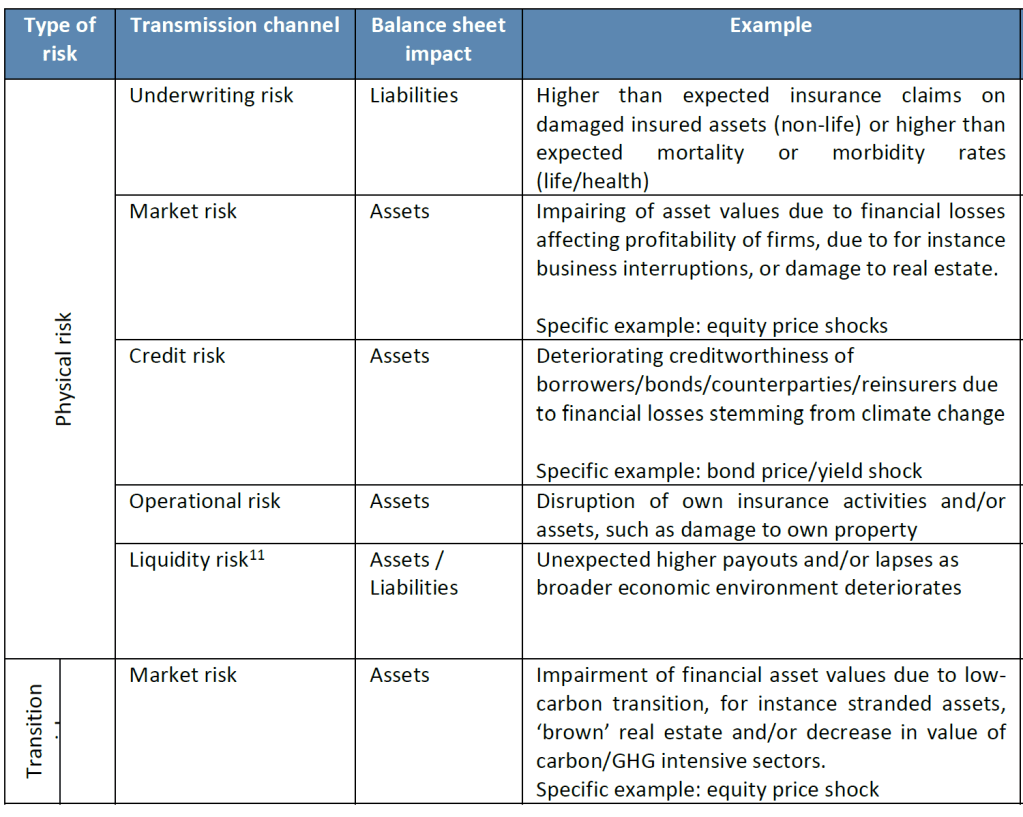
  • Under Solvency II, for public disclosure purposes, materiality means that if an issue is omitted or misstated, it could influence the decision-making or judgment of users of the information, including supervisory authorities. As to financial materiality, sustainability risks can translate in a financial impact on the (re)insurer’s assets and liabilities through existing risk categories, such as underwriting, market, counterparty default or operational risk as well as reputational risk or strategic risk. In other words, they are ‘drivers’ to existing risk categories.
  • Similarly, the ESRS defines materiality as the potential for sustainability-related information to influence decisions that users make on the basis of the undertaking’s reporting. In the context of financial materiality, which is relevant for Solvency II purposes, the ESRS specifies that a sustainability matter is considered material if it could trigger or reasonably be expected to trigger material financial effects on the undertaking. This includes material influence on the undertaking’s development, financial position, financial performance, cash flows, access to finance or cost of capital over the short-, medium- or long-term. The materiality of risks is based on a combination of the likelihood of occurrence and the potential magnitude of the financial effects.

The two frameworks are aligned as material financial effects, as defined by the ESRS, would likely influence the decision-making or judgment of users of the information, including supervisory authorities. This alignment enables undertakings to apply a consistent materiality assessment approach across both Solvency II and ESRS reporting requirements.

Both Solvency II and ESRS do not set a quantitative threshold for defining materiality. The RTS do not specify a threshold for materiality either, considering this should be entity-specific. The undertakings should however define and document clear and quantifiable materiality thresholds, taking into account the above and provide an explanation on the assumptions made for the categorisation into non-material and on how the conclusion on the materiality has been reached. The classification of an exposure or risk as material has bearing on its prudential treatment, as it is a factor that determines whether the risk should be further subject to scenario analysis in the undertaking’s ORSA. The RTS require the undertaking to explain its materiality threshold in the plan: the assumptions for classifying risks as (non-) material in light of the undertaking’s risk appetite and strategy.

The materiality assessment should consider that:

  • Sustainability risks are potential drivers of prudential risk on both sides of the (re)insurers’ balance sheet.
  • Sustainability risks can lead to potential secondary effects or indirect impacts.
  • The exposure of undertakings to sustainability risks can vary across regions, sectors, and lines of business.
  • Sustainability risks can materialise well beyond the one-year time horizon as well as have sudden and immediate impact. Therefore, the materiality assessment necessitates a forwardlooking perspective, including short, medium, and long term. For example, certain geographical locations may not be subject to flood risk today but may be so in the future due to sea level rise. The risk assessment should be performed gross and net of reinsurance, to measure the risk of reliance on reinsurance.

The materiality assessment would consist of a high-level description of the business context of the undertaking considering sustainability risks (‘narrative’) and the assessment of the exposure of the business strategy and model to sustainability risk (‘exposure assessment’), to decide whether a risk could be potentially material. Following this, based on the identification of a potentially material risk, the undertaking would perform an assessment of the potential financial impact (i.e., financial risk assessment, as part of ORSA).

The narrative should describe the business context of the undertaking regarding sustainability risks, and the current strategy of the undertaking. It also describes the long-term outcome, the pathway to that outcome, and the related actions to achieve that outcome (e.g., emissions pathways, technology developments, policy changes and socio-economic impacts).

The narrative would include a view on the broader impact of national or European transition targets on the economy, or the effect of a transition risk throughout the value chain. The narrative should include other relevant sustainability risks than climate, such as risks related to loss of biodiversity, or social and governance risks, as well as interlinkages between sustainability risks (e.g., between climate and biodiversity or climate and social) and spill-over and compounding effects looking beyond specific sustainability risk drivers on particular lines of business.

Sustainability narratives, indicators, and interlinkages

  • Narrative: For example, for climate change undertakings may refer to publicly available climate change pathways (i.e., the Representative Concentration Pathways (RCPs) developed by the Intergovernmental Panel on Climate Change (IPCC); Network for Greening the Financial System (NGFS)) or develop their own climate change pathway.
  • Indicators: Macro-prudential risk indicators or conduct indicators may provide additional insights and help the undertaking form its view on the future development of sustainability risks. Especially over a longer horizon, sustainability risk could have a wider and compounding impact on the economy and interactions between the financial and the real economy would need to be considered. For example, indirect impacts of climate change could lead to increase in food prices, migration, repricing of assets and rising social inequalities. All these indirect drivers will, in turn, impact the real economy as well as the financial sector, even more so as they could also trigger political instability. Macroprudential concerns could include, for example, plausible unfavourable forward-looking scenarios and risks related to the credit cycle and economic downturn, adverse investments behaviours or excessive exposure concentrations at the sectoral and/or country level. For example, EIOPA financial stability and conduct ESG risk indicators can be used to assess the external environment and business context in which climate change-related risks/opportunities can arise for the undertakings, the risk indicators will give an indication of macro-prudential risk in the insurance sector, and potential ESG related developments at sector level to the detriment of consumer protection.
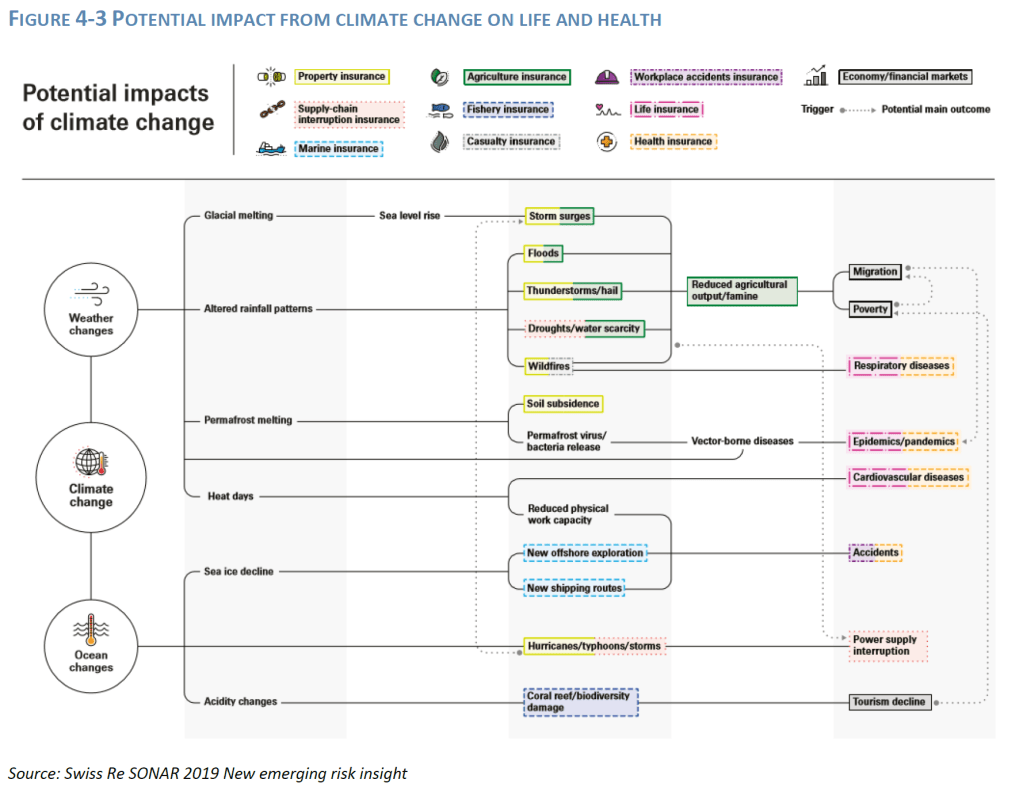
  • Interlinkages: For example, increasing temperatures leading to increased mortality risk affecting health business can potentially create underwriting as well as legal transition risk if the conditions for triggering a liability insurance have been met (e.g. a company failing to mitigate/adapt the risk). But also, a sharp increase in physical risks can lead to public policies focusing on a faster economy transition, leading in turn to higher transition risks. Physical and transition risks can impact economic activities, which in turn can impact the financial system. At the same time, the interconnectedness of the financial sector, and more generally of the economy, can create secondary effects: physical risk reducing the value of property, reducing in turn the value of collateral for lending purposes or increasing the cost of credit insurance, leading to economic slowdown; or physical damage caused by extreme weather events to critical infrastructure increasing the potential for operational/IT risks, amplifying supply chain disruption and disruption to global production of goods.

Based on the narrative, through qualitative and quantitative analyses, undertakings should arrive at an assessment of the materiality of their exposure to sustainability risks. A qualitative analysis could provide insight in the relevance of the main drivers in terms of traditional prudential risks. A quantitative analysis could assess the exposure of assets and underwriting portfolios to sustainability risk.

Exposure assessment

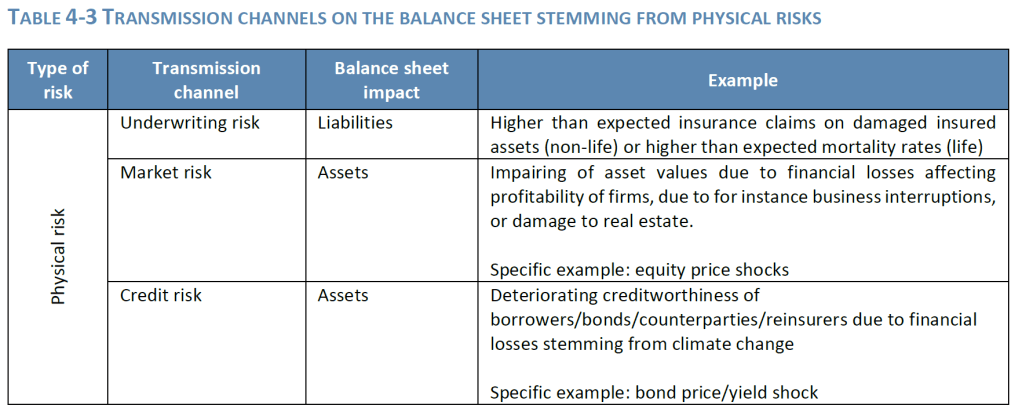
The aim is to identify sustainability risk drivers and their transmission channels to traditional prudential risks (i.e. market risk, counterparty risk, underwriting risk, operational risk, reputational risk and strategic
risk). Additionally, the assessment should provide insight into (direct) legal, reputational or operational risks or potential (indirect) market or underwriting risks, which could arise from investing in or underwriting activities with negative sustainability impacts, or from the undertaking misrepresenting its sustainability profile in public disclosure.

  • Qualitative analysis to help identifying the main drivers of climate change risks:
    • Transition risk drivers include changes in policies, technologies, and market preferences as well as the business activities of investees and commercial policyholders and policyholder preferences. At macro level, it may include consideration of failure of national governments to meet transition targets.
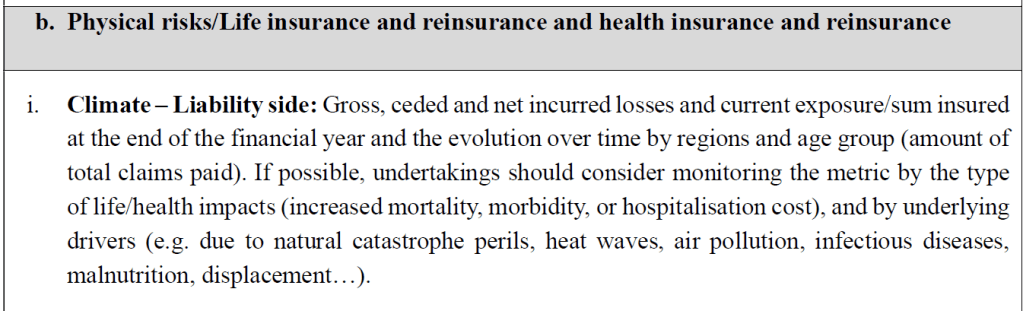
    • Physical risk drivers include level of both acute and chronic physical events associated with different transition pathways and climate scenarios. This involves assessing the impact of physical risks to counterparties (investees, policyholders, reinsurers) as well the insurer’s own operations (e.g.to insurer’s business continuity, also for outsourced services). For climate change-related risks, the assessment should consider the evolution of extreme weather-related events for insurers underwriting natural catastrophe risks (incl. in property and health insurance).
  • Geographical exposure: Identify potential exposure of assets or insured objects to sustainability risk based on, for example, the location of operations, assets or insured objects or supply chain dependencies of investee companies in geographical areas, regions or jurisdictions prone to (physical) climate, other environmental or social risks.
    • Natural catastrophe and environmental risk datahubs such as the Copernicus datasets on land (use) or biodiversity can give an indication of relevant environmental risks across regions.
    • Social risk indicators identify countries or regions that are vulnerable to social risk, measure social inequality or development. These can give an indication on potential social risk exposure of assets or liabilities located in those regions.
  • Economic activity/sector-based exposure: Identify potential exposure of assets or lines of business or insured risks to potential sustainability risks based on the impact of the investee (or supply chain dependencies of the investee) or the policyholder’s economic activity, or their dependency on environmental or social factors. Such assessment should however not only focus on for example, exposures to climate related sectors, but also to other sectors which may be indirectly affected by (transition) risks.
    • Alignment of the economic activity with the climate and environmental objectives and screening criteria set out in the Taxonomy Regulation and Climate, Environmental Delegated Regulations, as supported by the taxonomyrelated disclosures.
    • Biodiversity loss, a high-level exposure assessment of could be carried out using the level of premiums written in economic sectors with a high dependence on ecosystem services and/or a high biodiversity footprint (economic exposure) and the probability of occurrence of the associated nature-related risk factors.
    • Social risks, exposure of assets or liabilities to economic activities in ‘high risk social sectors’, can be identified by referring to the Business and Human Rights Navigator (UN Global Compact), which can help mapping exposure to sectors at high risk of relying on child labour, forced labour, or sectors negatively impacting on equal treatment (incl. restrictions to freedom of association) or on working conditions (inadequate occupational safety and health, living wage, working time, gender equality, heavy reliance on migrant workers) or have negative impacts on indigenous people.

Financial risk assessment

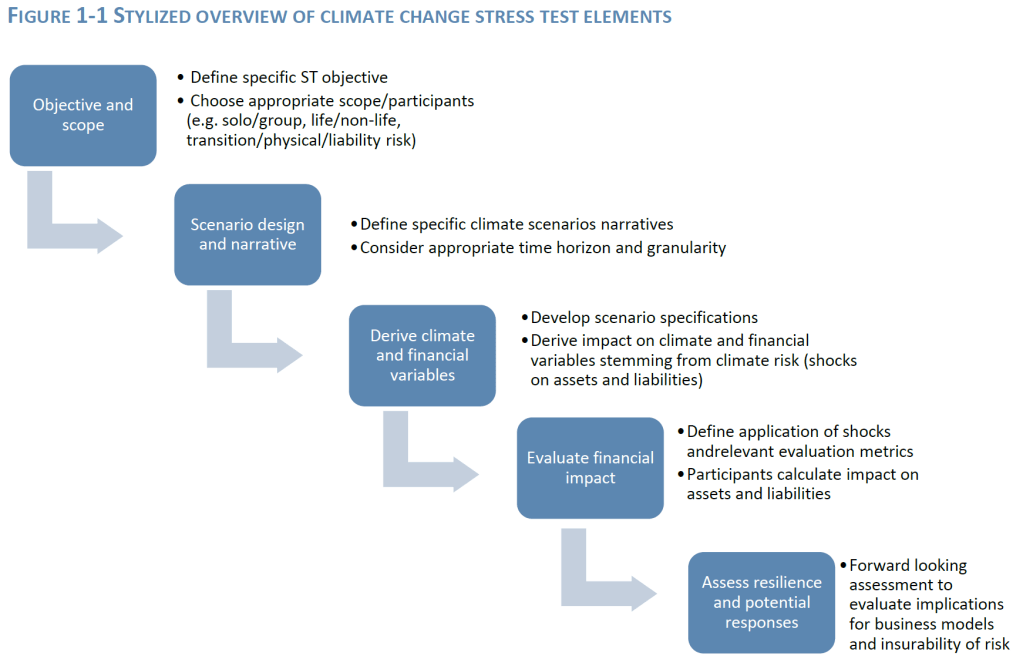
Where the exposure is deemed material, based on the thresholds set by the undertaking, a more detailed evaluation of the financial risks combining quantitative and/or qualitative approaches should inform the financial impact on the undertaking’s balance sheet. Here the assessment should aim to identify the key financial risk metrics and provide a view of the expected impact of such risks under different scenarios and time horizons at various levels of granularity.

Scenarios

When assessing the potential financial impact of material sustainability risks, the RTS sets out that undertakings should specify at a minimum two scenarios that reflect the materiality of the exposure and the size and complexity of the business. One of the scenarios should be based on the narrative
underpinning the materiality assessment. Where relevant, the scenarios should consider prolonged,
clustered, or repeated events
, and reflect these in the overall strategy and business model including
potential stresses linked to the

  • availability and pricing of reinsurance,
  • dividend restrictions,
  • premium increases/exclusions,
  • new business restrictions,
  • or redundancies.

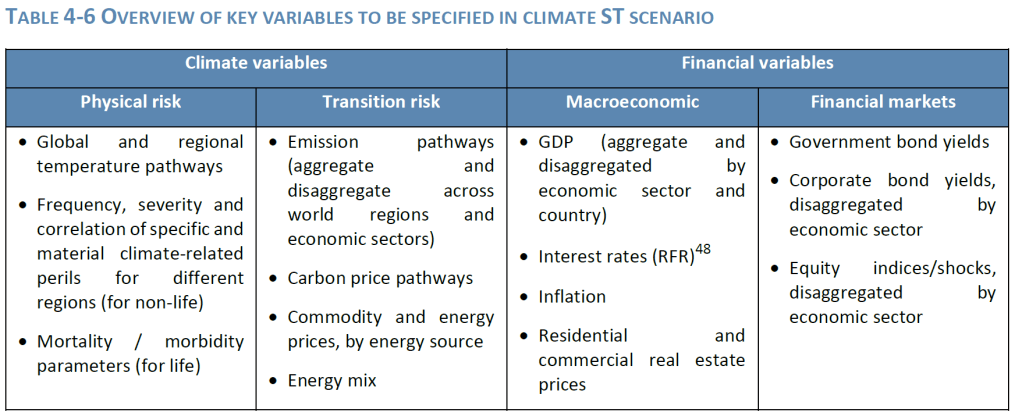
For climate change risks, the Solvency II Directive requires undertakings with a material exposure to climate change risks to specify at least two long term climate change scenarios:

(a) a long-term climate change scenario where the global temperature increase remains below two degrees Celsius;

(b) a longterm climate change scenario where the global temperature increase is significantly higher than two degrees Celsius.

Experience to date shows that the most used scenarios are those designed by NGFS43, IPCC Shared Socioeconomic Pathways (SSPs) or tailor-made scenarios (set by regulators, e.g. for nature-related scenarios or for stress testing purposes.

Time horizons

The time horizon should ensure that the time horizon for analysing sustainability risks is consistent with the undertaking’s long-term commitments. The time horizon should allow to capture risks which may affect the business planning over a short-to-medium term and the strategic planning over a longer term.

The time horizon chosen for the materiality assessment in sustainability risk plan should also enable the integration of the risk assessment process with time horizons applied for the purposes of the ORSA for risk assessment purposes.

Taking the example of the impact of climate change: its impact can materialise over a longer time horizon than the typical 3-5 years (re)insurers’ strategic and business planning time horizons considered in the ORSA. It is argued that ORSA time horizons are too short to integrate the results of such longer-term climate change scenarios. Nevertheless, the ORSA should allow for the monitoring of the materialisation of risks over a longer term. At the same time, climate change-related risks and opportunities can affect the business planning over a short term and the strategic planning over a longer term.

The RTS specify the time horizons for sustainability risk assessment, to promote supervisory convergence and increase the consistency of risk assessment across undertakings and with decisionmaking. For this purpose, the RTS stipulates that the following time horizons for the sustainability risk assessment apply:

  • Short term projection: 1-5 years
  • Medium term projection: 5-15 years
  • Long term projection: min. 15 years

Documentation and data requirements

The sustainability risk assessment should be properly documented. This would include documenting the methodologies, tools, uncertainties, assumptions, and thresholds used, inputs and factors considered, and main results and conclusions reached.

Undertakings’ internal procedures should provide for the implementation of sound systems to collect and aggregate sustainability risks-related data across the institution as part of the overall data governance and IT infrastructure, including to assess and improve sustainability data quality.

Undertakings would need to build on available sustainability data, including by regularly reviewing and
making use of sustainability information disclosed by their counterparties, in particular in accordance with the CSRD or made available by public bodies.

Additional data can be sourced from interaction with investees and policyholders at the time of the
investment or underwriting of the risk
, or estimates obtained from own analysis and external sources.
Undertakings should, where data from counterparties and public sources is not available or has shortcomings for risk management needs, assess these gaps and their potential impacts. Undertakings
should document remediating actions, including at least the following: using estimates or (sectoral) proxies as an intermediate step – the use of such estimates should be clearly indicated – , and seeking to reduce their use over time as sustainability data availability and quality improve; or assessing the need to use services of third-party providers to gain access to sustainability data, while ensuring sufficient understanding of the sources, data and methodologies used by data providers and performing regular quality assurance.

Frequency

The RTS aim to align the frequency of performance of the materiality and financial risk assessments
with, on the one hand, the cycle of the submission of the regular supervisory report to the supervisor ‘at least every three years’, if not stipulated differently by the supervisor, and the requirement for undertakings to assess material risks as part of their ORSA ‘regularly and without any delay following any significant change in their risk profile’.

Significant changes to the undertaking’s risk profile can include material change to its business environment including in relation to sustainability factors, such as significant new public policies or shifts in the institution’s business model, portfolios, and operations.

In addition, for the frequency of the financial risk assessment, the RTS need to consider that undertakings (except for SNCUs) are required to conduct at regular intervals, at a minimum every three years, the analysis of the impact of at least two long-term climate change scenarios for material climate change risks on the undertaking’s business.

Based on these considerations, the RTS set out that the materiality and financial risk assessment should be conducted at least every three years, and regularly and without any delay following any significant change in their risk profile.

Building on the requirements , the RTS specifies that key metrics and the results of the sustainability risk
plan should be disclosed at least every year
or, for smaller and non-complex undertakings, at least every two years or more frequently in case of a material change to their business environment in relation to sustainability factors.

Metrics

Prescribing a list of metrics in sustainability risk plans can help

  • in promoting risk assessment,
  • improve comparability of risks across undertakings,
  • promote supervisory convergence in the monitoring of the risks and
  • enable relevant disclosures.

At the same time, it is important to allow undertakings flexibility in defining their metrics to avoid missing useful undertaking-specific information. Therefore, the RTS describes the key characteristics of the metrics and provides a minimum list of relevant metrics to compute.

Backward-looking (current view) and forward-looking, can be tailored to the undertaking’s business model and complexity, while following key characteristics apply. Metrics should

  • provide a fair representation of the undertakings’ risks and financial position using the most up-to-date information.
  • be appropriate for the identification, measurement, and monitoring of the actions to achieve the risk management targets.
  • be calculated with sufficient granularity (absolute and relative) to evaluate eventual concentration issues per relevant business lines, geographies, economic sectors, activities, and products to quantify and reflect the nature, scale, and complexity of specific risks.
  • allow supervisors to compare and benchmark exposure and risks of different undertakings over different time horizons.
  • be documented to a sufficient level to provide relevant and reliable information to the undertaking’s management and at the same time be used as part of supervisory reporting and, where relevant for public disclosure, ensuring sufficient transparency on the data (e.g. source, limitations, proxies, assumptions) and methodology (e.g. scope, formula) used.

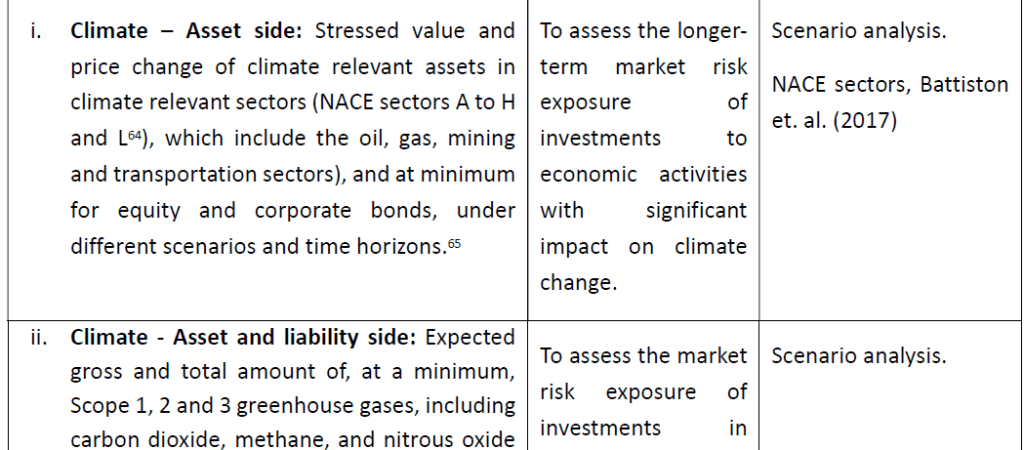
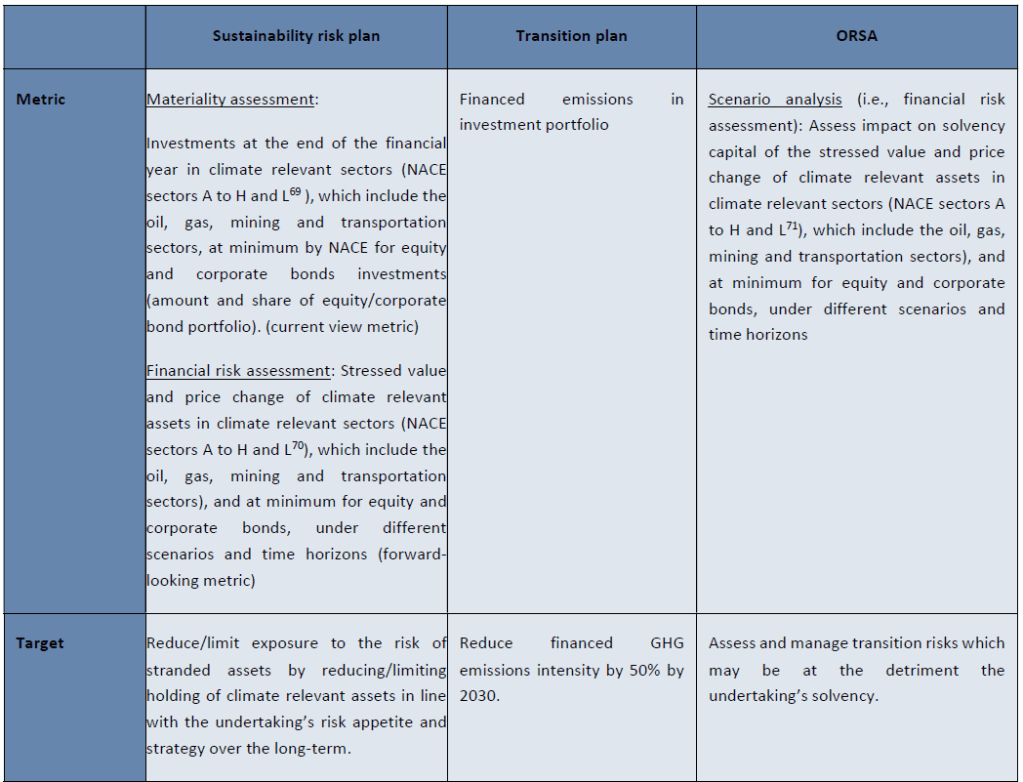
The RTS requires the following minimum current view metrics:

The following list includes optional metrics which could be considered by the undertaking on a voluntary basis to report on the results of scenarios analysis (financial risk assessment) for material sustainability risks.

Targets

Based on the results of the sustainability risk assessment, the undertaking’s risk appetite and long-term
strategy
, the undertaking should set quantifiable targets to reduce or manage material sustainabilityrelated exposure/risks or limits sustainability-related exposure/risks to monitoring prudential risks over the short, medium, and long term.

The undertaking should, based on its risk appetite, specify the type and extent of the material sustainability risks the undertaking is willing to assume in relation to all relevant lines of business, geographies, economic sectors, activities and products (considering its concentration and diversification objectives) and set its risk management targets accordingly.

Undertakings shall explain the way the target will be achieved or what is their approach to achieve the
target. Intermediate targets or milestones should allow for the monitoring of progress of the undertaking in addressing the risks. The undertakings should specify the percentage of portfolio covered by targets.

The targets should be consistent with any (transition) targets used in the undertaking’s transition plans and disclosed where applicable. The targets and measures to address the sustainability risks will consider the latest reports and measures prescribed by the European Scientific Advisory Board on climate change, in particular in relation to the achievement of the climate targets of the Union.

Relation between targets, metrics, and actions across transition plans, sustainability risk plans and ORSA, applied to an example for transition risk assessment for climate risk-related investments
Actions

Actions to manage risks should be risk-based and entity-specific.

  • Actions set out in undertakings’ transition plans, for example under CSDDD can inform the sustainability (transition) risk to the undertaking’s business, investment, and underwriting. Such transition plan actions typically involve:
  • Limiting investment in non-sustainable activities/companies Introduction of sustainability criteria in the investment decision.
  • Re-pricing of risks.
  • Integrating sustainability into the investment guidelines.
  • Stewardship, impact investing, impact underwriting.
  • Integrating ESG into the underwriting standards and guidelines of the undertaking.
  • Product development considering the impact on climate change.

The measures in the transition plan and actions to address financial risks arising from the transition need to be integrated into the investment, underwriting and business strategy of the undertaking. They need to be measurable and where actions fail to meet their expressed target, these should be monitored and, where necessary, adjusted.

Anchoring Climate Change Risk Assessment in Core Business Decisions in Insurance

Key messages:

  1. The development of decision-relevant climate change risk assessment with a holistic approach requires an exploratory, iterative and adaptive process that will take time. A holistic approach
    considers physical, transition and litigation risks and their interactions at different time horizons in the short and long term. It considers both sides of the balance sheet, as well as interactions across business functions and decision feedback loops to assess the materiality of risks and develop potential actions to address them. Importantly, some re/insurers that have advanced further in this iterative process have found it beneficial to anchor the assessment in overarching decision areas that link both sides of the balance sheet. While re/insurers in all business lines have started exploring the materiality of physical and transition climate change risks on each side of the balance sheet, for life & health re/insurers in particular, more research is required to assess the attributions and materiality of climate change to their underwriting exposures – including longevity, mortality and morbidity –over various time horizons. As research in this field progresses, the ability both to assess life & health re/insurer liability exposures and perform more holistic assessments will improve.
  2. An analysis of regulatory developments since June 2021 and a survey conducted by The Geneva Association reveal that the regulatory and supervisory priorities and approaches are increasingly aligned with earlier GA task force recommendations related to climate change risk assessment and scenario analysis.
  3. Responses from 11 regulatory bodies to a Geneva Association Survey shed light on the regulatory objectives and priorities that can help guide climate change risk assessment exercises within and across jurisdictions. Our analysis has revealed the top four regulatory priorities:
    • policyholder protection,
    • the insurer’s financial health,
    • corporate governance and strategy,
    • the insurability/affordability of insurance solutions,
    • financial stability,
    • raising risk awareness,
    • addressing data/risk assessment services and environmental stewardship.
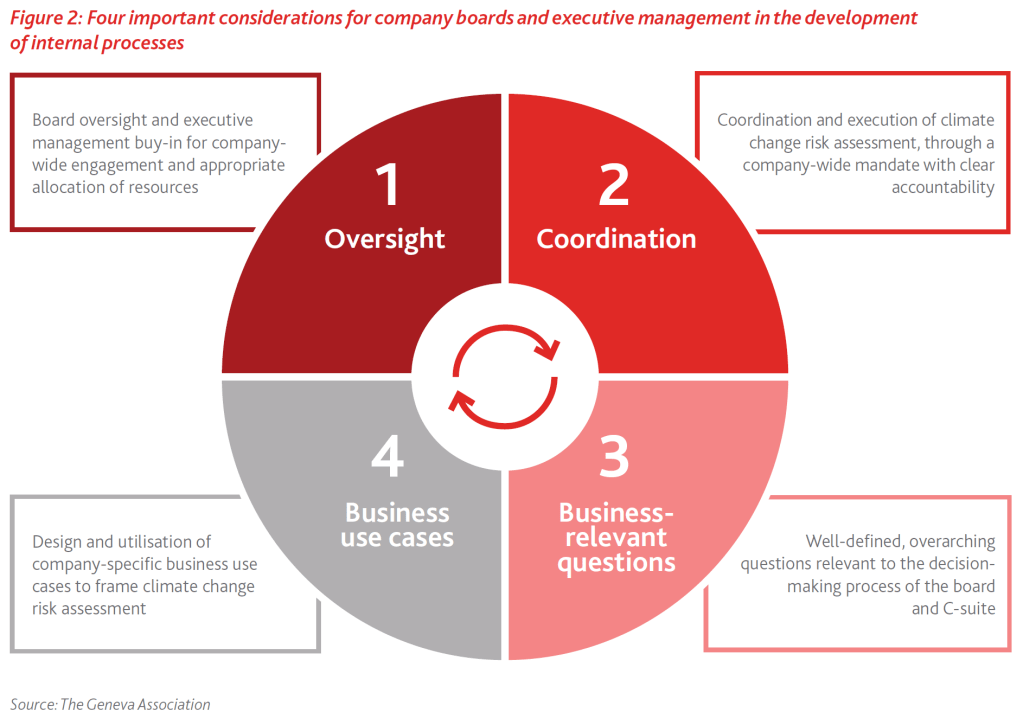
  4. Company boards and executive management need to consider the following four key issues to drive the process towards a more holistic approach that would produce decision-useful information:
    • Board oversight and executive management buy-in for company-wide engagement, along with appropriate resource allocation to build these capabilities, are important;
    • The coordination and execution of climate change risk assessment require an internally established, company-specific mandate with clear accountability;
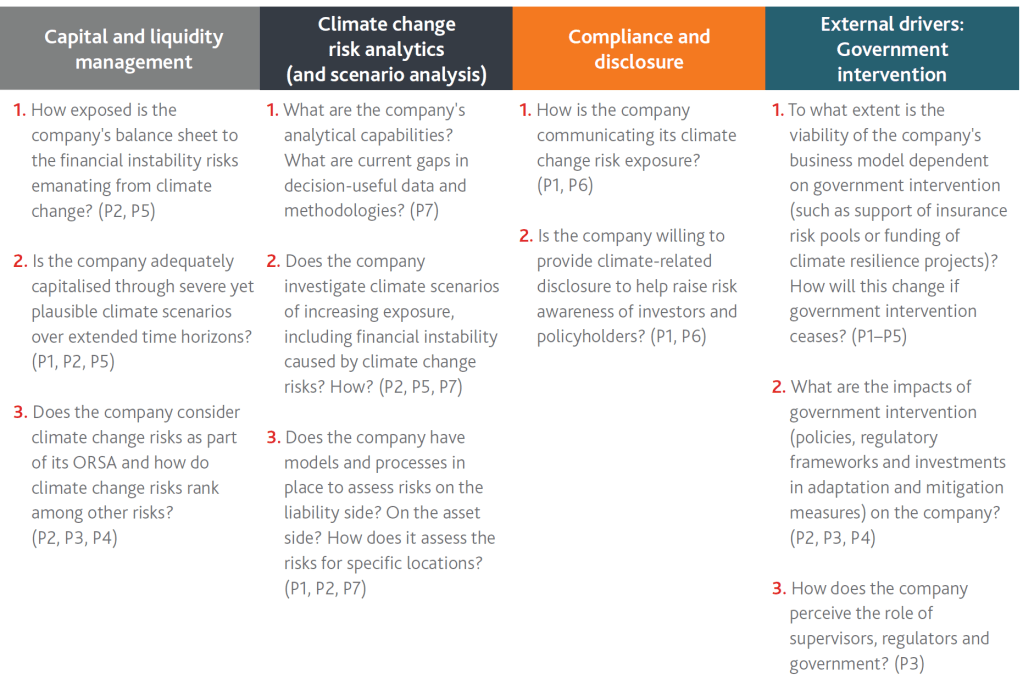
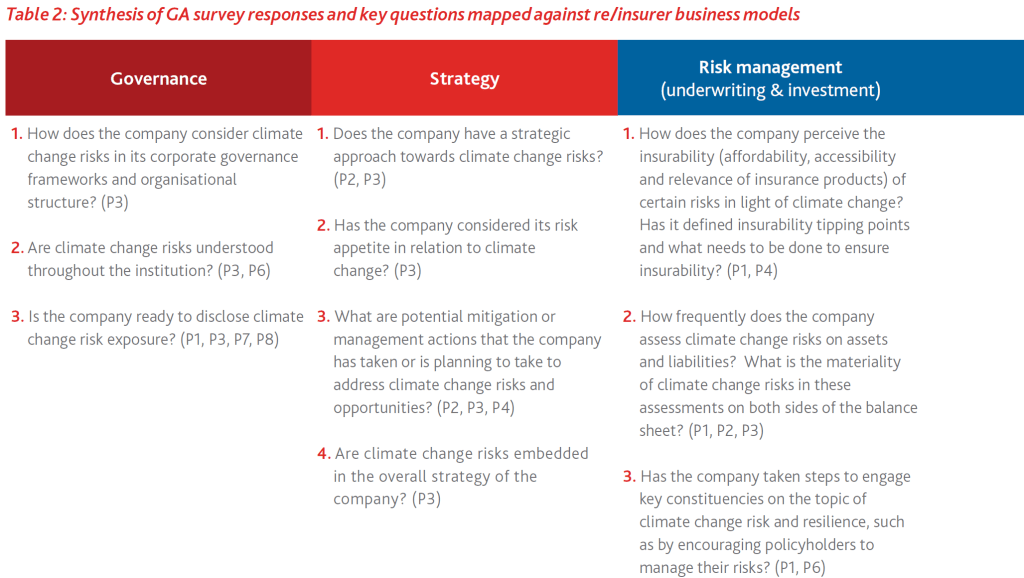
    • Central to this process is the development of overarching decision-relevant questions for the board and the C-suite (a list based on the GA survey of regulatory and standard-setting bodies is included);
    • Company-relevant business use cases should be designed and utilised to guide the iterations of climate change risk assessment.
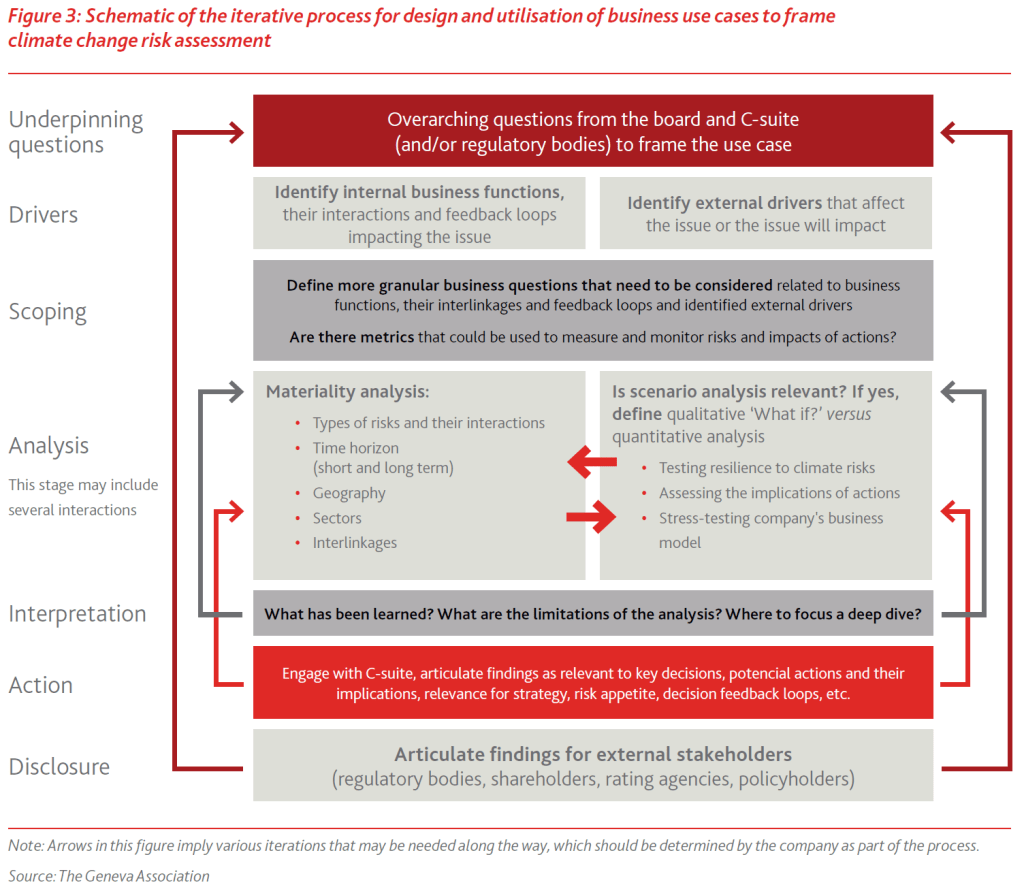
  5. A 10-step template provided in this report can help companies design business use cases to frame the analysis, engage experts from relevant business functions across the balance sheet, and mine and utilise the same data and tools across the company. It is important to start simple by exploring the impacts of each climate change risk type, on each side of the balance sheet, considering short- and long-term time horizons. With each iteration, companies can build up the level of complexity by assessing the interactions of physical, transition and litigation risks and exploring how these risks are manifested within and across business functions. Of note:
    • This process should consider internal business functions and their interactions as well as external drivers that impact issues relevant to the business use case, by risk type and time horizon;
    • Materiality analysis is at the heart of climate change risk assessment, allowing focus on the
      areas most impacted by climate change risks and identifying priorities for a deeper dive and
      resource allocation;
    • As part of the design and implementation of business use cases, the company should seek to
      identify metrics to measure and monitor the risks and track the impacts of the measures taken to manage them;
    • This resource-intensive process will take time and present challenges that will need to be addressed, ranging from overtime and the availability of data for the given region to internal experience and expertise, and the availability of best practices. In this report, we offer three examples of business use cases to demonstrate these points.
  6. The use of forward-looking scenario analysis needs to be further explored, depending on the issue being considered. Scenario analysis is a tool for conducting a forward-looking assessment of risks and opportunities, where the company can systematically explore individual or combined factors and make strategic decisions in the face of significant uncertainties. Scenario analysis may be used for a range of applications, for example:
    • Testing the resilience of a company’s business model to climate change-related risks;
    • Assessing the implications of possible actions a company can take;
    • Stress-testing the company’s business model under extremely adverse conditions.
  7. Through strong industry collaboration, re/insurers should conduct an analysis of existing data challenges, gaps and needs, and define priority areas and requirements for the future development of tools. More work is required by re/insurers and regulatory bodies to identify gaps in data, to converge on best practices and build a robust toolbox for forward-looking climate change risk analyses. Since 2021, several organisations have offered an assessment of the gaps in climate change risk data and tools in the current landscape, with a focus on certain applications or segments in the financial sector. The journey towards a holistic approach could lead re/insurers to address such gaps over time, not least in emissions data, asset locations and supply chain data. Note that life & health re/insurers still face challenges when it comes to identifying the types of data that would allow the extraction of climate change attribution and liability exposures.
  8. Importantly, company leadership should seek to harmonise and align their net-zero target-setting
    activities using ‘inside-out’ analysis with efforts to assess the resilience of their business model to
    climate change risks using ’outside-in’ approaches for developing viable targets, transition strategy and plans
    . In fact, a growing number of critics are calling out the misalignment of net-zero pledges with what the companies can actually deliver and the possibility of greenwashing, which could lead to potential reputational and climate litigation risks or even regulatory action.
  9. Robust intra- and inter-sectoral collaboration is the only way to expedite the development and convergence of good practices, meaningful baseline requirements for decision-useful climate change risk assessments and disclosures that would allow for cross-company comparisons. To this end, we acknowledge and deeply appreciate the growing proactive collaboration and engagement
    across the insurance industry and with key regulatory and standard-setting bodies in the financial sector.

Context

In 2020, The Geneva Association (GA) launched its task force on climate change risk assessment with the aim of advancing and accelerating the development of holistic methodologies and tools for conducting forward-looking climate change risk assessment. These efforts have intended not only to support primary insurance and reinsurance companies and regulatory bodies with innovation in this area, but also to demonstrate the benefits of industry-level collaboration to help expedite the development and convergence of best practices.

In its first two reports, the GA task force highlighted the complexities associated with the development of forward-looking climate change risk assessment methodologies and tools. It stressed the need to develop methodologies for holistic climate change risk modelling and scenario analysis for both sides of the balance sheet, using a combination of qualitative and quantitative approaches. The GA task force also highlighted the implications of physical and transition risks for the insurance industry, with a focus on the challenges of quantitative scenario analysis approaches. The conclusion was that the prescriptive quantitative regulatory exercises to date, which were conducted to raise awareness, have outlived their
purpose
. More specifically, these resource-intensive exercises do not provide decision-useful information given the significant uncertainties associated with the transition to a carbon-neutral economy (e.g. uncertainties associated with public policy, market and technology risks). Finally, the GA task force called on regulatory bodies to clarify their regulatory objectives and explain how their exercises would deliver decision-useful information. It also stressed the need for convergence on baseline regulatory requirements for analysis and reporting across jurisdictions. To this end, it encouraged stronger collaboration between regulatory bodies within and across jurisdictions, as well as with the insurance industry, to enable the sharing of lessons learned and access to broader expertise, in the aim of expediting the convergence of best practices.

Since June 2021, there have been several developments on the policy, technology, regulatory and scientific fronts, with implications for companies’ climate change risk assessment.

The evolving regulatory landscape for climate change risk assessment

Between June 2021 and May 2022, certain regulators launched new initiatives and published guidelines. A synthesis of these developments reveals the need for regulatory bodies to:

  • Acknowledge the limitations of current tools, models and data for long-term quantitative scenario analysis (as evidence, the 2021 Bank of England Climate Biennial Exploratory Scenarios experiment concluded that projections of climate change losses are uncertain; the view that scenario analysis is still in its infancy, with notable data gaps; and the increasing recognition among some regulatory bodies that quantitative approaches can and should be complemented with qualitative assessments, especially over a longer time horizon);
  • Stress the need to consider multiple scenarios representing different plausible pathways of transition or physical risks, and expand benchmark scenarios (typically NGFS) with sectoral and geographical granularity considerations;
  • Recognise the principle of proportionality, with expectations linked to the size and organisational complexity of the company;
  • Stress the importance of materiality in supervisory expectations for quantitative assessments as well as robust governance of climate change risks, with a need for transparency, particularly in relation to re/insurer investments in carbon-intensive sectors.

As of July 2022, there are still variations in the approaches used by regulators. Regulators agree, however, that this could impede comparisons across companies and jurisdictions as well as the ability to assess broader systemic economic and social impacts. Importantly, the International Association of Insurance Supervisors (IAIS) is working on promoting a globally consistent supervisory response to climate change, with a focus on three areas:

  • standards,
  • data
  • and scenario analysis,

by providing guidance to regulatory bodies. The Financial Stability Board (FSB) is also issuing guidance on supervisory and regulatory approaches across borders and sectors to address market fragmentation and potential sources of systemic risk. Finally, the development of a global baseline for sustainability reporting standards with a focus on climate change, by the ISSB, aims to translate them further into harmonised inter-jurisdictional standards.

Strategic importance of aligning inside-out and outside-in climate risk assessment approaches

Companies are conducting two types of climate risk assessment:

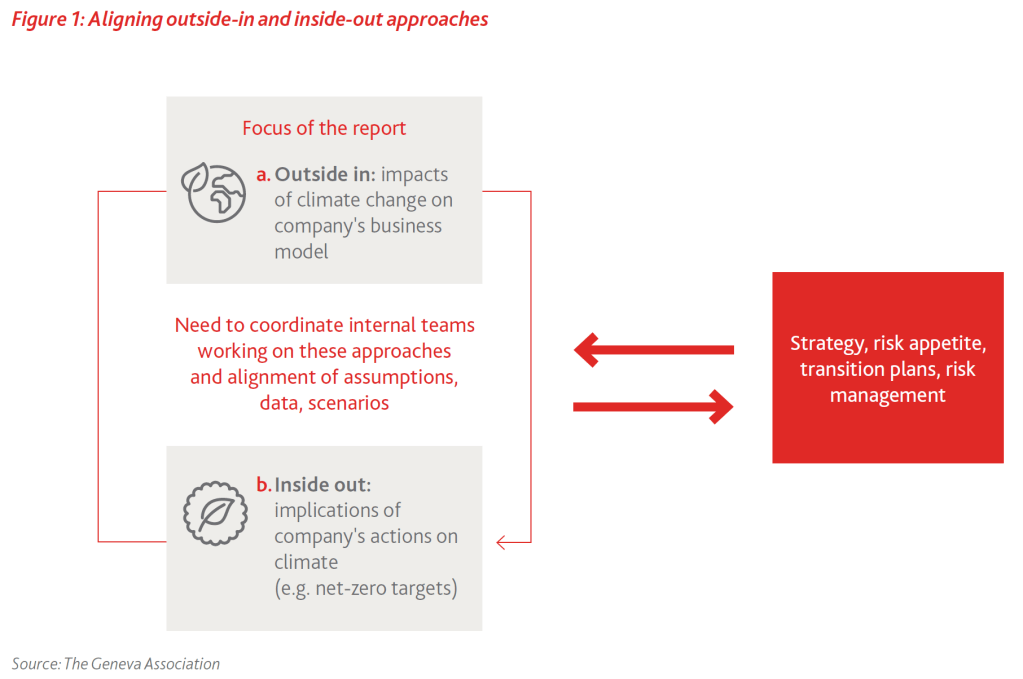
  • Inside-out analysis: This includes assessing the impact of the company’s actions on the climate by setting their climate targets (e.g. net zero targets) based on a variety of science-based approaches, such as those introduced by the UN Net-Zero Asset Owner Alliance (UN NZAOA) and the Science-Based Targets initiative (SBTi). For example, the UN-convened Net-Zero Alliances uses 1.5°C-compatible pathways, which may be far more ambitious than what companies and the real economy can deliver. In fact, the UN NZAOA has warned that the global economy does not move as is required by science, leading to a widening gap between companies’ climate targets and the real economy. Net-zero targets need to take this widening gap into account as this misalignment could lead to other financial and non-financial risks for the company, including reputation risk. This is further exacerbated by the fact that climate science is still evolving.
  • Outside-in analysis: This involves assessing the resilience of the company’s business model to climate change risks, which is the focus of this report. It is important to emphasise that the development of the company’s strategy, transition plan and related actions cannot be done solely using inside-out analysis. Conducting outside-in analysis is critical, enabling the company to assess not only the impacts of climate change risks and their interactions, but also the implications of the possible range of activities under different scenarios on the firm’s business model. Of note, the inside-out view puts greater emphasis on ‘impact’ – which has a clear political component and should be grounded in materiality assumptions, which is the central objective of the outside-in analysis.

In summary, companies should seek to harmonise and align inside-out with outside-in climate change risk assessment efforts (Figure 1). In fact, a growing number of critics are calling out the misalignment of net-zero pledges by the financial sector, in light of their already committed investments in carbon-intensive sectors for the years to come. Critics are also raising the possibility of greenwashing, which could lead to potential climate litigation risk. Regarding the latter, some regulators are developing KPIs to assess and monitor the existence and level of greenwashing as part of their efforts to incorporate climate change factors into their regulatory mandate.

The Prudential Regulation Authority’s approach to insurance supervision

UK’s Insurance Supervisory Body PRA just published a very interesting paper describing it’s purpose and it’s working principles. Even if Bexit will exclude PRA from EIOPA associated supervisory bodies, this paper should be considered as being landmark as most of the EIOPA associated bodies didn’t go this way of transparency and methodology yet, despite EIOPA having set a framework at least for some of these issues, crucial for insurers to manage thair risk and capital requirements.

« We, the Prudential Regulation Authority (PRA), as part of the Bank of England (‘the Bank’), are the UK’s prudential regulator for deposit-takers, insurance companies, and designated investment firms.

This document sets out how we carry out our role in respect of insurers. It is designed to help regulated firms and the market understand how we supervise these institutions, and to aid accountability to the public and Parliament. The document acts as a standing reference that will be revised and reissued in response to significant legislative and other developments which result in changes to our approach.

This document serves three purposes.

  1. First, it aids accountability by describing what we seek to achieve and how we intend to achieve it.
  2. Second, it communicates to regulated insurers what we expect of them, and what they can expect from us in the course of supervision.
  3. Third, it is intended to meet the statutory requirement for us to issue guidance on how we intend to advance our objectives.

It sits alongside our requirements and expectations as published in the PRA Rulebook and our policy publications.

EU withdrawal

Our approach to advancing these objectives will remain the same as the UK withdraws from the EU. Our main focus is on trying to ensure that the transition to our new relationship with the EU is as smooth and orderly as possible in order to minimise risks to our objectives.

Our approach to advancing our objectives

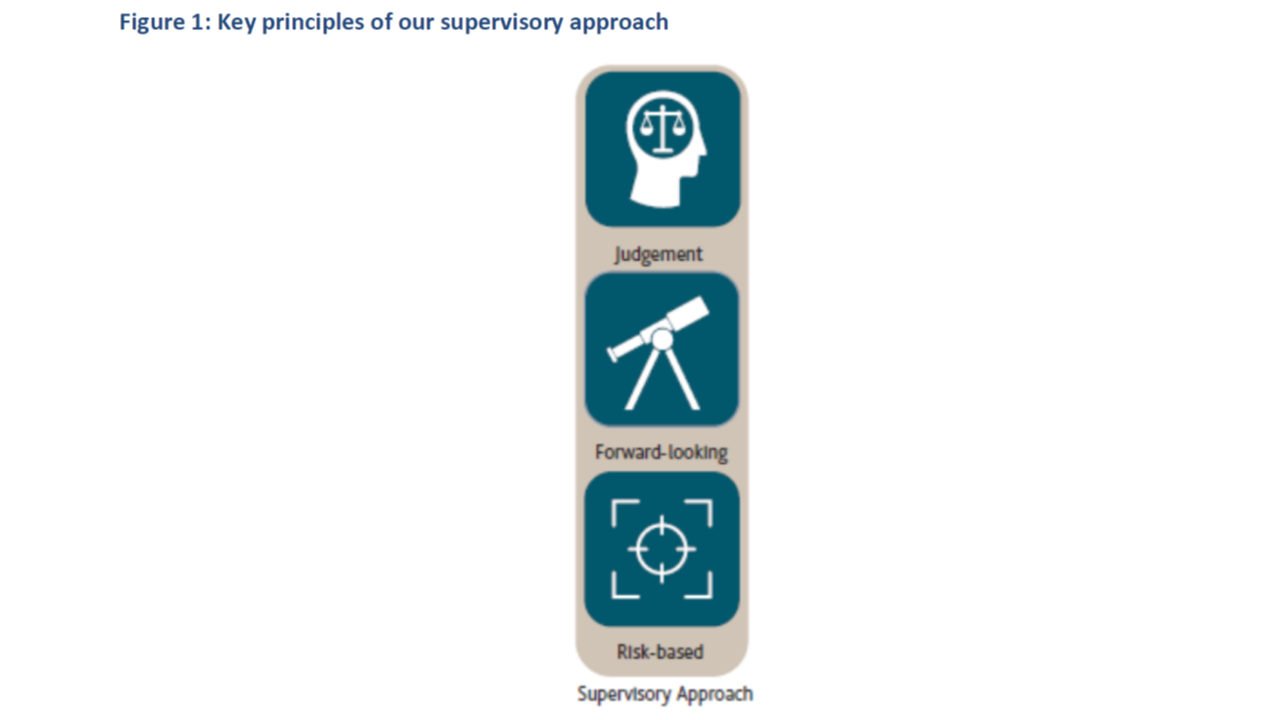
To advance our objectives, our supervisory approach follows three key principles – it is:

  1. judgement-based;
  2. forward-looking; and
  3. focused on key risks.

Across all of these principles, we are committed to applying the principle of proportionality in our supervision of firms.

PRA1

Identifying risks to our objectives

The intensity of our supervisory activity varies across insurers. The level of supervision principally reflects our judgement of an insurer’s potential impact on policyholders and on the stability of the financial system, its proximity to failure (as encapsulated in the Proactive Intervention Framework (PIF), which is described later), its resolvability and our statutory obligations. Other factors that play a part include the type of business carried out by the insurer and the complexity of the insurer’s business and organisation.

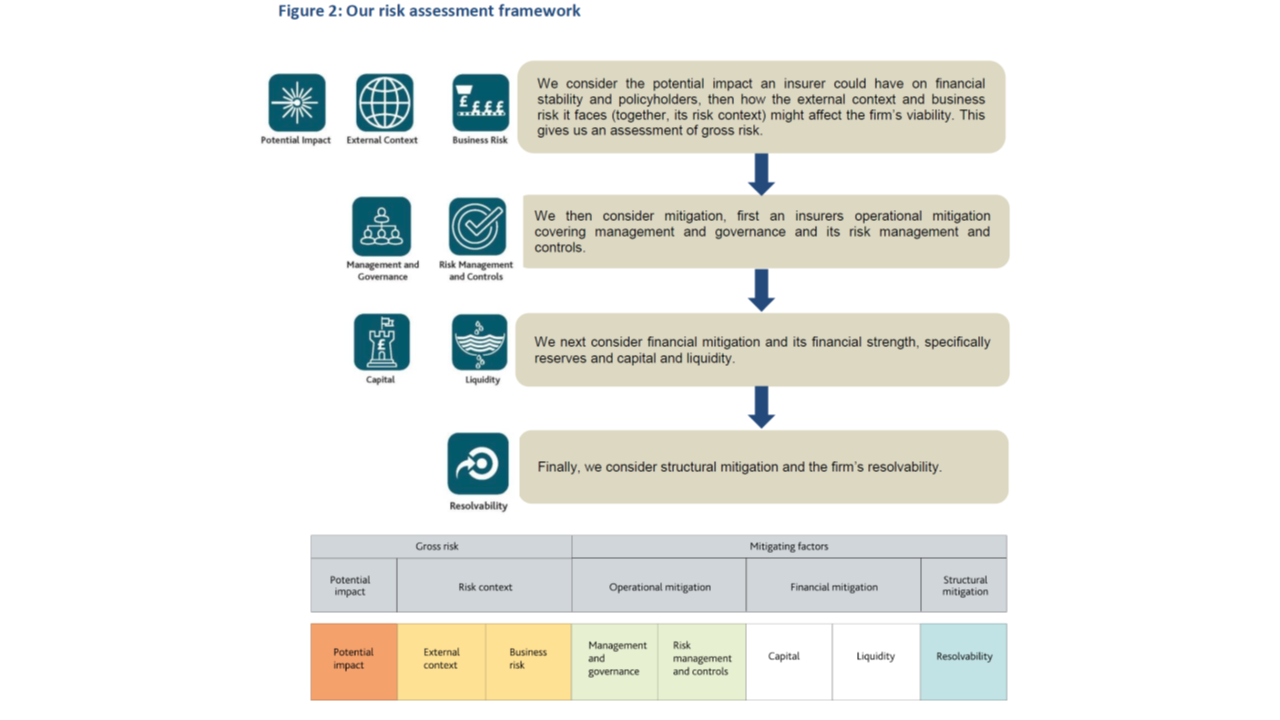
Our risk framework

We take a structured approach when forming our judgements. To do this we use a risk assessment framework. The risk assessment framework for insurers is the same as for banks, but is used in a different way, reflecting our additional objective to contribute to securing appropriate policyholder protection, the different risks to which insurers are exposed, and the different way in which insurers fail.

Much of our proposed approach to the supervision of insurers is designed to deliver the supervisory activities which the UK is required to carry out under Solvency II.

The key features of Solvency II are:

  • market-consistent valuation of assets and liabilities;
  • high quality of capital;
  • a forward-looking and risk-based approach to setting capital requirements;
  • minimum governance and effective risk management requirements;
  • a rigorous approach to group supervision;
  • a Ladder of Intervention designed to ensure intervention by us in proportion to the risks that a firm’s financial soundness poses to its policyholders;
  • and strong market discipline through firm disclosures.

Some insurers fall outside the scope of the Solvency II Directive (known as non-Directive firms), mainly due to their size. These firms should make themselves familiar with the requirements for non-Directive firms.

PRA2

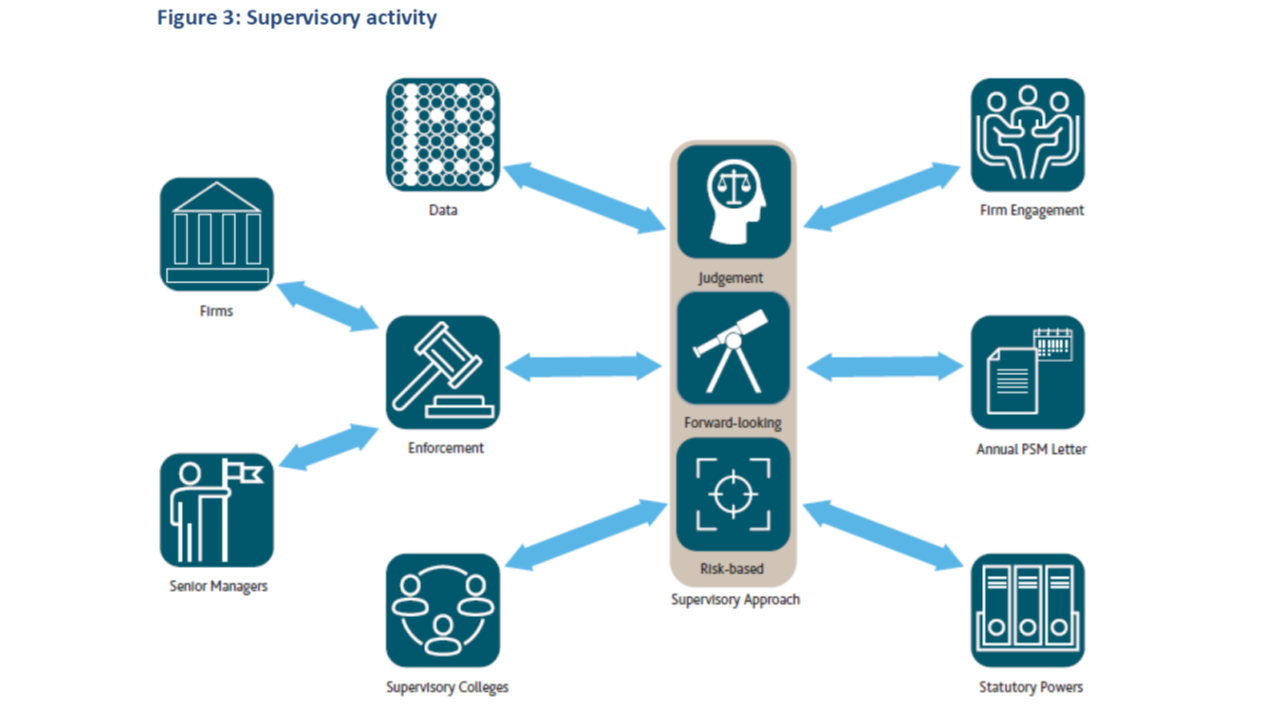
Supervisory activity

This section describes how, in practice, we supervise insurers, including information on our highest decision-making body and our approach to authorising new insurers. As part of this, it describes the Proactive Intervention Framework (PIF) and our high-level approach to using our legal powers. For UK insurers, our assessment covers all entities within the consolidated group.

PRA3

Proactive Intervention Framework (PIF)

Supervisors consider an insurer’s proximity to failure when drawing up a supervisory plan. Our judgement about proximity to failure is captured in an insurer’s position within the PIF.

Judgements about an insurer’s proximity to failure are derived from those elements of the supervisory assessment framework that reflect the risks faced by an insurer and its ability to manage them, namely, external context, business risk, management and governance, risk management and controls, capital, and liquidity. The PIF is not sensitive to an insurer’s potential impact or resolvability.

The PIF is designed to ensure that we put into effect our aim to identify and respond to emerging risks at an early stage. There are five PIF stages, each denoting a different proximity to failure, and every insurer sits in a particular stage at each point in time. When an insurer moves to a higher PIF stage (ie as we determine the insurer’s viability has deteriorated), supervisors will review their supervisory actions accordingly. Senior management of insurers will be expected to ensure that they take appropriate remedial action to reduce the likelihood of failure and the authorities will ensure appropriate preparedness for resolution. The intensity of supervisory resources will increase if we assess an insurer has moved closer to breaching Threshold Conditions, posing a risk of failure and harm to policyholders.

An insurer’s PIF stage is reviewed at least annually and in response to relevant, material developments. (…) »

Click here to access PRA’s detailed paper

Navigating the new world – Preparing for insurance accounting change (IFRS 17)

If implementation of the forthcoming insurance contracts standard is to reach the best possible outcome for your organization, we believe it needs to be seen as more than just a compliance exercise. This will entail

  • combining multiple strands into a common program,
  • identifying linkages
  • and addressing dependencies

across the business in a logical sequence and thinking strategically about possible effects on the organization and its stakeholders. A well-developed and ‘living’ plan assigns clear accountabilities and breaks down objectives into manageable tasks for delivery to realistic time-scales in order to establish an effective blue-print for success.

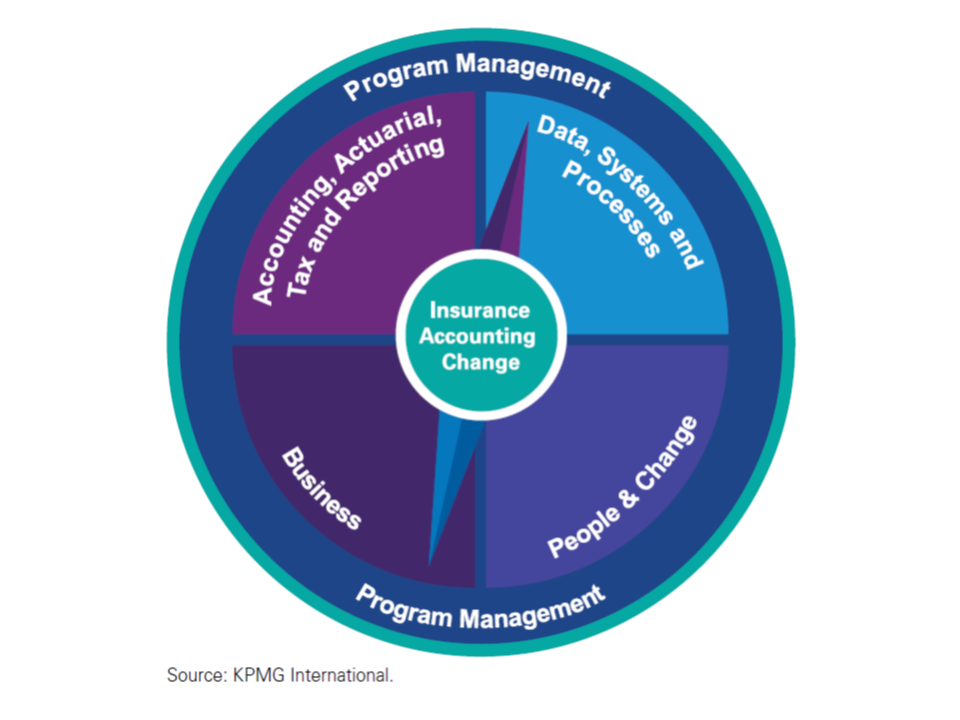
Our methodology groups activities into four manageable phases:

  1. assess the change
  2. design your response
  3. implement your design
  4. sustain your new practices, securely embedding them in business as usual.

Key success factors

Our experience shows us there are many factors that will contribute to successfully implementing insurance accounting change, including:

  1. Dedicated staff: In our experience the single biggest factor contributing to program success is the presence of full-time staff dedicated to the project, with a wide range of skills including data management, IT implementation and project management and who know your business.
  2. Spend sufficient time and energy on the initial impact phase: It is essential that an insurer plans for this critical phase and allows for sufficient time to perform a gap analysis on a line-by-line basis through the income statement and balance sheet and supports disclosures.
  3. Consider fundamental questions surrounding core business drivers: earnings trends, growth opportunities and target operating models. The earlier effects are identified, the more time an insurer will have to develop and implement a strategic response.
  4. Training staff: Many organizations underestimate the amount of personnel training required. Designing a comprehensive training strategy and program is highly complex and requires careful planning.
  5. Robust project planning: The plan must be achievable and continuously refined with formal tracking and monitoring.
  6. Clear communications: Communication needs to be both formal and informal and applied throughout the life of the program.
  7. Careful change management: IFRS conversion will lead to significant changes in how people do their jobs. Some of the biggest challenges have arisen when the cultural issues have not been acknowledged and addressed.
  8. More than just an accounting and actuarial project: Implementing the forthcoming insurance contracts project will undoubtedly be a multi-disciplinary effort.
    1. IT specialists consider the functionality of source systems and enterprise performance management (EPM) systems;
    2. Change management specialists focus on behavioral change and communication;
    3. specialists in commercial functions (tax, data management, executive incentives, etc.) bring a holistic approach to the program.

Robust project management helps to bring everything together coherently.

Assessing what the forthcoming standard will mean for you

Accounting, actuarial, tax and reporting

Q1. What are the key accounting, actuarial, tax and disclosure differences between our current generally accepted accounting principles (GAAP) and the new standards? What are the key decisions that need to be made by management regarding the alternative treatments that are available?

Data, systems and processes

Q2. What will the impact be for our data requirements, and on the systems and processes used for

  • data collection,
  • actuarial projections,
  • calculating and accruing interest on the contractual service margin
  • and consolidation and financial reporting systems?

Are there quick fixes that we can use? Can we leverage recent investments in infrastructure or will we need a major overhaul?

Q3. How will the group‘s close and other processes be impacted?

Business

Q4. What is the estimated directional impact on profit and equity and what are the key decisions and judgments that this will influence?

Q5. What are the key impacts for my business and how will these be influenced by the choices open to us? Who will need to understand results and metrics on the new basis?

People and change management

Q6. Who will be impacted by the conversion, what skills and resources are likely to be needed and what training needs can we identify?

Program management

Q7. What would a high-level conversion plan look like and what is its likely impact on resources?

IFRS17 3

Click here to access KPMG’s methodology paper

A Transformation in Progress – Perspectives and approaches to IFRS 17

The International Financial Reporting Standard 17 (IFRS 17) was issued in May 2017 by the International Accounting Standards Board (IASB) and has an effective date of 1st January 2021. The standard represents the most significant change in financial reporting for decades, placing greater demand on legacy accounting and actuarial systems. The regulation is intended to increase transparency and provide greater comparability of profitability across the insurance sector.

IFRS 17 will fundamentally change the face of profit and loss reporting. It will introduce a new set of Key Performance Indicators (KPIs), and change the way that base dividend or gross payments are calculated. To give an example, gross premiums will no longer be recorded under profit and loss. This is just one of the wide-ranging shifts that insurers must take on board in the way they structure their business to achieve the best possible commercial outcomes.

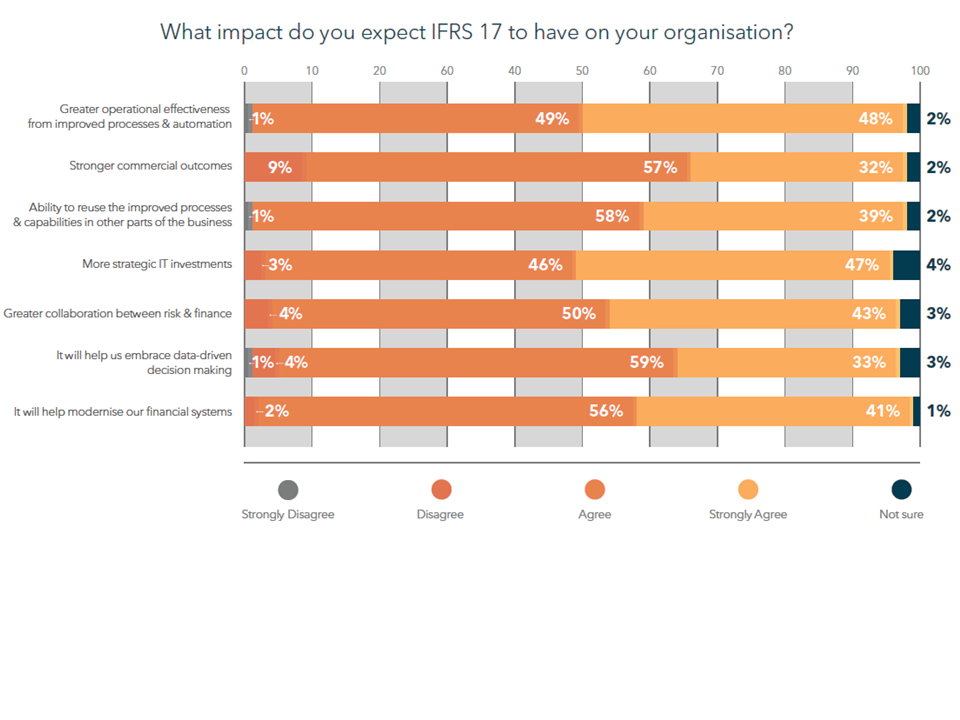
In early 2018 SAS asked 100 executives working in the insurance industry to share their opinions about the standard and strategies for compliance. The research shed light on the sector’s sentiment towards the regulation, challenges and opportunities that IFRS 17 presents, along with the steps organisations are taking to achieve compliance. The aims of the study were to better understand the views of the industry and how insurers are preparing to implement the standard. The objective was to share an unbiased view of the peer group’s analysis of, and approach to, tackling the challenges during the adjustment period. The information garnered is intended to help inform insurers’ decision-making during the early stages of their own projects, helping them arrive at the best-placed strategy for their business.

This report reveals the findings of the survey and provides guidance on how organisations might best achieve compliance. It provides a subjective, datadriven view of IFRS 17 along with valuable market context for insurance professionals who are developing their own strategies for tackling the new standard.

SAS’ research indicates that UK insurers do not underestimate the cost of IFRS 17 or the level of change it will likely introduce. Overall, 97 per cent of survey respondents said that they expected the standard to increase the cost and complexity of operating in insurance.

Companies will need to

  • introduce a new system of KPIs
  • and make changes in management information reports

to monitor performance under the revised profitability metrics. Forward looking strategic planning will also need to incorporate potential volatility and any ramifications within the insurance industry. To achieve this, firms will need to ensure the main parties involved co-operate and work together in a more integrated way.

The cost of these measures will, of course, differ considerably between organisations of different sizes, specialisms and complexities. However, the cost of compliance also greatly depends on

  • the approach taken by decision-makers,
  • the partners they choose
  • and the solutions they select.

Perhaps more instructive is that 90 per cent believe compliance costs will be greater than those demanded by the Solvency II Directive, aimed at insurers retaining strong financial buffers so they can meet claims from policyholders.

The European Commission estimated that it cost EU insurers between £3 and £4 billion to implement Solvency II, which was designed to standardise what had been a piecemeal approach to insurance regulations across the EU. Almost half (48 per cent) predict that IFRS 17 will cost substantially more.

Respondents are preparing for major alterations to their current accounting and actuarial systems, from minor upgrades all the way to wholesale replacements. Data management systems will be the prime target for review, with 84 per cent of respondents planning to either make additional investment (25 per cent), upgrade (34 per cent), or replace them (25 per cent). Finance, accounting and actuarial systems will also see significant innovation, as 83 per cent and 81 per cent respectively prepare for significant investment.

The use of analytics appears to be the most divisive area for insurers. While 27 per cent of participants are confident they will need to make no changes to their analytics systems or processes, 28 per cent plan to replace them entirely. A majority of 71 per cent still expect to make at least some reform.

IFRS17

IFRS17 2

Click here to access SAS’ Whitepaper


Risk Dashboard for fourth quarter of 2017: Risk exposure of the European Union insurance sector remains stable

Risks originating from the macroeconomic environment remained at a high level in Q4 2017, although most indicators improved slightly comparing with Q3. Positive developments in forecasted real GDP growth and increased expected inflation closer towards the ECB target contributed somewhat to a decrease in risk, as well as a slight reduction in the accommodative stance of monetary policy. Swap rates recently increased but remained low by historical standards. The credit-to-GDP gap was the only indicator to deteriorate since the previous assessment, moving further into negative territory.

Credit risks remain constant at a medium level in Q4 2017. Since the last assessment spreads have decreased across all bond segments, except for unsecured financial corporate bonds. Concerns about potential credit risk mispricing remain.

Market risks were stable at a medium level in Q4 2017. Most market indicators changed only little when compared to the previous risk assessment, except for investments in equity. Volatility of equity prices increased, with a temporary peak in February. A slight decline was reported for the price-to-book value ratio (PBV). In addition, Q4 Solvency II data seems to indicate a slight increase in median exposures to bonds and property and an increase of exposures to equity for insurers in the upper tail of the distribution.

Liquidity and funding risks remained constant at a medium level in Q4 2017, with most indicators pointing to a stable risk exposure.

Profitability and solvency risks remained stable at a medium level in Q4 2017. Annual figures for some profitability indicators show a slight deterioration when compared to annualised Q2 indicators, but are broadly at the same level as in Q4 2016. Solvency ratios remain well above 100% for most insurers in the sample. A slight increase in the quality of own funds has also been observed.

EIOPA1

Risks related to interlinkages and imbalances remain stable at a medium level in Q4 2017. Main observed developments relate to a slight decrease in median exposures to domestic sovereign debt and to a mild increase in the share of premiums ceded to reinsurers. Investment exposures to banks, insurers and other financial institutions remained broadly unchanged.

Insurance risks remained stable at a medium level when compared to Q3 2017. The impact of the catastrophic events observed in Q3 on insurers’ technical results still weights on the risk assessment.

EIOPA2

Market perceptions remained stable at a medium level since the last assessment. Positive developments related to the performance of insurers’ stock prices relative to the overall market and a decrease in the upper tail of the distribution of price-to-earnings ratios contributed to decreased risk, but this was partially compensated by a deterioration of some insurers’ external rating outlooks. Other indicators, such as insurers’ CDS spreads and external ratings remained largely unchanged.

Summary

Click here to access EIOPA’s detailed Risk Dashboard – April 2018

EIOPA3

EIOPA Risk Dashboard January 2018

Risks originating from the macroeconomic environment remained stable and high. Improvements have been observed across most indicators, but were not sufficient to change the overall risk picture. The improving prospects for economic growth still contrast with the persistence of structural imbalances, such as fiscal deficit. The accommodative stance of monetary policy has been reduced only very gradually, with low interest rates continuing to put a strain on the insurance sector.

Credit risks remained constant at a medium level whereas observed spreads continued to decline. The average rating of investments has seen some marginal improvements. Concerns on the pricing of the risk premia remain.

Market risks remained stable at a medium level despite a reduction of the volatility on prices was observed. Only price to book value of European stocks moved in the direction of risk increase.

Liquidity and funding risks were constant at a medium level in 2017 Q3 and remained a minor issue for insurers. Catastrophe bond issuance significantly decreased when compared to the record high registered during the previous quarter. The low volume of issued bonds made the indicator less relevant.

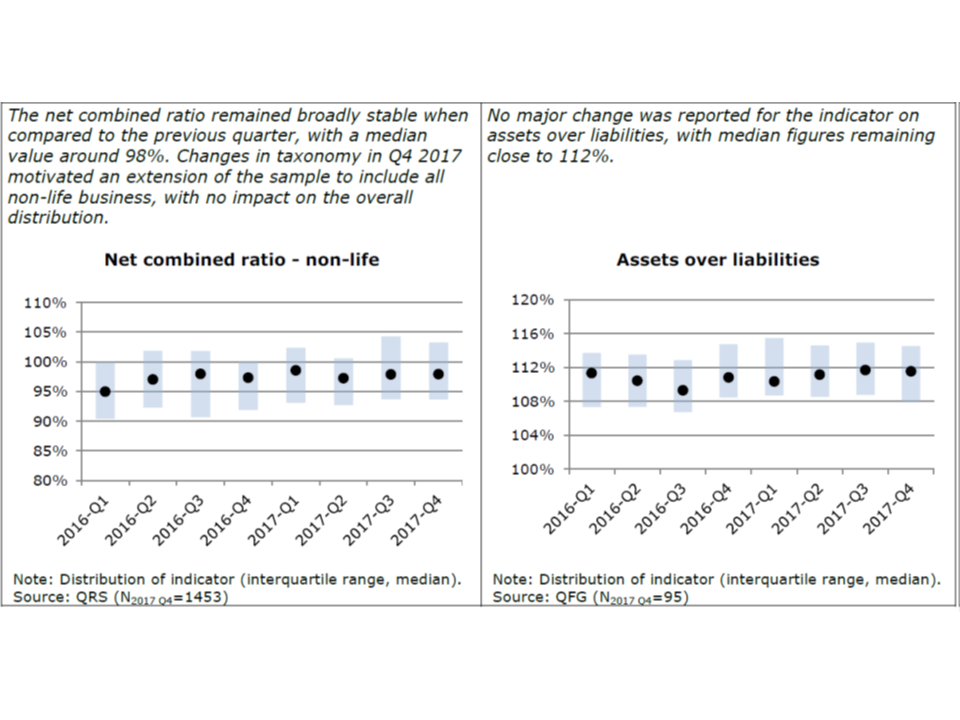
Profitability and solvency risks remained stable at a medium level. A deterioration of the net combined ratio was observed in the tail (90 percentile) of the distribution mainly populated by reinsurers in this quarter. SCR ratios have improved across all types of insurers mainly due to an increase of the Eligible Own Funds. This has been especially marked for life solo companies.

Interlinkages & imbalances: Risks in this category remained constant at a medium level. Investment exposures to banks and other insurers increased slightly from the previous quarter.

Insurance risks increased when compared to 2017 Q2 and are now at a medium level. This was essentially driven by the significant increase in the catastrophe loss ratio resulting from the impact of the catastrophic events observed in Q3 mainly on reinsurers’ technical results. This is also reflected in the loss ratio. Other indicators in this risk category still point to a stable risk exposure.

Market perceptions remained constant, with the improvement in external rating outlooks outweighing the observed increase in price to earnings ratios. Insurance stocks slightly outperformed the market, especially for life insurance, and CDS spreads reduced.

Riskdashboard 12018

Click here to access EIOPA’s Risk Dashboard January 2018