EIOPA proposal for Regulatory Technical Standards (RTS) on management of sustainability risks including sustainability risk plans

Early december 2024 EIOPA has published its consultation paper on management of sustainability risks and the newly created sustainibility risk plans. Very detailed and far reaching standards for the (re)insurance industry that will be added to the ESRS and CSRD framework and significantly enhance existing Solvency II requirements as part of the broader Solvency II reform (Proposal for a Directive of the European Parliament and of the Council amending Directive 2009/138/EC as regards proportionality, quality of supervision, reporting, long-term guarantee measures, macro-prudential tools, sustainability risks, group and cross-border supervision).

This article covers the new requirements for governance (AMSB, Key Functions) and the framework for the sustainability risk plans. An upcoming article will deal with materiality and financial assessments covered by the RTS draft as well as with the new metrics to be integrated in the extended framework.

Background and rationale

The Solvency II Directive requires undertakings to implement specific plans to address the financial risks from sustainability factors and mandates EIOPA to specify the elements of these plans. Article 44 of the amended Solvency II Directive requires undertakings to develop and monitor the implementation of specific plans, quantifiable targets, and processes to monitor and address the financial risks arising in the short, medium, and long-term from sustainability factors. The Directive mandates EIOPA to specify in regulatory technical standards (RTS) the minimum standards and reference methodologies for the

  • identification,
  • measurement,
  • management,
  • and monitoring

of sustainability risks, the elements to be covered in the plans, the supervision and disclosure of relevant elements of the plans.

According to EIOPA, the RTS apply the following approach:

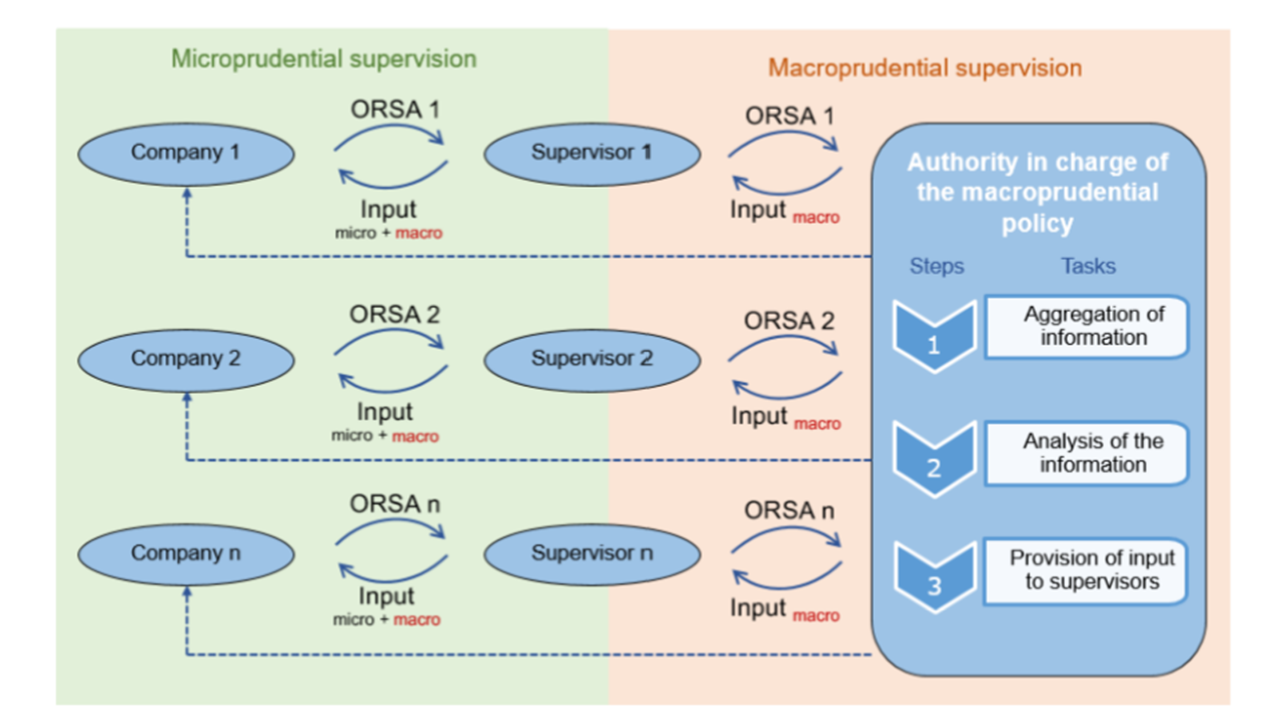
  • First, the proposed RTS build on the existing prudential requirements and integrate the sustainability risk plans into undertakings’ existing risk management practices. The Solvency II Delegated Regulation as amended in 2022 as well as amendments to the Solvency II Directive already require the management of sustainability risks. Existing policy statements and guidance issued by EIOPA set out supervisory expectations on aspects of sustainability risks management. The elements of the sustainability risk plans feed off these requirements and into the own risk and solvency assessment (ORSA) of material financial risks. The sustainability risk plans will be part of undertakings’ regular supervisory reporting.
  • Second, the RTS ensure a read-across between the undertakings’ sustainability and transition plans. While the sustainability risk plans focus on prudential risks for insurers arising from sustainability factors, the undertakings’ actions to mitigate these risks will need to consider their transition efforts.
  • Third, the RTS enable undertakings, including those that are subject to the Corporate Sustainability Reporting Directive (CSRD), to disclose on sustainability risk in a consistent and efficient manner. The RTS specify the minimum standards and methodologies, including selected risk metrics, for performing and disclosing on prudential sustainability risks, as required by the Solvency II Directive. Insurers subject to CSRD can feed the elements identified for public disclosure as part of the Solvency II Solvency and Financial Condition Report (SFCR), into the disclosure required under CSRD.

Own Risk and Solvency Assessment (ORSA)

Insurers shall integrate sustainability risk assessment in their system of governance, risk management
system and ORSA
, as illustrated below:

  • Risk management function and areas: the risk management function shall identify and assess emerging and sustainability risks. The sustainability risks identified by the risk management function shall form part of the own solvency needs assessment in the ORSA. Undertakings shall integrate sustainability risks in their policies. This includes the underwriting and investment policies, but also, where relevant policies on other areas (e.g. ALM, liquidity, concentration, operational, reinsurance and other risk mitigating techniques, deferred taxes risk management). The underwriting and reserving policy shall include actions by the undertaking to assess and manage the risk of loss resulting from inadequate pricing and provisioning assumptions due to internal or external factors, including sustainability risks. The investment risk management policy shall include actions by the insurance or reinsurance undertaking to ensure that sustainability risks relating to the investment portfolio are properly identified, assessed, and managed.
  • Prudent person investment principle: when identifying, measuring, monitoring, managing, controlling, reporting, and assessing risks arising from investments, undertakings shall take into account the potential long-term impact of their investment strategy and decisions on sustainability factors.
  • Actuarial function: regarding the underwriting policy, the opinion to be expressed by the actuarial function shall at least include conclusions on the effect of sustainability risks.
  • Remuneration policy: The remuneration policy shall include information on how it takes into account the integration of sustainability risks in the risk management system.

Sustainability Risk Plans

Considering the relationship with the ORSA, regular supervisory reporting and public disclosure, the figure below sets out the structure of the sustainability risk assessment and key elements of the plan:

The sustainability risk plans should be sufficiently robust to support insurers’ risk management process and the supervisory review of the risk management. Considering the information that is required in the ORSA (for material risks), the sustainability risk plans reported to the National Supervisory Authority should include as a minimum:

a) Governance arrangements and policies to identify, assess, manage, and monitor material sustainability risks.
b) A sustainability risk assessment consisting of:
I. A materiality assessment.
II. A financial risk assessment.
c) Explanation of the key results obtained from the materiality assessment and from the financial risk assessment, where applicable
d) The risk metrics, where relevant, based on different scenarios and time horizons.
e) Quantifiable targets over the short, medium, and long term to address material risks in line with the undertaking’s risk appetite and strategy.
f) Actions by which the undertaking manages the sustainability risks according to the targets set.

Governance

Business model and strategy

Sustainability risks and opportunities can affect the business planning over a short-to-medium term and the strategic planning over a longer term.

The Administrative, Management, and Supervisory Body (AMSB) should set risk exposure limits, targets, and thresholds for the risks that the undertaking is willing to bear with regards to sustainability risks, taking into account:

  • Short-, medium- and long-term time horizon, considering the impact sustainability risks may have soon, but also over the longer term, to be reflected in the business planning over a short-to-medium term and the strategic planning over a longer term.
  • The impact of sustainability risks on the external business environment that will feed into the (re)insurers’ strategic planning.
  • The undertaking’s exposure to material sustainability risk, across sectors and geographies, the transmission channels across risk categories and lines of business.
  • Qualitative and quantitative results from scenario, sensitivity, and stress testing.

Potentially relevant questions which the undertaking can consider when integrating sustainability risk assessment into its governance are:

How does the AMSB expect that sustainability risks might affect its business?

  • Does the AMSB consider sustainability factors as a risk and/or opportunity? If yes, in what ways might environmental, social or governance factors pose risks to the undertaking’s business in economic or financial terms, or create opportunities? If neither risk nor opportunities seem to exist, why not? Has the undertaking elaborated different strategic options to manage the risks and how they have been developed?
  • Has the AMSB implemented or planned any substantive changes to its business strategy in response to current and potential future sustainability impacts? If yes, what are the key risk drivers that it would consider relevant to its strategy? If not, why not?
  • Is the AMSB concerned about secondary effects or indirect impacts of sustainability on the undertaking’s overall strategy and business model (e.g. any systemic repercussions on the industry or the economy)?
  • What is the undertaking’s time horizon for considering environmental, social or governance risks?

Governance

A. The AMSB

Fitness and propriety. The AMSB is responsible for setting undertakings’ risk appetite and making sure that all risks, and therefore also sustainability risks, if material, are effectively identified, managed, and controlled.

For this, the AMSB should collectively possess the appropriate qualification, experience, and knowledge relevant to assess long-term risks and opportunities related to sustainability risks, which may be obtained or improved through appropriate training.

Effectiveness. To ensure the AMSB effectively executes its responsibilities to identify, manage and control sustainability risks, the AMSB should:

  • be aware of their obligations in the context of the long-term impacts of sustainability risks.
  • be capable of identifying sustainability risks as possible key risks for the undertaking.
  • openly discuss within the AMSB sustainability risks and opportunities.
  • effectively communicate on sustainability risks as possible key risks to in the short and long term.
  • interact with the rest of the organisation by putting sustainability risk as a possible key topic in the day-to-day business.
  • plan and deliver results by considering the impact of sustainability risks and opportunities.
  • take sustainability risks into consideration in the decision-making process.

B. Risk Management and other Key Functions

The risk management function has a vital role in:

Risk identification and measurement: The risk management function will need to ensure that the undertaking effectively identifies how sustainability risks could materialise within each area of the risk management system. It also sets the approach used by undertakings to measure and quantify their exposure to sustainability risks, including understanding the limitations of the methods used, and any gaps the undertaking faces in data and methodologies to assess the risks. Undertakings need to apply relevant tools to identify risks in a proportionate way depending on the nature, scale, and complexity of the risks.

Given the forward-looking nature of the risks and the inherent uncertainty associated with sustainability risks, undertakings will need to use appropriate methodologies and tools necessary to capture the size and scale of the risks. This would imply going beyond using only historical data for the purposes of the risk assessment and depending on the materiality of risk at stake, implement forward-looking technique (i.e. stress testing and scenario analysis), for example by considering also future trends in catastrophe modelling or environmental risk assessment. Science, data, or tools may not yet be sufficiently developed to estimate the risks accurately. As undertakings’ expertise and practices develops, the expectation should be that the approach to identifying and measuring the sustainability risks will mature over time. Hence, the risk management function will need to establish the following:

  • clear policies and procedures for identifying, measure, monitor, managing and report sustainability risks, and the review and approval by the AMSB.
  • qualitative, quantitative or a mix of both approaches to appropriately identify and measure the risks, and any limitations to data and tools.
  • forward-looking analysis of underwriting liabilities or investment portfolios under different future (transition) scenarios, setting out the key data inputs and assumptions as well as gaps and barriers (information, data, scenarios) which complicate undertaking’s efforts to undertake scenario analysis.
  • oversight of any activities performed by the external service providers (e.g. ESG rating providers).

Risk monitoring: The risk management function will need to establish the methodologies, tools, metrics and suitable key risk or performance indicators to monitor the sustainability risks and ensure that risks are consistent with internal limit and its risk appetite. These quantitative and qualitative tools and metrics would aim, for example, at monitoring exposures to climate change-related risk factors which could result from changes in the concentration of the investment or underwriting portfolios, or the potential impact of physical risk factors on outsourcing arrangements and supply chains. The tools and metrics need to be updated regularly to ensure that risks underwritten, or investments made remain in line with undertakings’ risk appetite and support decision making by the AMSB. In addition to that, a list of circumstances which would trigger a review of the strategy for addressing the sustainability risks can be considered as a good practice.

Risk management/mitigation: Risk management measures should be proportionate to the outcome of the materiality assessment. Where material potential impacts of the sustainability risks have been identified, undertaking(s) should identify risk management and mitigating measures. The written policies on the investment and underwriting strategy should include such potential measures. Based on the double materiality principle, the investment and underwriting policy will also consider the financial risks to the balance sheet arising from the impact posed by the underwriting and investment strategy and decisions on sustainability factors. Risk management measures can therefore include measures to help reducing risks caused by climate change, through premium incentives, for example.

The actuarial function shall also consider sustainability risks in its tasks. This would include:

  • concluding on the effect of sustainability risks in the opinion on the underwriting policy. For example, considering the increasing expected losses from physical damage due to increasingly severe and frequent natural catastrophes, the choice of underwriting certain perils, but also the pricing of the perils will need to be considered in a forward-looking manner, having regard to the sustainability of the business strategy.
  • an opinion on the adequacy of the reinsurance arrangements of the undertaking taking special account of the sustainability risks of the undertaking, the undertaking’s reinsurance policy and the interrelationship between reinsurance and technical provisions. The undertaking may consider that in times of increasing losses due to climate change, the reinsurance market may ‘harden’ and increase the cost for primary reinsurance.
  • contributing to the effective implementation of the risk management system, providing the necessary support to the risk management function. For example, considering increasing losses for natural catastrophes due to climate change, the actuarial function will need to contribute to the assessment of the risk and opportunity of underwriting certain natural perils. The actuarial pricing of climate change risks can inform the overall risk management strategy and contribute to the underwriting policy by informing on the risks of underwriting certain perils and the opportunity to invest in prevention measures to reduce the losses. The consideration of climate change in an actuarial risk-based manner should allow for the consideration of incentives in the pricing and underwriting of certain natural hazards, with the view to potentially reduce losses over a longer-term perspective.
  • coordinating the calculation of technical provisions and overseeing the calculation of technical provision, including referring to risks to technical provision driven by sustainability factors.
  • assessing the sufficiency and quality of the data used in the calculation of technical provisions including the validation of relevant sustainability risk input data and comparison of best estimates against experience. The assessment may include expressing a view on data limitations as well as considerations on how to implement a forward-looking view on the risks.

The role of the compliance function regarding sustainability risks would imply, as part of establishing and implementing the compliance policy:

  • assessing legal and legal change risks related to sustainability regulation. Especially as regulatory requirements are building up on sustainability risk management, reporting and disclosure, the compliance with new legal requirements will require attention.
  • providing information on the high-risk areas within the undertaking as regards to the transition policy of the company and legal risk attached to implementing (or not) the transition targets, from a prudential and conduct perspective.
  • identifying potential measures to prevent or address non-compliance. This may require addressing the risk of misrepresentation at entity or product level on the sustainable nature of its risk management or of its product offer.

The internal audit function should consider, where relevant sustainability risks in the preparation and maintaining of internal audit plan. This may include:

  • highlighting high-risk areas to requiring special attention. The potentially increased reliance on external parties as data providers on sustainability risks, or for verification of the sustainability of investments regarding environmental or social objectives, may need particular attention to ascertain the quality of the outsourced activity.
  • coping with follow-up actions in particular recommendations in areas, processes, and activities subject to review.

Functions or committees with special responsibility for sustainability risks. The AMSB may decide to delegate the task of addressing sustainability matters to specific committee(s). Such committees discuss and propose matters to the AMSB for it to take appropriate actions and pass resolutions. It is important to highlight that the responsibility about decisions about material sustainability risks remains with the AMSB. If a (re)insurance undertaking has or intends to set up a function with special responsibility for sustainability risks, its integration with existing processes and interface with key and other functions must be clearly defined. A dedicated sustainability unit or function would therefore be involved, in addition to the risk management function, actuarial function and/or compliance function, whenever the insured risk or investment is sensitive to sustainability risk, e.g., by virtue of the economic sector in which the investment was made, or the geographical location of the insured object.

Misunderstandings regarding the role or extent of the assessment to be made by the sustainability function must be avoided. In other words, it needs to be ascertained whether the function has a mere corporate/communication role (e.g. in dealing with corporate responsibility and reputational risks) or is also intended and equipped for sustainability materiality and financial risk analysis.

Remuneration

Remuneration can be used as a tool for the integration of sustainability risks and incentives for
sustainable investment or underwriting decisions
. The Solvency II Delegated Regulation stipulates that the remuneration policy and remuneration practices shall be in line with the undertaking’s business and risk management strategy, its risk profile, objectives, risk management practices and the long-term interests and performance of the undertaking. It further stipulates that the remuneration policy shall include information on how it takes into account the integration of sustainability risks in the risk management system.

Furthermore, undertakings within the scope of the Sustainable Finance Disclosure Regulation shall include in their remuneration policies information on how those policies are consistent with the integration of sustainability risks, and to publish that information on their websites.

Undertakings will need to take into account both financial and non-financial criteria when assessing
an individual’s performance at certain point of time
: the consideration of sustainability factors is an example of non-financial (or increasingly financial) criteria that could be considered when assessing individual performance. For example, increasingly, for investment professionals, the risk framework should include an assessment of sustainability risks.

From a sustainability perspective, the alignment of the remuneration policy with the institution’s
long-term risk management framework and objectives, seems relevant. In addition, a number of studies concluded that, although it is difficult to prove that short-term strategies result in the destruction of long-term values, in some cases the short-term orientations of managers and investors become self-reinforcing. Therefore, incentives to shift the overall business strategy towards more long-term goals (e.g. promoting ‘patient capital’, increasing the long-term commitments of shareholders or tie managers’ remunerations to long-term performances through training and disclosure of long-term oriented metrics) are relevant in view of the long-term horizon of sustainability risks and opportunities.

The impact of the remuneration policies on the achievement of sound and effective long-term risk
management objectives may be especially relevant when it comes to the variable remuneration of
categories of staff whose professional activities have a material impact on the institution’s risk profile
, taking into account their roles and responsibilities in relation to its sustainability strategy.

Among the currently existing practices across the EU, variable remuneration of employees of (re)insurance undertakings is based on performance and mostly on short-term basis – annual bonuses, or bonuses linked to the business strategy over 3-5 years. The performance of employees would therefore need to be aligned with the longer-term horizon of sustainability risks.

For example, long-term strategy goals such as reducing financed emissions in the investment portfolio or limiting losses in the underwriting of natural catastrophes can be aligned with the remuneration goals horizon, as for example through:

  • Medium-to-short term remuneration incentives linked to achieving set targets in reducing CO2 emissions of investments or linked to reduction of losses through risk prevention initiatives for climate adaptation purposes.
  • Longer-term incentives linked to payment with shares in the company, nudging the executive to take decisions in the long-term interest of the company.

Where the remuneration strategy of the undertaking refers to vague discretionary measures of progress such as ‘improving sustainability’ or ‘driving a robust ESG program’, these should be supported by specific goals or commitments and be measurable, meaningful, and auditable.

Overview on EIOPA Consultation Paper on the Opinion on the 2020 review of Solvency II

The Solvency II Directive provides that certain areas of the framework should be reviewed by the European Commission at the latest by 1 January 2021, namely:

  • long-term guarantees measures and measures on equity risk,
  • methods, assumptions and standard parameters used when calculating the Solvency Capital Requirement standard formula,
  • Member States’ rules and supervisory authorities’ practices regarding the calculation of the Minimum Capital Requirement,
  • group supervision and capital management within a group of insurance or reinsurance undertakings.

Against that background, the European Commission issued a request to EIOPA for technical advice on the review of the Solvency II Directive in February 2019 (call for advice – CfA). The CfA covers 19 topics. In addition to topics that fall under the four areas mentioned above, the following topics are included:

  • transitional measures
  • risk margin
  • Capital Markets Union aspects
  • macroprudential issues
  • recovery and resolution
  • insurance guarantee schemes
  • freedom to provide services and freedom of establishment
  • reporting and disclosure
  • proportionality and thresholds
  • best estimate
  • own funds at solo level

EIOPA is requested to provide technical advice by 30 June 2020.

Executive summary

This consultation paper sets out technical advice for the review of Solvency II Directive. The advice is given in response to a call for advice from the European Commission. EIOPA will provide its final advice in June 2020. The call for advice comprises 19 separate topics. Broadly speaking, these can be divided into three parts.

  1. Firstly, the review of the long term guarantee measures. These measures were always foreseen as being reviewed in 2020, as specified in the Omnibus II Directive. A number of different options are being consulted on, notably on extrapolation and on the volatility adjustment.
  2. Secondly, the potential introduction of new regulatory tools in the Solvency II Directive, notably on macro-prudential issues, recovery and resolution, and insurance guarantee schemes. These new regulatory tools are considered thoroughly in the consultation.
  3. Thirdly, revisions to the existing Solvency II framework including in relation to
    • freedom of services and establishment;
    • reporting and disclosure;
    • and the solvency capital requirement.

Given that the view of EIOPA is that overall the Solvency II framework is working well, the approach here has in general been one of evolution rather than revolution. The principal exceptions arise as a result either of supervisory experience, for example in relation to cross-border business; or of the wider economic context, in particular in relation to interest rate risk. The main specific considerations and proposals of this consultation paper are as follows:

  • Considerations to choose a later starting point for the extrapolation of risk-free interest rates for the euro or to change the extrapolation method to take into account market information beyond the starting point.
  • Considerations to change the calculation of the volatility adjustment to risk-free interest rates, in particular to address overshooting effects and to reflect the illiquidity of insurance liabilities.
  • The proposal to increase the calibration of the interest rate risk submodule in line with empirical evidence. The proposal is consistent with the technical advice EIOPA provided on the Solvency Capital Requirement standard formula in 2018.
  • The proposal to include macro-prudential tools in the Solvency II Directive.
  • The proposal to establish a minimum harmonised and comprehensive recovery and resolution framework for insurance.

A background document to this consultation paper includes a qualitative assessment of the combined impact of all proposed changes. EIOPA will collect data in order to assess the quantitative combined impact and to take it into account in the decision on the proposals to be included in the advice. Beyond the changes on interest rate risk EIOPA aims in general for a balanced impact of the proposals.

The following paragraphs summarise the main content of the consulted advice per chapter.

Long-term guarantees measures and measures on equity risk

EIOPA considers to choose a later starting point for the extrapolation of risk-free interest rates for the euro or to change the extrapolation method to take into account market information beyond the starting point. Changes are considered with the aim to avoid the underestimation of technical provisions and wrong risk management incentives. The impact on the stability of solvency positions and the financial stability is taken into account. The paper sets out two approaches to calculate the volatility adjustment to the risk-free interest rates. Both approaches include application ratios to mitigate overshooting effects of the volatility adjustment and to take into account the illiquidity characteristics of the insurance liabilities the adjustment is applied to.

  • One approach also establishes a clearer split between a permanent component of the adjustment and a macroeconomic component that only exists in times of wide spreads.

EIOPA2

  • The other approach takes into account the undertakings-specific investment allocation to further address overshooting effects.

EIOPA3

Regarding the matching adjustment to risk-free interest rates the proposal is made to recognise in the Solvency Capital Requirement standard formula diversification effects with regard to matching adjustment portfolios. The advice includes proposals to strengthen the public disclosure on the long term guarantees measures and the risk management provisions for those measures.

EIOPA1

The advice includes a review of the capital requirements for equity risk and proposals on the criteria for strategic equity investments and the calculation of long-term equity investments. Because of the introduction of the capital requirement on long-term equity investments EIOPA intends to advise that the duration-based equity risk sub-module is phased out.

Technical provisions

EIOPA identified a larger number of aspects in the calculation of the best estimate of technical provisions where divergent practices among undertakings or supervisors exist. For some of these issues, where EIOPA’s convergence tools cannot ensure consistent practices, the advice sets out proposals to clarify the legal framework, mainly on

  • contract boundaries,
  • the definition of expected profits in future premiums
  • and the expense assumptions for insurance undertakings that have discontinued one product type or even their whole business.

With regard to the risk margin of technical provisions transfer values of insurance liabilities, the sensitivity of the risk margin to interest rate changes and the calculation of the risk margin for undertakings that apply the matching adjustment or the volatility adjustment were analysed. The analysis did not result in a proposal to change the calculation of the risk margin.

Own funds

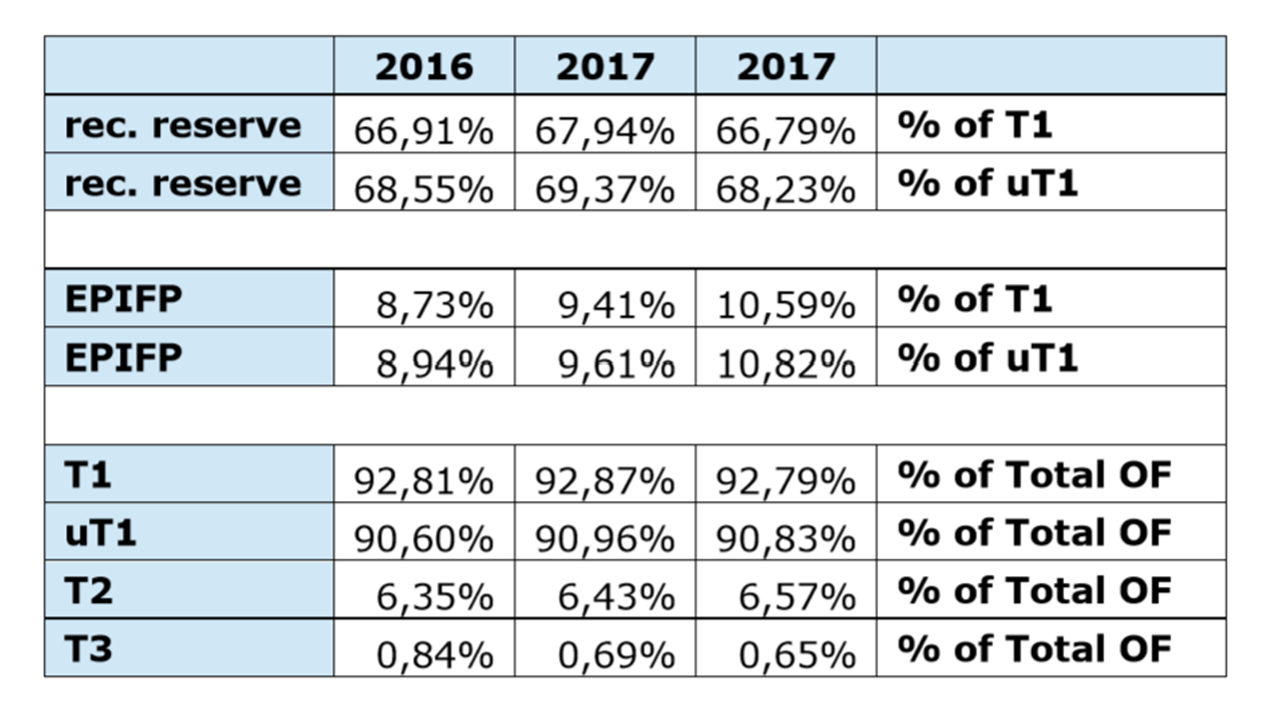
EIOPA has reviewed the differences in tiering and limits approaches within the insurance and banking framework, utilising quantitative and qualitative assessment. EIOPA has found that they are justifiable in view of the differences in the business of both sectors.

EIOPA4

Solvency Capital Requirement standard formula

EIOPA confirms its advice provided in 2018 to increase the calibration of the interest rate risk sub-module. The current calibration underestimates the risk and does not take into account the possibility of a steep fall of interest rate as experienced during the past years and the existence of negative interest rates. The review

  • of the spread risk sub-module,
  • of the correlation matrices for market risks,
  • the treatment of non-proportional reinsurance,
  • and the use of external ratings

did not result in proposals for change.

Minimum Capital Requirement

Regarding the calculation of the Minimum Capital Requirement it is suggested to update the risk factors for non-life insurance risks in line with recent changes made to the risk factors for the Solvency Capital Requirement standard formula. Furthermore, proposals are made to clarify the legal provisions on noncompliance with the Minimum Capital Requirement.

EIOPA5

Reporting and disclosure

The advice proposes changes to the frequency of the Regular Supervisory Report to supervisors in order to ensure that the reporting is proportionate and supports risk-based supervision. Suggestions are made to streamline and clarify the expected content of the Regular Supervisory Report with the aim to support insurance undertakings in fulfilling their reporting task avoiding overlaps between different reporting requirements and to ensure a level playing field. Some reporting items are proposed for deletion because the information is also available through other sources. The advice includes a review of the reporting templates for insurance groups that takes into account earlier EIOPA proposals on the templates of solo undertakings and group specificities.

EIOPA proposes an auditing requirement for balance sheet at group level in order to improve the reliability and comparability of the disclosed information. It is also suggested to delete the requirement to translate the summary of that report.

Proportionality

EIOPA has reviewed the rules for exempting insurance undertakings from the Solvency II Directive, in particular the thresholds on the size of insurance business. As a result, EIOPA proposes to maintain the general approach to exemptions but to reinforce proportionality across the three pillars of the Solvency II Directive.

Regarding thresholds EIOPA proposes to double the thresholds related to technical provisions and to allow Member States to increase the current threshold for premium income from the current amount of EUR 5 million to up to EUR 25 million.

EIOPA had reviewed the simplified calculation of the standard formula and proposed improvements in 2018. In addition to that the advice includes proposals to simplify the calculation of the counterparty default risk module and for simplified approaches to immaterial risks. Proposals are made to improve the proportionality of the governance requirements for insurance and reinsurance undertakings, in particular on

  • key functions (cumulation with operational functions, cumulation of key functions other than the internal audit, cumulation of key and AMSB function)
  • own risk and solvency assessment (ORSA) (biennial report),
  • written policies (review at least once every three years)
  • and administrative, management and supervisory bodies (AMSB) ( evaluation shall include an assessment on the adequacy of the composition, effectiveness and internal governance of the administrative, management or supervisory body taking into account the nature, scale and complexity of the risks inherent in the undertaking’s business)

Proposals to improve the proportionality in reporting and disclosure of Solvency II framework were made by EIOPA in a separate consultation in July 2019.

Group supervision

EIOPA proposes a number of regulatory changes to address the current legal uncertainties regarding supervision of insurance groups under the Solvency II Directive. This is a welcomed opportunity as the regulatory framework for groups was not very specific in many cases while in others it relies on the mutatis mutandis application of solo rules without much clarifications.

In particular, there are policy proposals to ensure that the

  • definitions applicable to groups,
  • scope of application of group supervision
  • and supervision of intragroup transactions, including issues with third countries

are consistent.

Other proposals focus on the rules governing the calculation of group solvency, including own funds requirements as well as any interaction with the Financial Conglomerates Directive. The last section of the advice focuses on the uncertainties related to the application of governance requirements at group level.

Freedom to provide services and freedom of establishment

EIOPA further provides suggestions in relation to cross border business, in particular to support efficient exchange of information among national supervisory authorities during the process of authorising insurance undertakings and in case of material changes in cross-border activities. It is further recommended to enhance EIOPA’s role in the cooperation platforms that support the supervision of cross-border business.

Macro-prudential policy

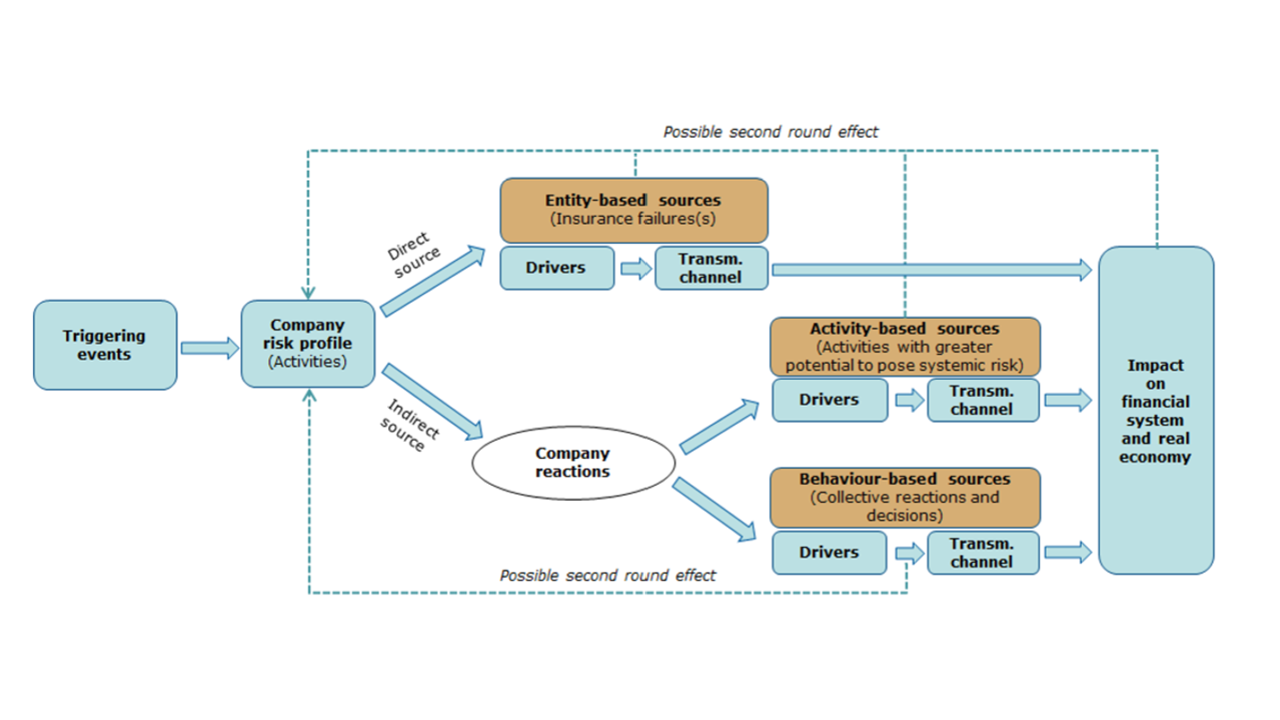
EIOPA proposes to include the macroprudential perspective in the Solvency II Directive. Based on previous work, the advice develops a conceptual approach to systemic risk in insurance and then analyses the current existing tools in the Solvency II framework against the sources of systemic risk identified, concluding that there is the need for further improvements in the current framework.

EIOPA7

Against this background, EIOPA proposes a comprehensive framework, covering the tools initially considered by the European Commission (improvements in Own Risk and Solvency Assessment and the prudent person principle, as well as the drafting of systemic risk and liquidity risk management plans), as well as other tools that EIOPA considers necessary to equip national supervisory authorities with sufficient powers to address the sources of systemic risk in insurance. Among the latter, EIOPA proposes to grant national supervisory authorities with the power

  • to require a capital surcharge for systemic risk,
  • to define soft concentration thresholds,
  • to require pre-emptive recovery and resolution plans
  • and to impose a temporarily freeze on redemption rights in exceptional circumstances.

EIOPA8

Recovery and resolution

EIOPA calls for a minimum harmonised and comprehensive recovery and resolution framework for (re)insurers to deliver increased policyholder protection and financial stability in the European Union. Harmonisation of the existing frameworks and the definition of a common approach to the fundamental elements of recovery and resolution will avoid the current fragmented landscape and facilitate cross-border cooperation. In the advice, EIOPA focuses on the recovery measures including the request for pre-emptive recovery planning and early intervention measures. Subsequently, the advice covers all relevant aspects around the resolution process, such as

  • the designation of a resolution authority,
  • the resolution objectives,
  • the need for resolution planning
  • and for a wide range of resolution powers to be exercised in a proportionate way.

The last part of the advice is devoted to the triggers for

  • early intervention,
  • entry into recovery and into resolution.

EIOPA9

Other topics of the review

The review of the ongoing appropriateness of the transitional provisions included in the Solvency II Directive did not result in a proposal for changes. With regard to the fit and proper requirements of the Solvency II Directive EIOPA proposes to clarify the position of national supervisory authorities on the ongoing supervision of propriety of board members and that they should have effective powers in case qualifying shareholders are not proper. Further advice is provided in order to increase the efficiency and intensity of propriety assessments in complex cross-border cases by providing the possibility of joint assessment and use of EIOPA’s powers to assist where supervisors cannot reach a common view.

Click here to access EIOPA’s detailed Consultation Paper

EIOPA: Peer review assessing how National Competent Authorities (NCAs) supervise and determine whether an insurer’s set­ting of key functions fulfils the legal requirements of Solvency II

The main task of the European Insurance and Occupational Pensions Authority (EIOPA) is to

  • enhance supervisory convergence,
  • strengthen consumer protection
  • and preserve financial stability.

In the context of enhancing supervisory convergence and in accordance with its mandate, EIOPA regularly conducts peer reviews, working closely with national competent authorities (NCAs), with the aim of strengthening both the convergence of supervisory practices across Europe and the capacity of NCAs to conduct high-quality and effective supervision.

In line with its mandate, the outcome of peer reviews, including identified best practices, are to be made public with the agreement of the NCAs that have been subject to the review.

BACKGROUND AND OBJECTIVES

Enhancing the governance system of insurers is one of the major goals of Solvency II (SII). The four key functions (risk management, actuarial, compliance and internal audit) as required under the SII regulation are an essential part of the system of governance. These key functions are expected to be operationally independent to ensure an effective and robust internal control environment within an insurer and support high quality of decision making by the management. At the same time it is also important that these governance requirements are not overly burdensome for small and medium-sized insurers. Therefore SII allows NCAs to apply the principle of proportionality in relation to compliance with key function holder requirements for those insurers.

Under SII, insurers may combine key functions in one holder. However, such combinations have to be justified by the principle of proportionality and insurers need to properly address the underlying conflicts of interest. Holding a key function should generally not be combined with administrative, management or supervisory body (AMSB) membership or with operational tasks because of their controlling objective. Thus, these combinations should rather occur in exceptional cases, taking into account a risk-based approach and the manner in which the insurer avoids and manages any potential conflict of interest.

This peer review assesses how NCAs supervise and determine whether an insurer’s setting of key functions fulfils the legal requirements of SII with a particular emphasis on proportionality. The peer review examines practices regarding:

  • combining key functions under one holder;
  • combining key functions with AMSB membership or with carrying out operational tasks;
  • subordination of one key function under another key function;
  • split of one key function among several holders;
  • assessment of the fitness of key function holders; and
  • outsourcing of key functions.

The period examined under the scope of this peer review was 2016 but also covered supervisory practices executed before 2016 in the preparatory stage of SII. The peer review was conducted among NCAs from the European Economic Area (EEA) on the basis of EIOPA’s Methodology for conducting Peer Reviews (Methodology).

Detailed information was gathered in the course of the review. All NCAs completed an initial questionnaire. This was followed by fieldwork comprising visits to 8 NCAs and 30 conference calls.

MAIN FINDINGS

The review showed that NCAs in general apply the principle of proportionality and that they have adopted similar approaches.

SUMMARY RESULTS OF THE COMPARATIVE ANALYSIS

  • Supervisory framework: Approximately half of NCAs use written supervisory guidance for the application of the principle of proportionality. Larger NCAs in particular use written supervisory guidance in order to ensure consistency of their supervisory practice among their supervisory staff.
  • Approach of NCAs: Most NCAs have a similar approach. NCAs assess the insurers’ choice of key function holders at the time of initial notification regarding the key function holder’s appointment. If any concerns are noted at this stage, for example regarding combinations or fitness, NCAs generally challenge and discuss these issues with the insurer, rather than issuing formal administrative decisions.
  • Combining key functions in one holder: This occurs in almost all countries. The most frequent combinations are between risk management and actuarial functions and between risk management and compliance functions. Combinations are most commonly used by smaller insurers but are also seen in large insurers. EIOPA has identified the need to draw the attention of NCAs to the need to challenge combinations more strongly, especially when they occur in bigger, more complex insurers, and to ensure that adequate mitigation measures are in place to warrant a robust system of governance.
  • Holding the internal audit function and other key functions: The combination of the internal audit function with other key functions occurs in 15 countries, although the frequency of such combinations is relatively low. Moreover, there were cases of the internal audit function holder also carrying out operational tasks which could lead to conflicts of interest and compromise the operational independence of the internal audit function. It is important to emphasise that the legal exemption of Article 271 of the Commission Delegated Regulation EU (2015/35) does not apply to the combination with operational tasks.
  • Combining a key function holder with AMSB membership: Most NCAs follow a similar and comprehensive approach regarding the combination of key function holder and AMSB member. In this regard, NCAs accept such cases only if deemed justified under the principle of proportionality. This peer review shows that two NCAs request or support combinations of AMSB member and the risk management function holder regardless of the principle of proportionality in order to strengthen the knowledge and expertise regarding risk management within the AMSB.
  • Combining key function holders (excluding internal audit function holder) with operational tasks: In nearly all countries combinations of risk management, actuarial and compliance key function holders with operational tasks occur, but such combinations generally occur rarely or occasionally. However, several NCAs do not have a full market overview of such combinations with operative tasks. Adequate mitigating measures are essential to reduce potential conflicts of interest when key function holders also carry out operational tasks. The most common combinations are the compliance function holder with legal director and the risk management function holder with finance director.
  • Splitting a key function between two holders: About half of the NCAs reported cases where more than one individual is responsible for a particular key function (‘split of key function holder’). The most common split concerns the actuarial function (split between life and non-life business). NCAs should monitor such splits in order to maintain appropriate responsibility and accountability among key function holders.
  • Subordination of a key function holder to another key function holder or head of operational department: This is observed in half of the countries reviewed. An organisational subordination can be accepted, but there needs to be a direct ‘unfiltered’ reporting line from the subordinated key function holder to the AMSB. In cases of subordination, conflicts of interest have to be mitigated and operational independence needs to be ensured including the mitigating measures concerning the remuneration of the subordinated key function holders.
  • Fitness of key function holders: Most NCAs assess the fitness of the key function holder at the time of initial notification and apply the principle of proportionality. Several NCAs did not systematically assess the key function holders appointed before 2016. These NCAs are advised to do so using a risk-based approach.
  • Outsourcing of key function holders: Most NCAs have observed outsourcing of key function holders. According to the proportionality principle, an AMSB member may also be a designated person responsible for overseeing and monitoring the outsourced key function. Eight NCAs make a distinction between intra-group and extra-group outsourcing and six NCAs do not require a designated person in all cases, which may give rise to operational risks.

BEST PRACTICES

Through this peer review, EIOPA identified four best practices.

  • When NCAs adopt a structured proportionate approach based on the nature, scale and complexity of the business of the insurer regarding their supervisory assessment of key function holders and combination of key function holders at the time of initial notification and on an ongoing basis. The best practice also includes supervisory documentation and consistent and uniform data submission requirements (for example an electronic data submission system for key function holder notification). This best practice has been identified in Ireland and the United Kingdom.
  • When an NCA has a supervisory panel set up internally which discusses and advises supervisors about complex issues regarding the application of the proportionality principle in governance requirements regarding key functions. This best practice has been identified in the Netherlands.
  • When assessing the combination of key function holder with AMSB member, EIOPA considers the following as best practice for NCAs:
    • To publicly disclose the NCA’s expectations that controlling key functions should generally not be combined with operational functions for example with the membership of the AMSB. Where those cases occur, NCAs should clearly communicate their expectation that the undertaking ensures that it is aware of possible conflicts of interest arising from such a combination and manages them effectively.
    • To require from insurers that main responsibilities as a member of the AMSB do not lead to a conflict of interest with the tasks as a key function holder.
    • To assess whether the other AMSB members challenge the key function holder also being an AMSB member.

This best practice has been identified in Lithuania.

  • When NCAs apply a risk-based approach for the ongoing supervision that gives the possibility to ensure the fulfilment of fitness requirements of KFHs at all times by holding meetings with key function holders on a regular scheduled basis as part of an NCA’swork plan (annual review plan). The topics for discussion for those meetings can vary, depending for example on actual events and current topics. This best practice has been identified in Ireland and the United Kingdom.

These best practices provide guidance for a more systematic approach regarding the application of the principle of proportionality as well as for ensuring consistent and effective supervisory practice within NCAs.

EIOPA NCA KFH

Click here to access EIOPA’s full report on its Peer Review